Stigg Announcements
Stigg for Agents now runs inside your agent orchestration
Stigg for Agents now supports LangChain, LangGraph, Google ADK, and Vercel AI SDK, so agents can stay within budget at every step of the run.

Reserve & Settle and Governance give you control over AI spend at every level, from each agent run to every team, user, and agent in your customer's org.


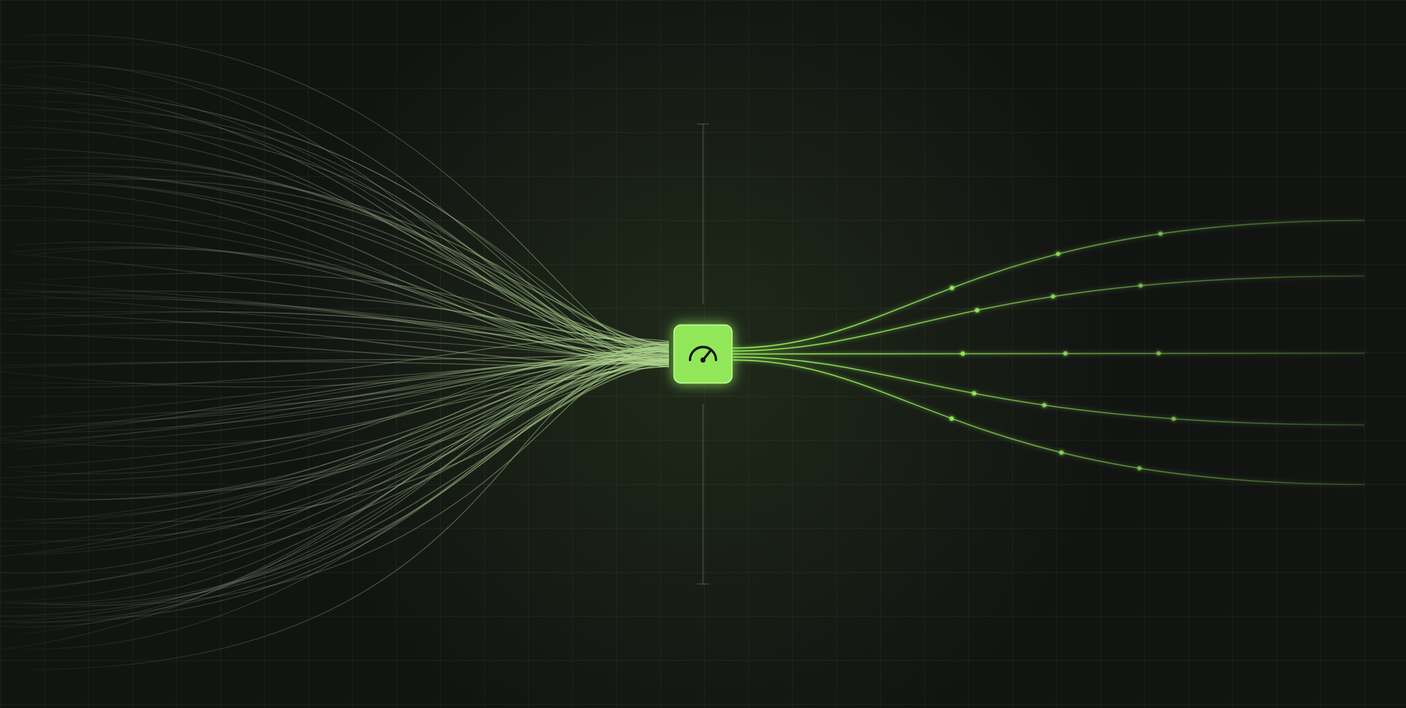
Agents decide what to spend at runtime, many at once, and the cost is known only after the work is done. Today we're launching Reserve & Settle and making Governance generally available, so you can control spend before the work runs, not after the invoice lands.
Together they give you control over AI spend at every level. Reserve & Settle works at the action level: it holds the most a task can cost before it runs, settles the real cost after, and never overdraws, even with many agents running in parallel. Governance works at the org level: a budget for every team, user, and agent, enforced on every call.
Compute is becoming the variable that decides how much work gets done. Research, testing, and data processing used to be limited by how much time people could put in. Now output scales with tokens, and agents decide how many to spend. Most controls weren't built for that, and two gaps show up as soon as agents reach production:
Either way, your customer can spend more than you charge them, and you eat the difference. Teams cover the gap with glue code: they overestimate and refund the excess, accept the overdraft, or build their own locking layer in front of the balance.
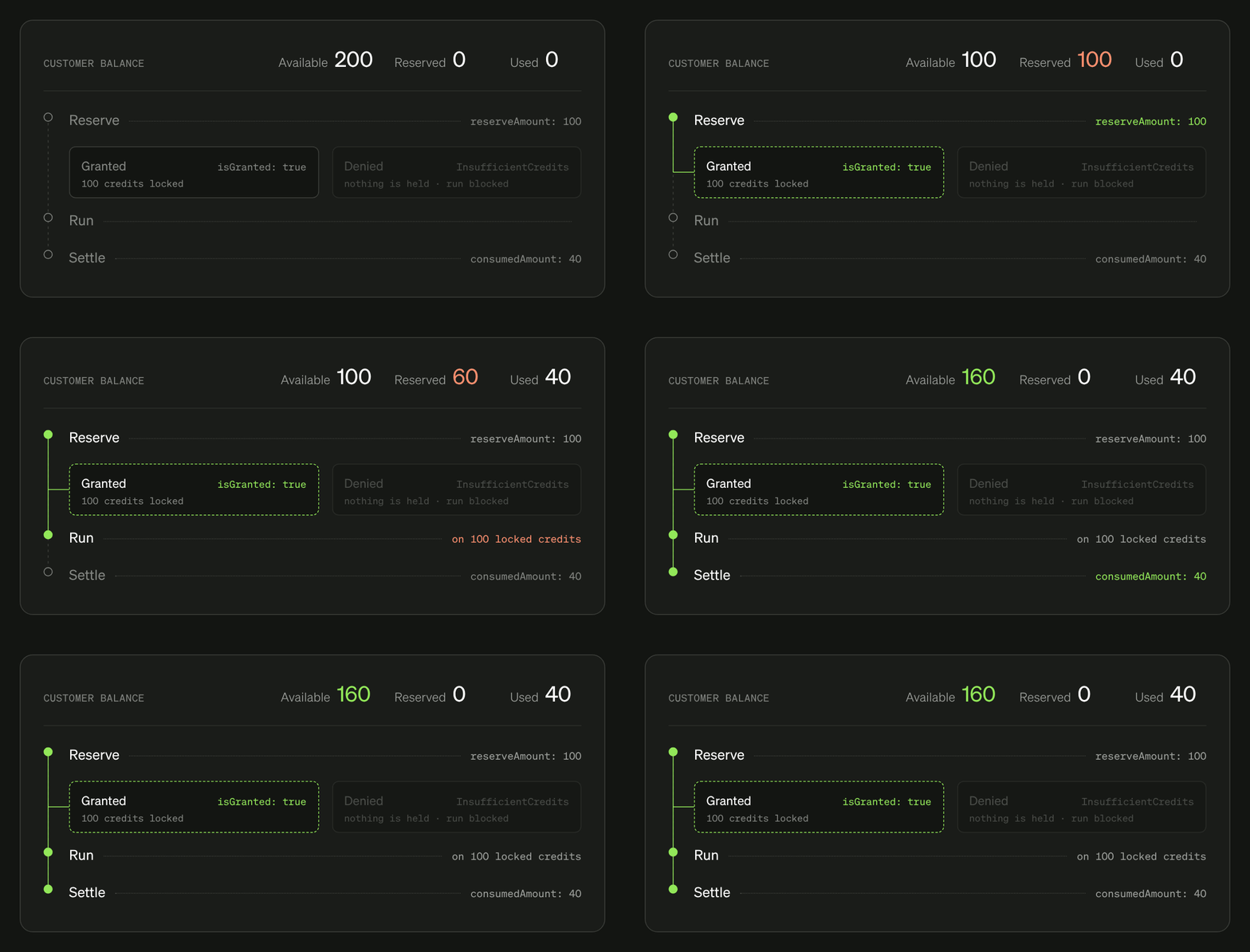
Every AI request is a spend decision. Now you can make it before the work starts, even when you don't know the cost yet:
The reservation rides on the entitlement check you already make, with a reserveAmount added. Settling is a single call to the release endpoint with the consumedAmount, deducted to the same grants that backed the hold. You don’t build any reservation, refund, or reconciliation logic yourself.
A balance check on its own can't stop parallel requests. If three agents each check a 100-credit balance for 60 credits at the same moment, all three pass, and together they spend 180.
With a reservation, the check and the hold happen together. Each granted reservation takes its credits off the available balance immediately, so the next request sees only what's actually left. A lock under the hood guarantees reservations never add up to more than the balance. Of those three agents, the first gets through and the other two are denied, since only 40 credits are left. The balance never goes below zero. When nothing is left, the rest are denied.
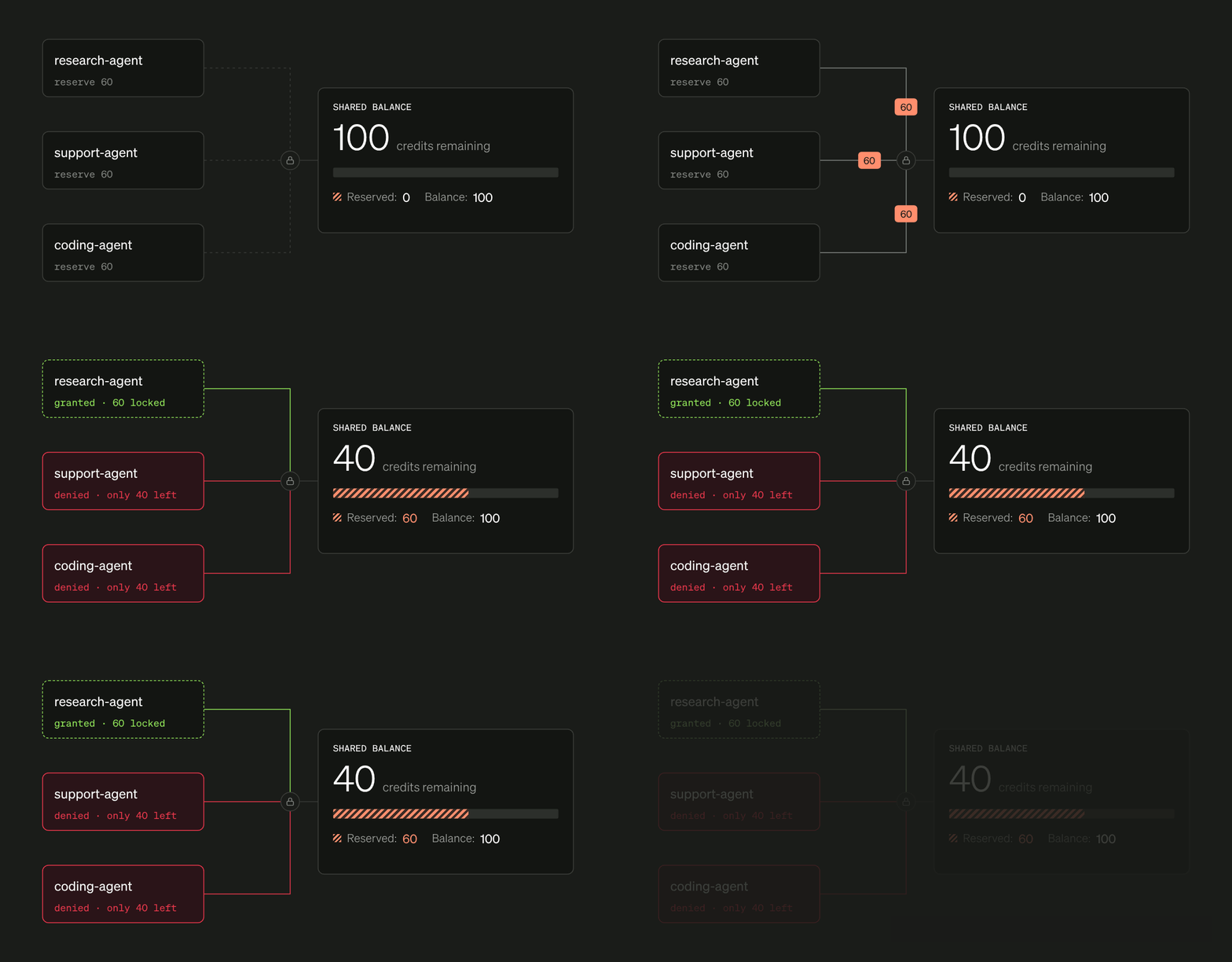
Reservations live on the same ledger as grants and consumption, so credits stay atomic, auditable, and safe under concurrency, even when a task crashes, retries, or runs long:
Governance, now generally available, lets your enterprise customers control AI spend at any granularity. Departments, teams, individual users, and AI agents each get their own budgets and limits, checked before every request runs, so no single user or agent can exhaust the shared pool.
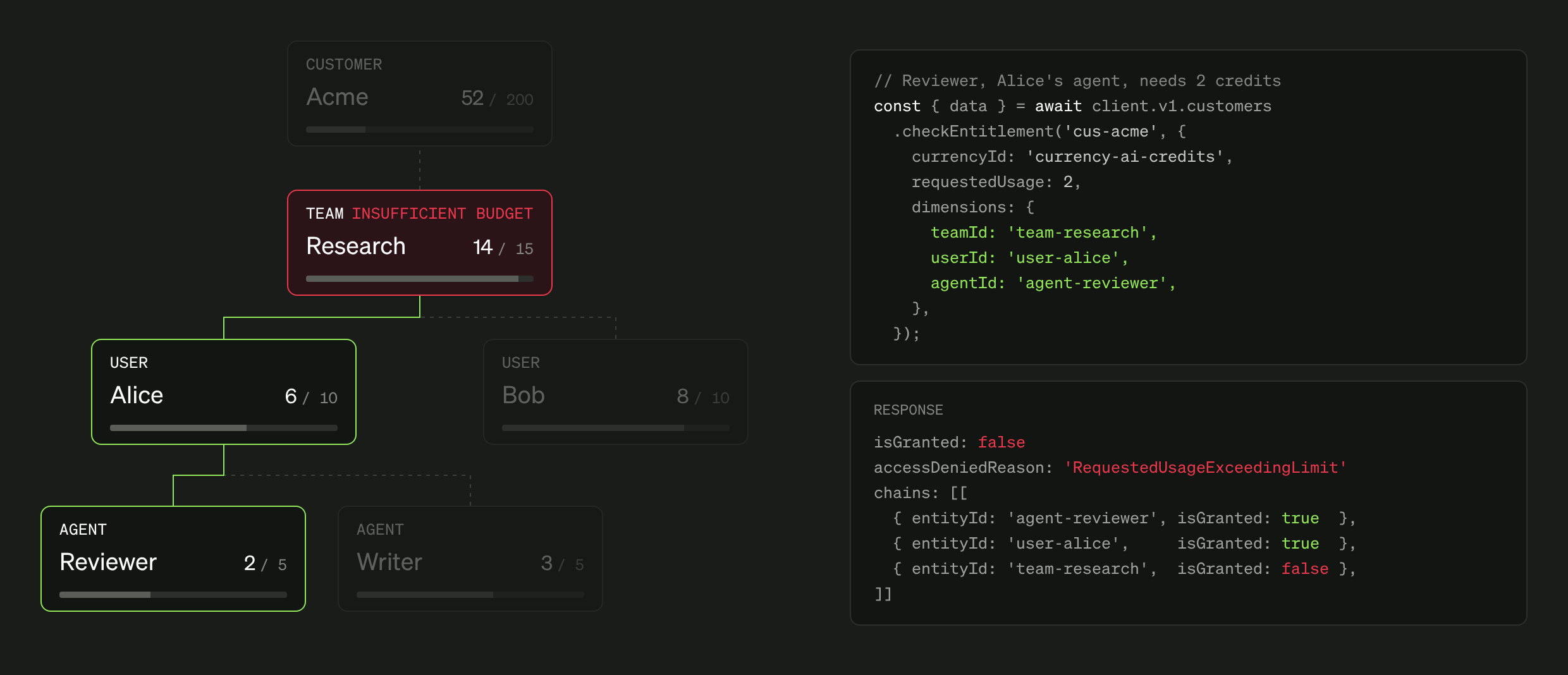
Until now, agents decided what to spend and you found out afterward. Stigg hands control back to you, at every level: Reserve & Settle holds each action's cost before it runs, and Governance keeps every team, user, and agent within a budget your customers set.
Ready to take control of AI spend? Connect Stigg in one command with npx @stigg/terminal, or talk to us for a tailored demo.
Prefer to read first? See the Reserve & Settle docs and Governance docs.