Entitlements
Entitlement logic doesn't belong in your codebase.
Every plan-limit check. Every hardcoded flag. Every pricing change that became an eng project. Stigg moves it into a real-time access layer, one API call.
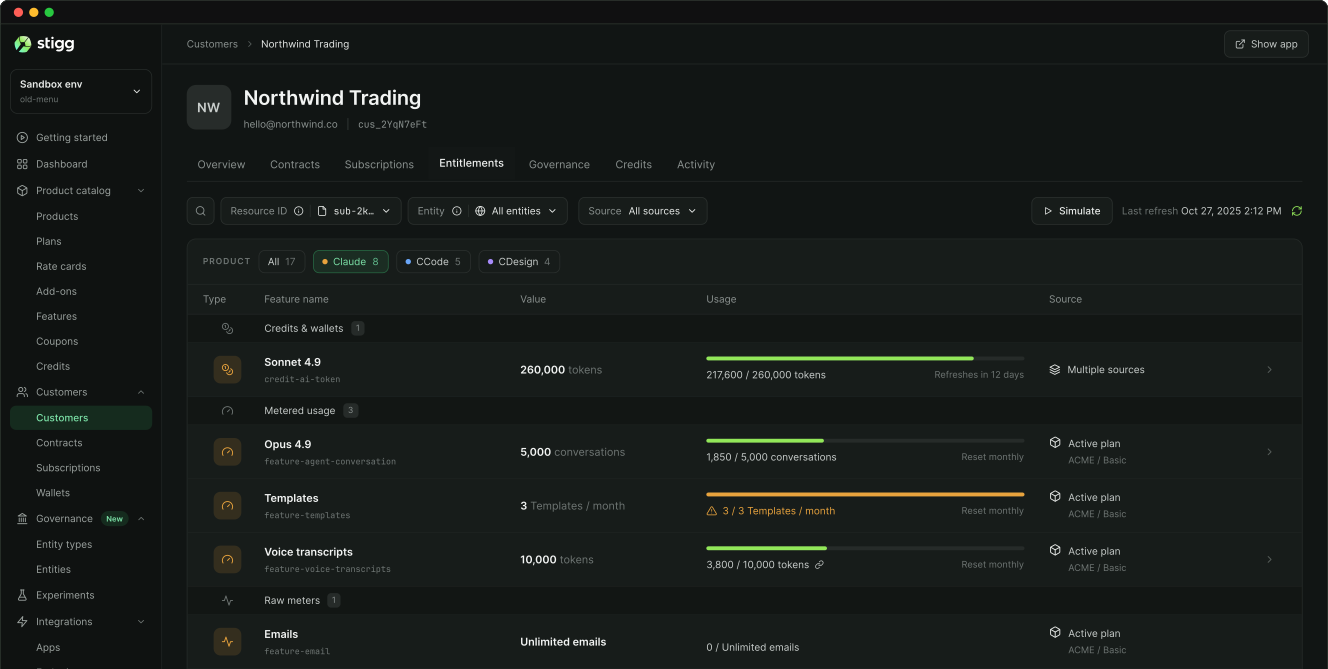
You already have an entitlements system. You just don't like it.
It works until a pricing change takes six weeks, not six hours. Until an enterprise account breaks on an assumption hardcoded three quarters ago. Until every launch is a billing project.
Billing tracks what was sold. Entitlements track what was fulfilled.
That distinction is about to become the most important one in enterprise software.
Billing knows the customer bought Pro with 10,000 API calls. But when request 10,001 lands mid-inference, who decides if it proceeds?
Features are what your product does.
Plans package them per customer.
Entitlements are the rules: what each customer can do, and how much.
Billing tells you what happened after the cycle closes. Entitlements decide what's allowed before the request completes.
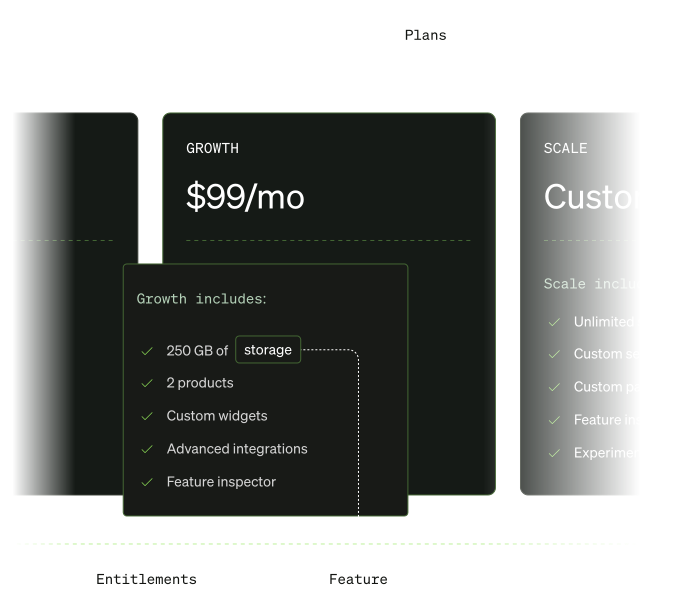
Entitlements are critical infra. Here’s why.
Entitlements used to be simple. Static flags, changed quarterly. A few tiers, a few gates. That world is gone.
AI companies ship features faster than commerce can keep up.
1,800 pricing changes across 500 companies in 2025. When you ship a new capability weekly, entitlements need to move just as fast. Hardcode it and every launch is a billing project.
Agentic usage demands millisecond-latency enforcement.
A human click gives you hundreds of milliseconds to check permissions. An agent firing 50 parallel calls against a shared pool doesn’t. "Reconcile later" means eat the cost or surprise the customer.
Enterprise buyers won't sign without governance.
Buyers aren't asking about dashboards. They're asking "can teams set their own budgets? Can I cap a runaway agent before it drains $50,000?" Those are deal requirements now.
Auditability on what was fulfilled, not just what was sold.
SOX requires provable controls over financial reporting. With usage-based revenue, what the contract says and what the customer received is an audit surface. If you can't prove what was fulfilled, you can't recognize the revenue.
One call.
One definitive answer.
Every entitlement check resolves to one question: does this customer have access to this feature, and on what terms?
Your app asks. Stigg answers with the effective entitlement computed from plan, add-ons, overrides, and credit balance. No feature-flag service. No custom middleware. No scattered if-statements. One query. One source of truth.
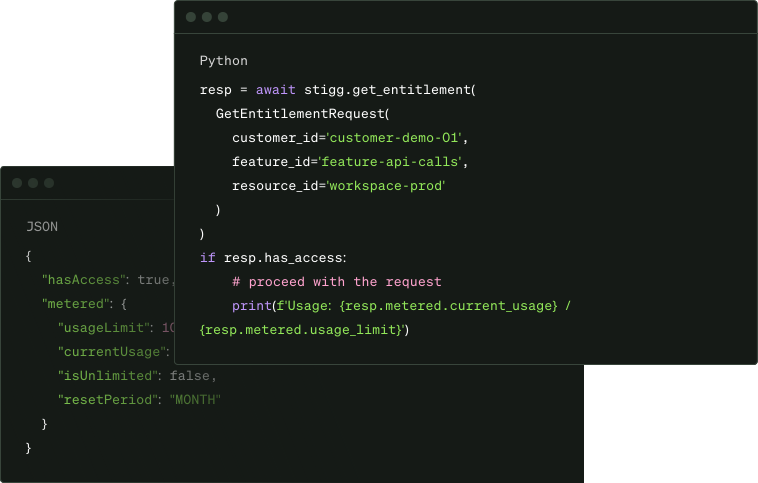
Boolean. Configuration. Metered. Credits. One interface.
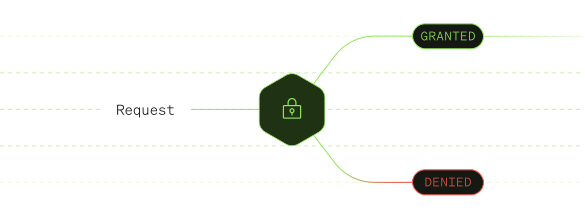
Boolean entitlements
Feature access as a binary gate. Premium support on or off. API access granted or denied. The pattern most teams hardcode first. Stigg makes it queryable, versionable, and changeable without a deploy.
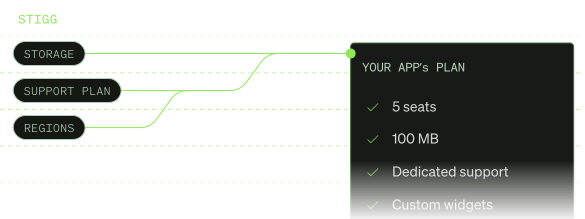
Configuration entitlements
The values that define what a plan means. Numeric limits (seats: 5, file size: 100MB, retention: 90 days). Enums (regions: US, EU, APAC; support: email, chat, dedicated). Change one in Stigg and every downstream system sees it immediately. No code change. No deploy.
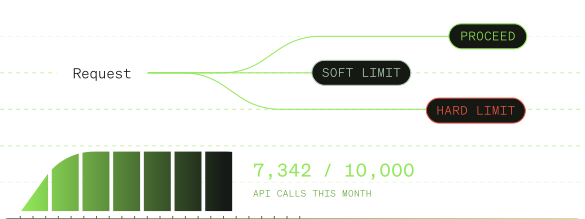
Metered entitlements
Usage tracked against a cap, with enforcement. 10,000 calls a month. 500 messages a day. Stigg tracks consumption, evaluates the limit on every request, and returns whether the next one proceeds. Hard limits block. Soft limits warn. You define the behavior.
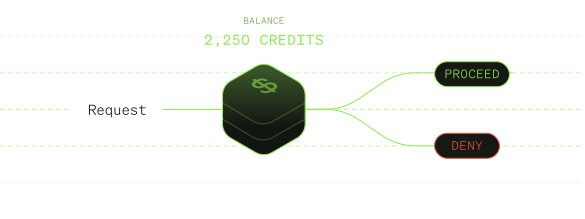
Credit entitlements
Prepaid balances consumed on usage. When the credits engine and entitlements layer work together, every deduction is also an access decision. Balance hits zero, access stops. No overdraft. No reconciliation surprises.
Entitlements that work the way your code already works.
Stigg treats entitlements like code: versioned, promotable, reversible, auditable. Deployment-pipeline rigor, applied to the commercial layer of your product.
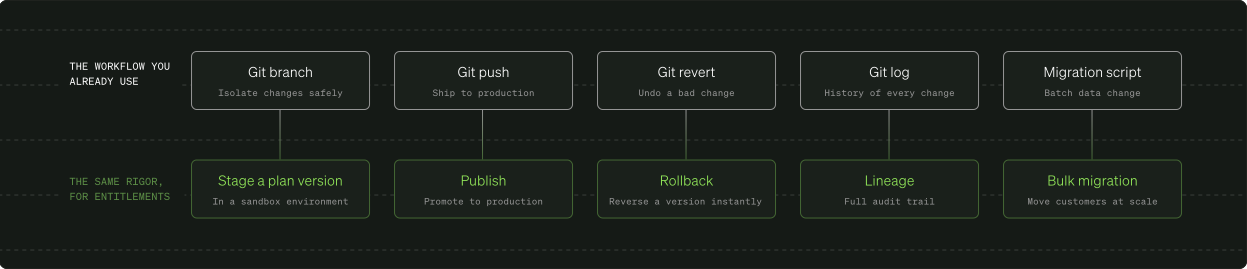
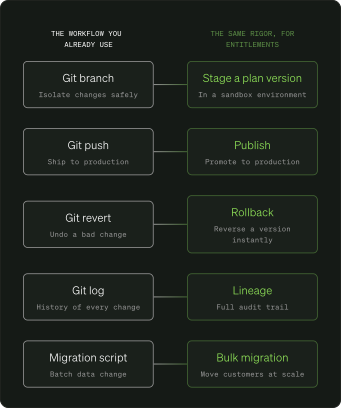
Version everything
Every plan and config is versioned. New versions don't touch existing subscribers. Inspect any customer's state at any point in time.
Promote through environments
Build in sandbox, validate in staging, promote to production when ready. No more changing a plan in prod and hoping.
Roll back safely
Roll back to a previous version. Existing subscribers keep their terms, new ones get the fix. Blast radius contained by design.
Migrate in bulk
Move customers off legacy plans with controlled rollout. Grandfathering, sunsets, and phased transitions are first-class operations, not one-off scripts.
Full lineage
Every change tracked: who, when, and the prior state. Reconstruct any customer's entitlement state at any point in time.
Time To Deploy
In the request path. Millisecond. Fail-safe.
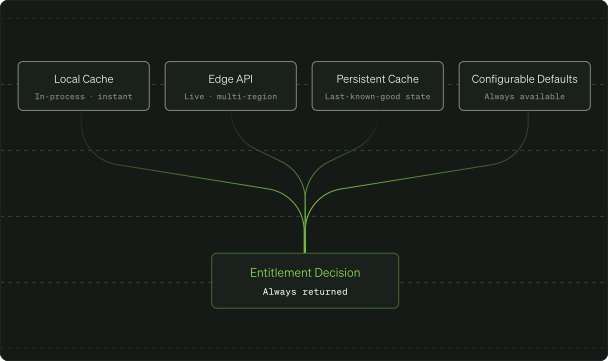
Built for the hot path from day one, not bolted onto a billing system. Fast enough to call synchronously on every request. Reliable enough that you never think about it.
Edge-delivered entitlements
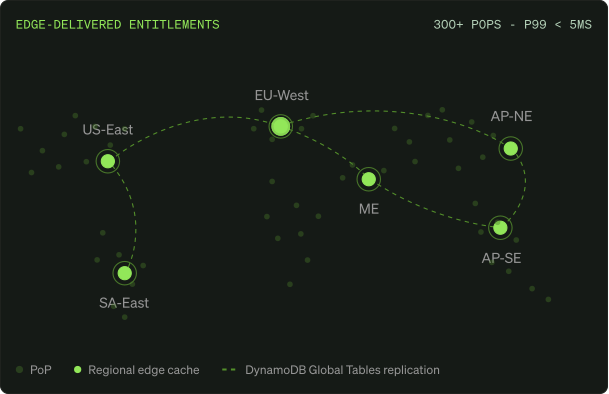
The Edge API runs on a CDN with 300+ points of presence, executing at the nearest regional edge. DynamoDB Global Tables replicate state across regions. P99 check latency stays under 5ms.
The Sidecar
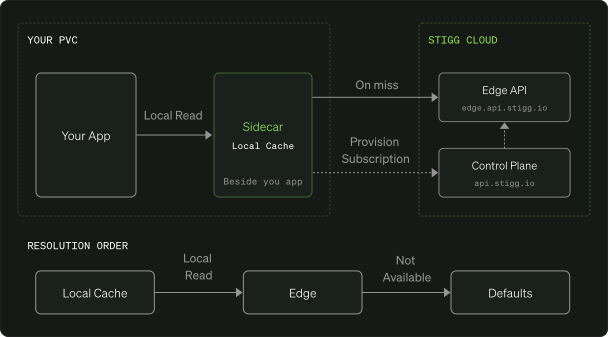
A lightweight service beside your app, inside your VPC. Reads resolve from a local cache, no round trip. Miss hits the Edge. Edge down, it serves cache. Cache empty, it uses defaults.
Multi-region, self-healing
Active-passive across regions and AZs. Automated failover: under 10s across zones, under a minute across regions. Async replication. Point-in-time backups. Durable queues retry on sync errors. Every call audited.
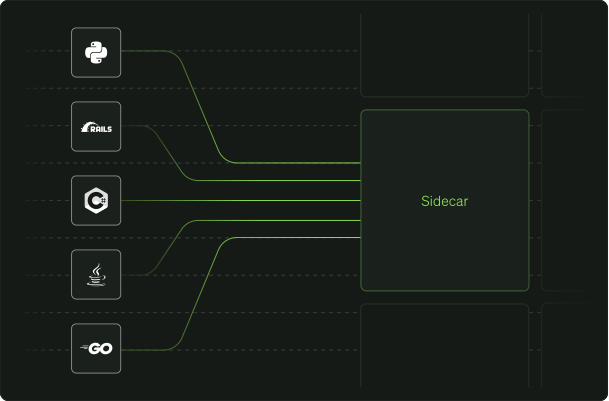
Language-neutral
The Sidecar exposes gRPC over Protocol Buffers, so Python, Go, Java, and Ruby all call it the same way. Node.js gets equivalent performance natively through the SDK, no Sidecar needed.
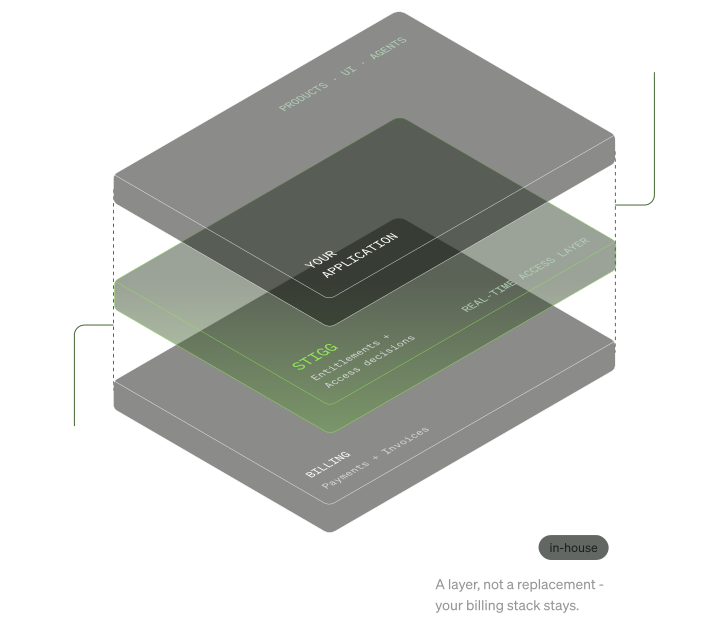
Keep your billing stack. Add the access layer it's missing.
Stigg isn't a billing replacement. Your billing stack keeps doing payments, invoices, and revenue recognition. Stigg sits above and answers in real time what billing can't: is this customer allowed to do this, right now?
Subscriptions provision entitlements automatically, plan changes propagate, and limits are enforced before billing even knows.
Works seamlessly alongside Stripe, Zuora, Chargebee, or in-house.
Three years in production.
The edge cases are already solved.
Running in production since 2022, powering access decisions for enterprises that don’t tolerate downtime, inaccuracy, or 3am surprises.





“Something new I said in our status meeting on entitlements today: ‘I think all things are possible through the power of Stigg’.”