%20(1).png)
Guides
Best Metered Billing Software: 9 Tools Ranked (2026)
I tested 9 metered billing software platforms for metering accuracy, pricing, and real-time enforcement, with honest pros, cons, and prices for 2026.

Comparing eight enterprise billing platforms for AI products in 2026. What each one is built for, what it costs, and where it stops working at scale.


Most enterprise billing platforms in 2026 were built for subscriptions and extended to handle usage later. If your product charges by token, inference call, or compute minute, that matters more than any feature list suggests.
Here is what actually separates the eight platforms worth evaluating in 2026:
We cover what each platform actually does well, where the limits show up in production, and which teams each one genuinely serves.
Disclaimer: Prices are subject to change without notice. Always visit the official company websites for the most up-to-date pricing information.
I evaluated each platform against the specific requirements AI product teams actually encounter in production, like real-time usage ingestion, credit-based pricing, multi-dimensional metering, enterprise account hierarchies, and how much engineering work each platform puts back on the product team.
Where free trials or demos were available, I tested them directly. Pricing was taken from official pages only.
This helped distinguish platforms built for usage-based pricing from the ground up versus those that added it later.
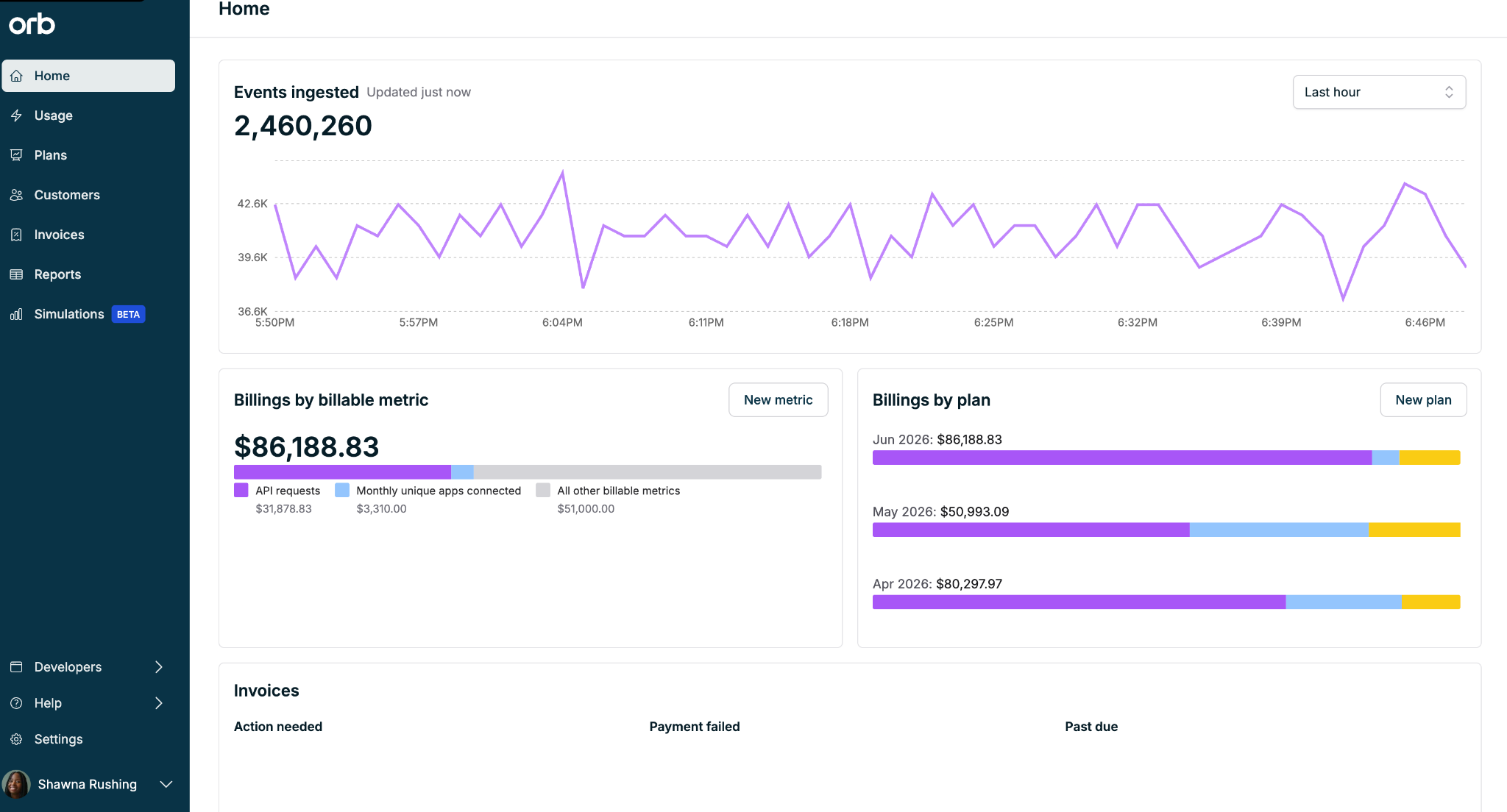
What it does: Event-driven billing engine that ingests high-volume usage data, translates it into billable revenue, and connects monetization decisions to an auditable data layer.
Best for: API and AI infrastructure companies with developer-heavy teams who need accurate, high-volume usage metering and finance-grade invoice auditability.
Orb treats usage event data as a competitive asset rather than something to compress and discard after invoicing. Revenue Graph, their core event store, keeps every billing decision traceable back to raw usage so contracts that change retroactively recalculate.
For AI products still figuring out monetization, it supports token-based, per-action, and outcome-based pricing with a Simulations feature that lets you stress-test new pricing against real historical data before anything goes live.
Worth factoring in: Orb was acquired by Adyen in June 2026. The product continues operating as standalone, but the roadmap is no longer fully independent.
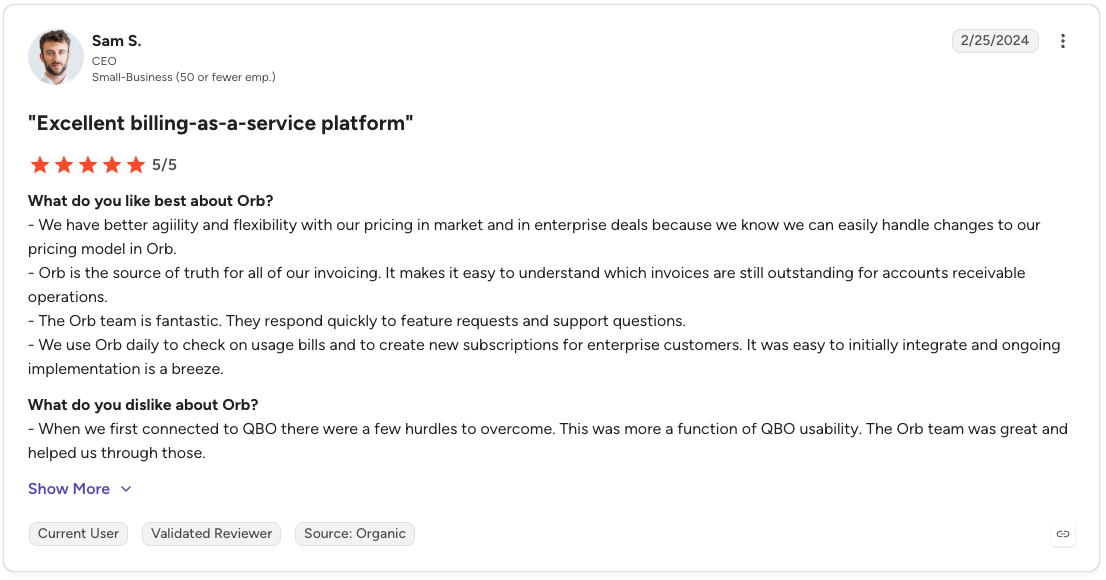
Pro: "We have better agility and flexibility with our pricing in market and in enterprise deals because we know we can easily handle changes to our pricing model in Orb. Orb is the source of truth for all of our invoicing. It makes it easy to understand which invoices are still outstanding for accounts receivable operations." Sam S., G2 Review (February 25, 2024)
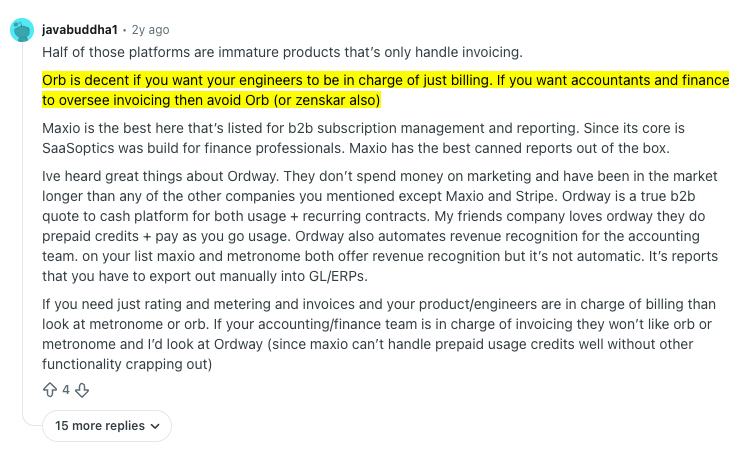
Con: "Orb is decent if you want your engineers to be in charge of just billing. If you want accountants and finance to oversee invoicing, then avoid Orb." Reddit user javabuddha1 (July 9, 2024)
No pricing is listed publicly. Evaluation starts with a sales form asking for company type, team size, and billing requirements.
Bottom Line
If your team ships API or AI infrastructure and billing accuracy is genuinely load-bearing, Orb is worth a serious look.
The event retention architecture solves a real pain point most billing tools ignore, and Simulations is the kind of feature that prevents expensive mistakes when you're changing how you charge.
The Adyen acquisition is the asterisk. The product is good today, but where the roadmap goes over the next few years is worth asking in the sales conversation.
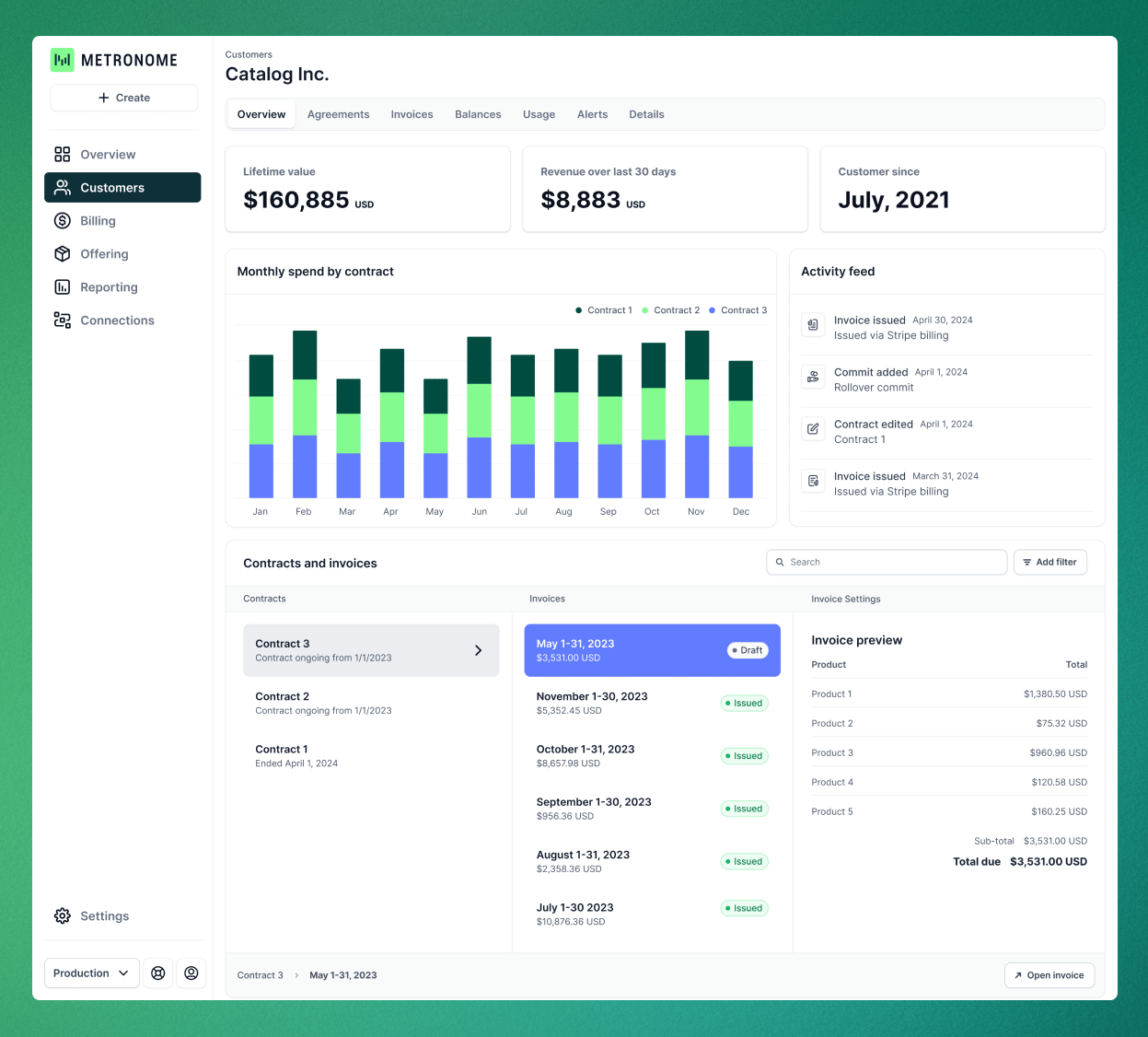
What it does: Usage-based billing platform that turns raw product events into accurate, configurable invoices across self-serve, enterprise, and marketplace motions.
Best for: Fast-growing AI and SaaS companies that need to iterate on pricing frequently without pulling engineering into every change.
Metronome's core bet is that pricing changes should never require touching the data pipeline underneath them.
SQL-based billable metrics run directly on raw events, so custom enterprise contracts, per-customer overrides, retroactive amendments, and scheduled price changes all flow through a centralized rate card model rather than a growing pile of one-off pricing tables.
For AI products at enterprise scale, that translates to handling token-based and consumption models across high-volume event streams while giving finance teams enough independence to manage complex contracts without filing an engineering ticket.
Metronome was acquired by Stripe in 2026 and operates as a standalone product, but teams outside the Stripe ecosystem should verify integration fit before committing.

Pro: "We recently switched over to Metronome and love it, besides a couple of tweaks it's been helpful." Reddit user Big-Principle2939 (July 17, 2025)

Con: "Metronome is very expensive and is the only rating and metering solution you listed that works for enterprise-level usage volumes." - Reddit user javabuddha1 (July 9, 2024)
Two tiers are available.
Metronome earns its place here by solving a problem engineering teams quietly dread, being the bottleneck every time someone wants to change a price.
The rate card architecture is genuinely well-designed for companies whose pricing model is still evolving, and the finance team's independence is real.
If you are deep in the Stripe ecosystem, the native integration makes the decision easier. If you are not, it is still a strong platform, but worth confirming how cleanly it fits your existing payments stack before signing.
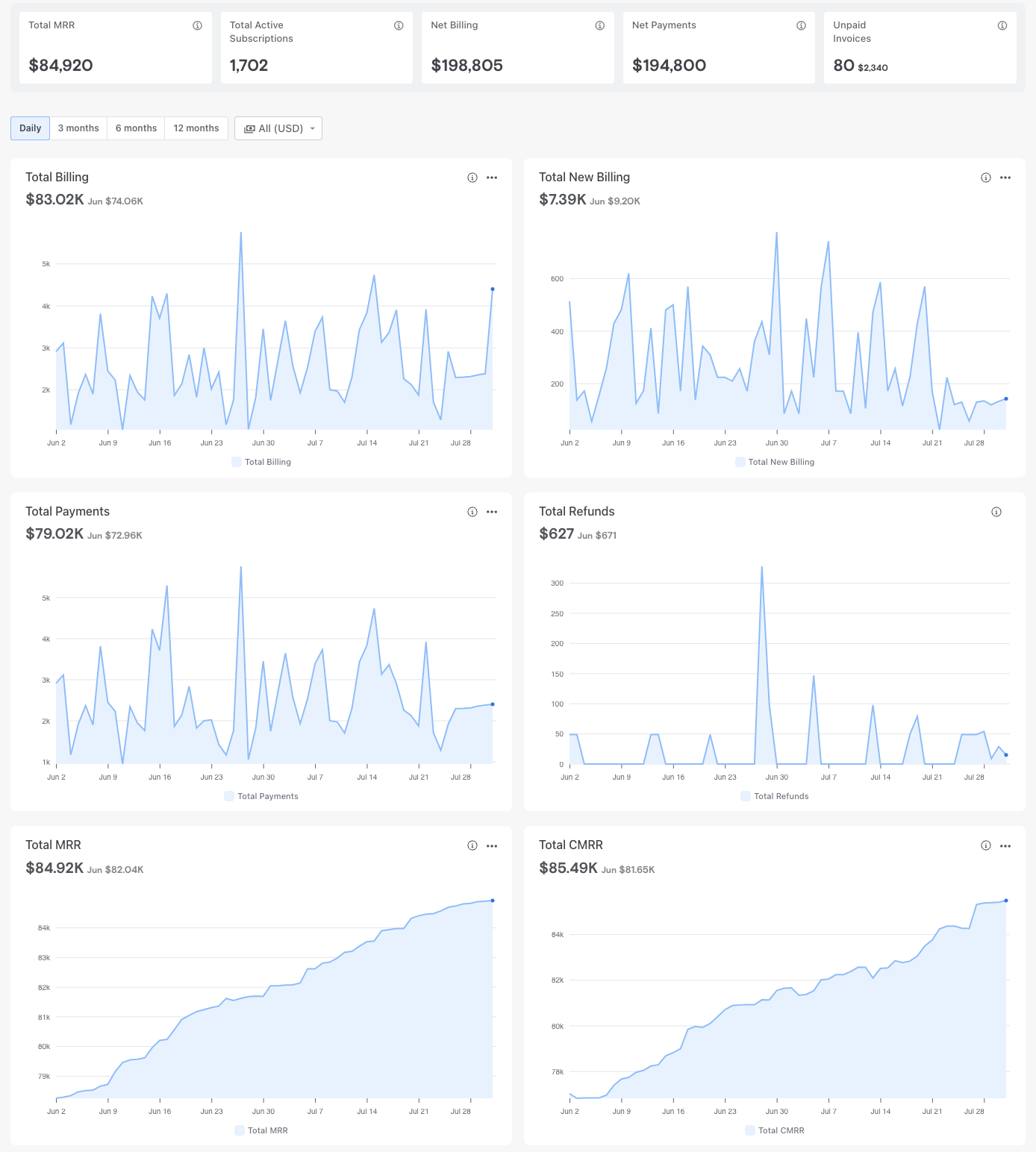
What it does: End-to-end billing and monetization platform covering usage metering, CPQ, revenue recognition, and subscription management across self-serve and sales-led motions.
Best for: AI companies running both product-led and sales-led growth that need billing, quoting, and revenue recognition to operate from a single system without stitching tools together.
Chargebee is built on the premise that billing infrastructure should bend to how your business sells rather than the other way around. That shows up in how CPQ sits directly on top of the billing engine, so what sales quotes is always what finance bills, with no re-keying of contract terms at close.
For AI products scaling into enterprise, outcome-based and consumption pricing models survive the handoff from quote to invoice intact, and revenue recognition runs against the same data without a separate reconciliation exercise.
The breadth of the platform means there is meaningful surface area to configure, and if you don’t have dedicated RevOps or finance ownership, you might find the initial setup heavier than expected.
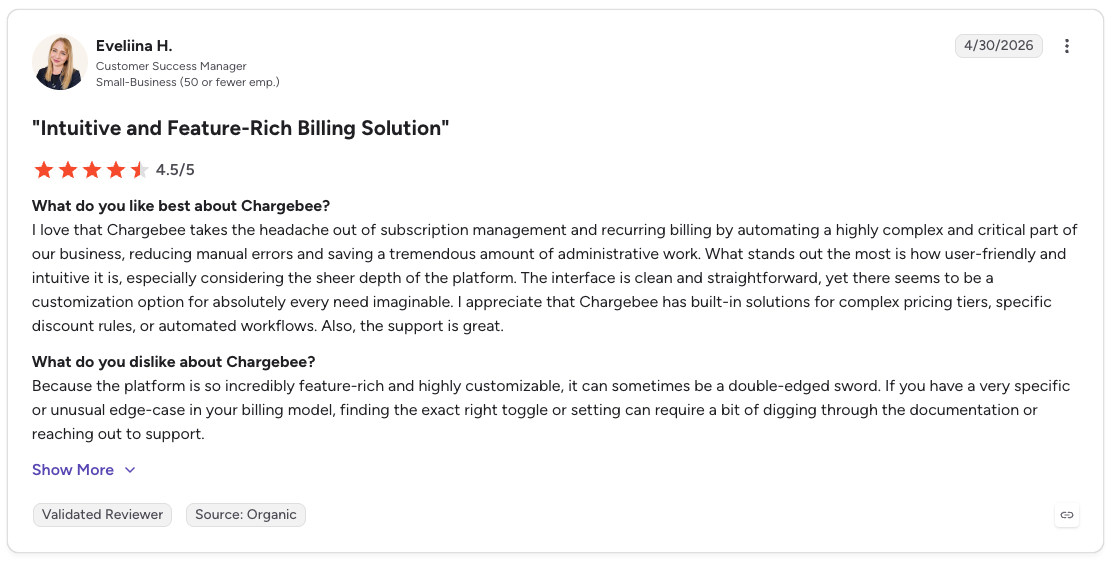
Pro: "I love that Chargebee takes the headache out of subscription management and recurring billing by automating a highly complex and critical part of our business, reducing manual errors and saving a tremendous amount of administrative work." Eveliina H., G2 Review (April 30, 2026)

Con: "Reporting isn’t what I expected. Also, a few items that were introduced, such as RAMP, along with some invoice- and email-related features, aren’t provided with full context, which makes them harder to understand and use." Anand K., G2 Review (April 15, 2026)
Three tiers are available.
Chargebee makes the most sense when your billing problem is actually three problems at once: quoting, invoicing, and revenue recognition all need to stay in sync as your pricing model evolves.
For AI companies selling consumption- or outcome-based models into enterprise while also running a self-serve motion, having those three things on one platform is a real operational advantage.
If you only need metering and invoicing, the platform may be more than you need right now, but it is worth considering whether you will need the rest of it in twelve months.

What it does: Integrated billing platform that unifies subscriptions, usage-based billing, invoicing, tax, and revenue recognition into a single payments-native stack.
Best for: AI and SaaS companies that want to consolidate their entire quote-to-revenue cycle on one platform without managing separate billing and payments infrastructure.
Stripe Billing's core argument is that payments and billing should live on the same infrastructure rather than being stitched together after the fact.
That means metering, invoicing, tax, and payment processing share one data model, so a pricing change does not require coordinating across multiple vendors.
Worth knowing before you price it out: revenue recognition, accounts receivable aging, and multiprocessor support all sit behind additional costs on top of the base plan.
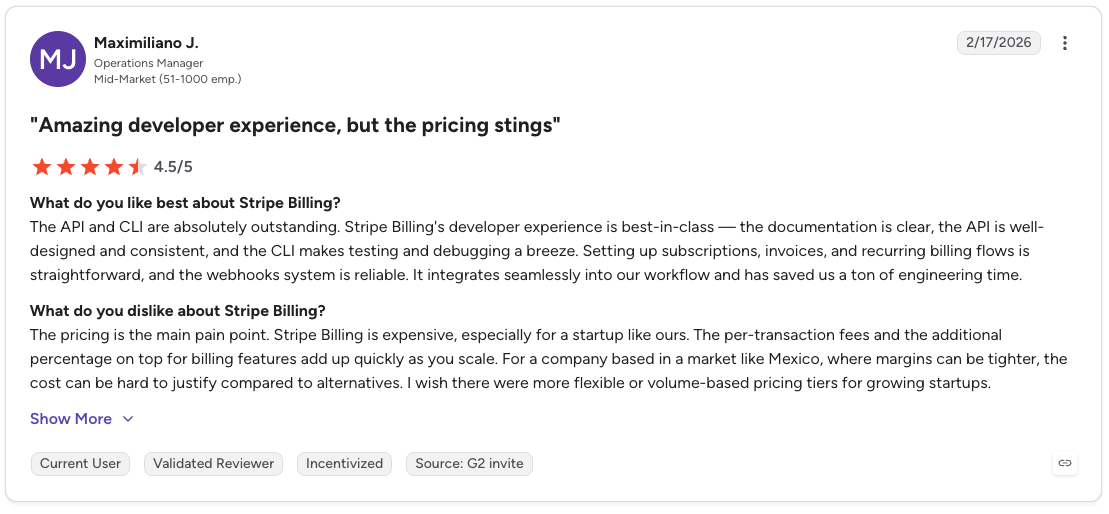
Pro: "The API and CLI are absolutely outstanding. Stripe Billing's developer experience is best-in-class. The documentation is clear, the API is well-designed and consistent, and the CLI makes testing and debugging a breeze. Setting up subscriptions, invoices, and recurring billing flows is straightforward, and the webhooks system is reliable." Maximiliano J., G2 Review (February 17, 2026)
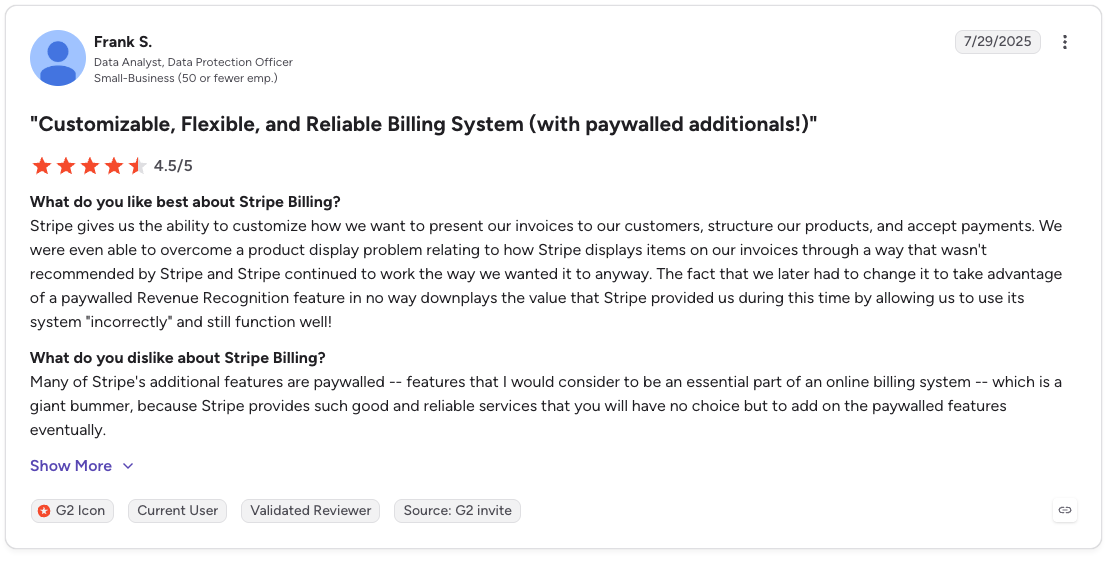
Con: "Many of Stripe's additional features are paywalled, features that I would consider to be an essential part of an online billing system, which is a giant bummer, because Stripe provides such good and reliable services that you will have no choice but to add on the paywalled features eventually." Frank S., G2 Review (July 29, 2025)
Three options are available for Stripe Billing pricing:
Stripe Billing makes the most sense when you are already running payments on Stripe and want to eliminate the coordination overhead between billing and payments infrastructure. The metering capacity is enterprise-grade.
If you are evaluating Stripe Billing for a serious enterprise deployment, price out the full feature set before comparing it against purpose-built alternatives.
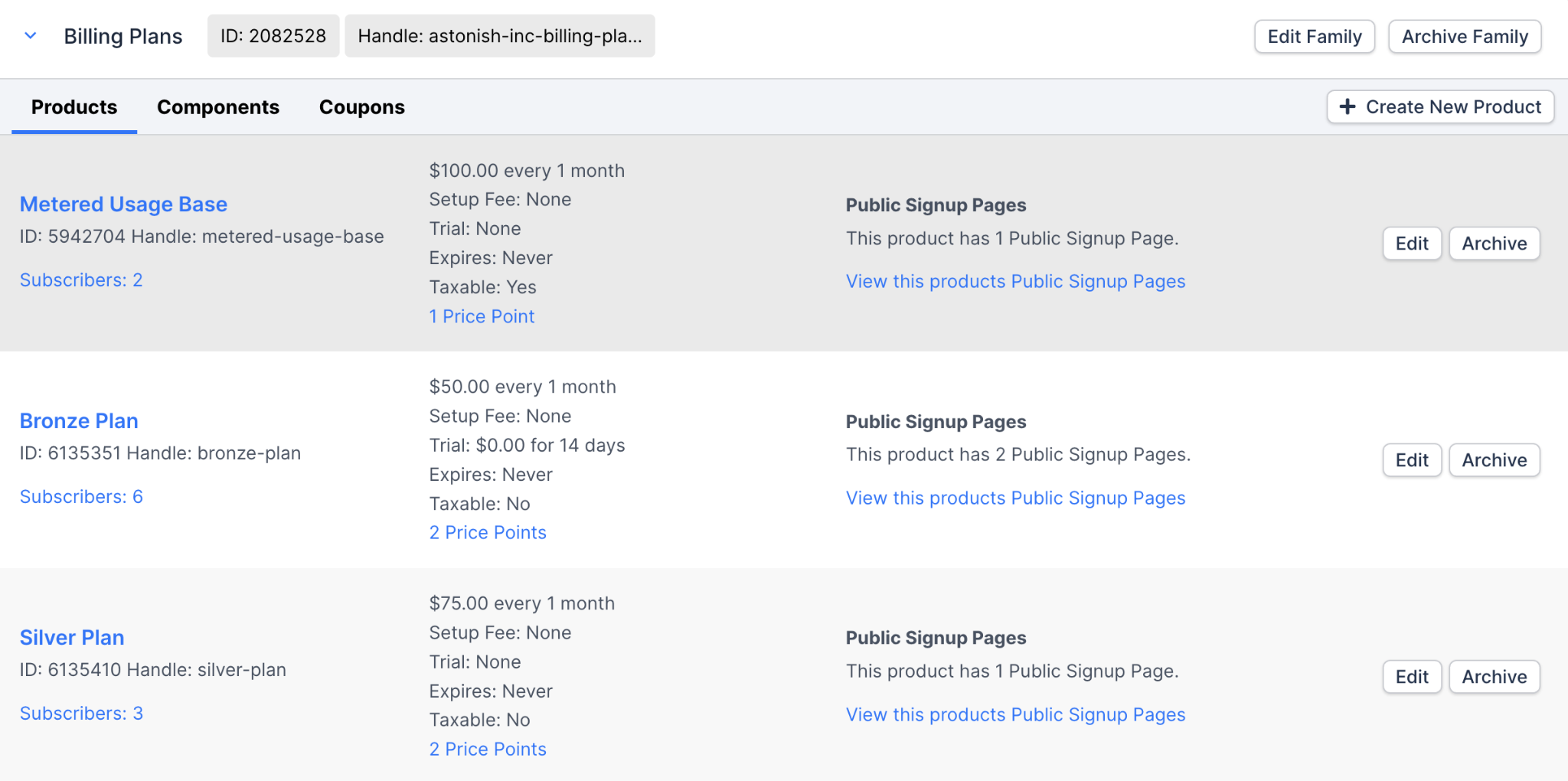
What it does: Subscription billing and revenue management platform covering usage metering, automated collections, SaaS metrics reporting, and revenue recognition for B2B companies.
Best for: B2B SaaS companies that need billing automation and finance-grade reporting to operate from the same system without a separate analytics layer.
The idea behind Maxio is that billing data and financial reporting should never need to be reconciled because they should never live in separate systems.
In practice, that means ARR, MRR, churn, revenue waterfalls, and cohort analysis all pull from the same live billing data that generated the invoices, which saves finance teams a lot of painful end-of-period work.
It handles usage-based and hybrid pricing reasonably well for AI and SaaS products, with both real-time streaming and batch import options for usage data and dunning cadences you can configure by customer attributes like ACV or renewal status.
The catch is that the capabilities that matter most for enterprise scale, including multi-entity support, advanced revenue recognition, and metering, are all locked behind the Scale tier and require a custom quote to access.
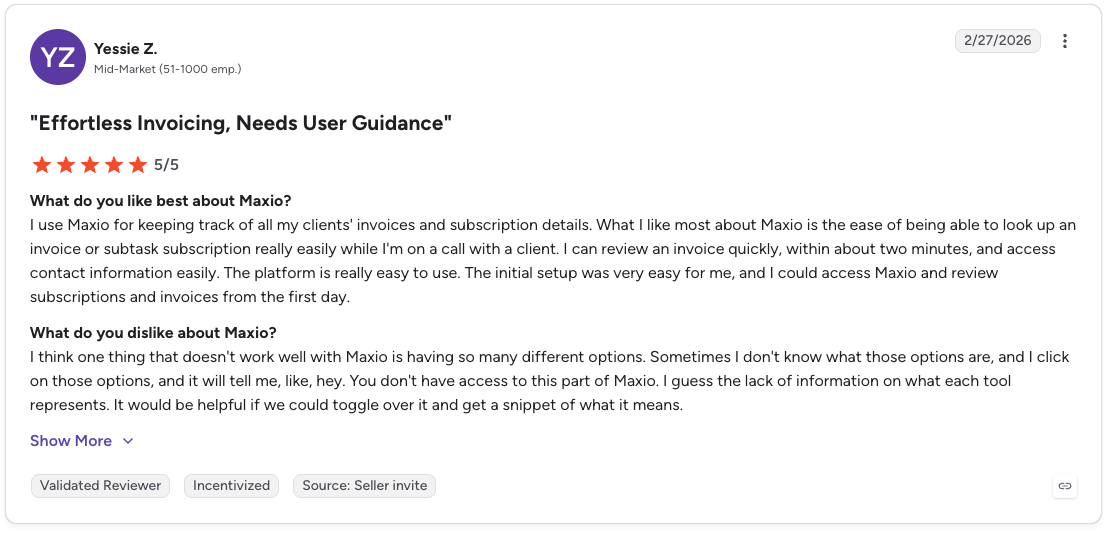
Pro: "What I like most about Maxio is the ease of being able to look up an invoice or subtask subscription really easily while I'm on a call with a client. I can review an invoice quickly, within about two minutes, and access contact information easily. The platform is really easy to use." Yessie Z., G2 Review (February 27, 2026)

Con: "I think the amount of bolt on and add ons that you need to use all of the functions is frustrating. Right now, we have to bring in Maxio advanced billing and pull from multiple different accounts to get into the system. The ability to use one system would be great. Also, the initial setup was a bit laborious, with a lot of steps and check-in calls, making it a longer process than expected." Shane H., G2 Review (March 9, 2026)
Maxio is a good fit when having billing operations and financial reporting in the same tool matters more than having the deepest usage metering on the market.
The reporting is genuinely strong for B2B SaaS, and most subscription challenges get handled without engineering involvement.
For AI products with heavy metering requirements or complex enterprise contracts, you'll hit the Scale tier ceiling faster than expected.
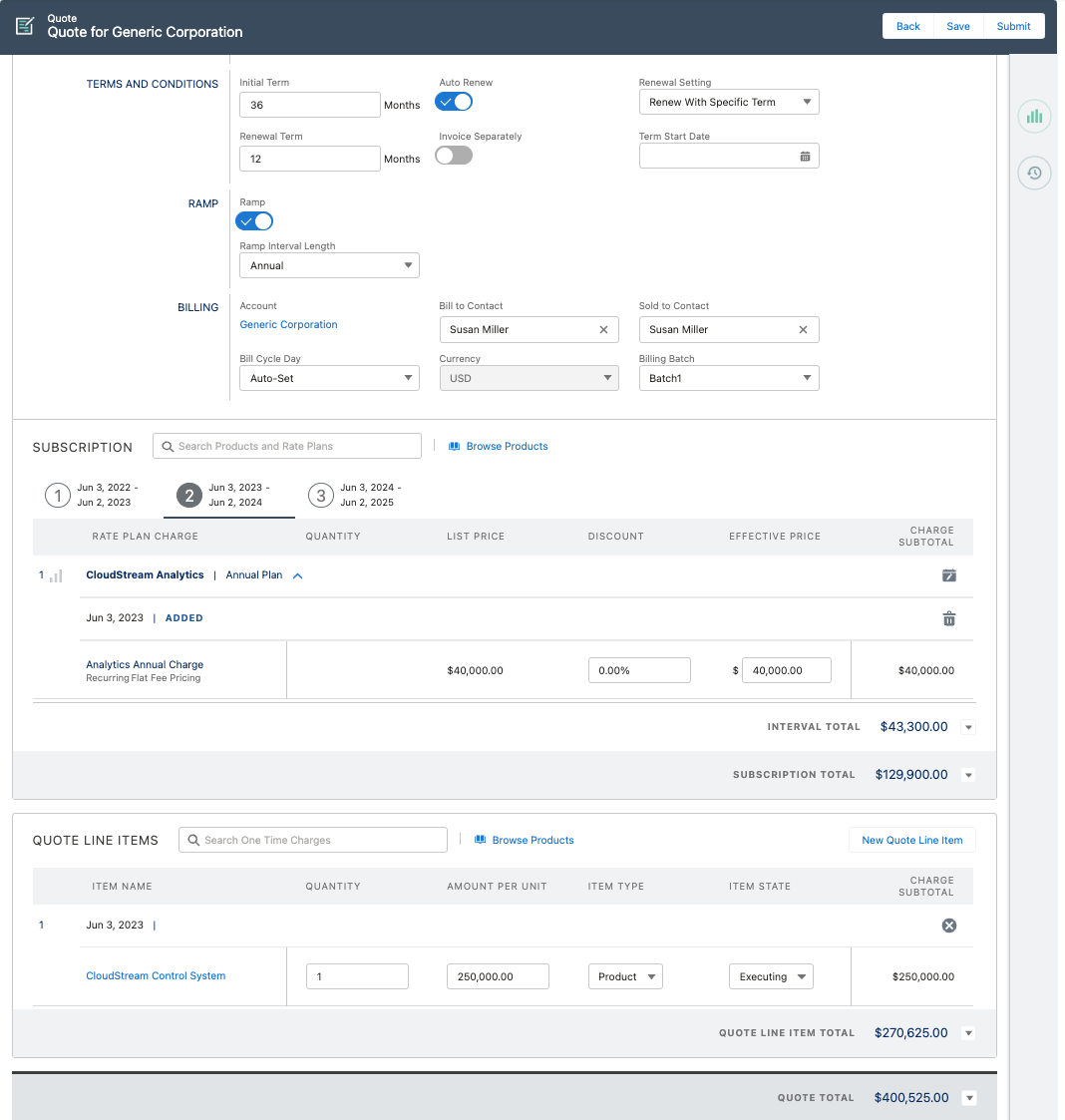
What it does: End-to-end monetization platform covering subscription billing, usage metering, CPQ, revenue recognition, collections, and payments for large enterprises managing complex recurring revenue models.
Best for: Enterprise finance and revenue operations teams that need a single platform governing the full quote-to-cash cycle across multiple entities, geographies, and pricing models.
Zuora sits at the intersection of billing and finance governance in a way most platforms don't attempt. Quoting, billing, collections, payments, and revenue recognition all integrate into a single audit-ready system, and the company claims that no public customer has ever failed a revenue audit conducted on it.
At enterprise scale, it handles billions of usage events per day, supports token-based and consumption pricing alongside subscriptions, and provides finance teams with built-in AI-powered anomaly detection and forecasting.
The tradeoff is implementation weight. Zuora is a serious platform, and if you’re expecting to go live quickly without dedicated implementation resources, you will be disappointed.
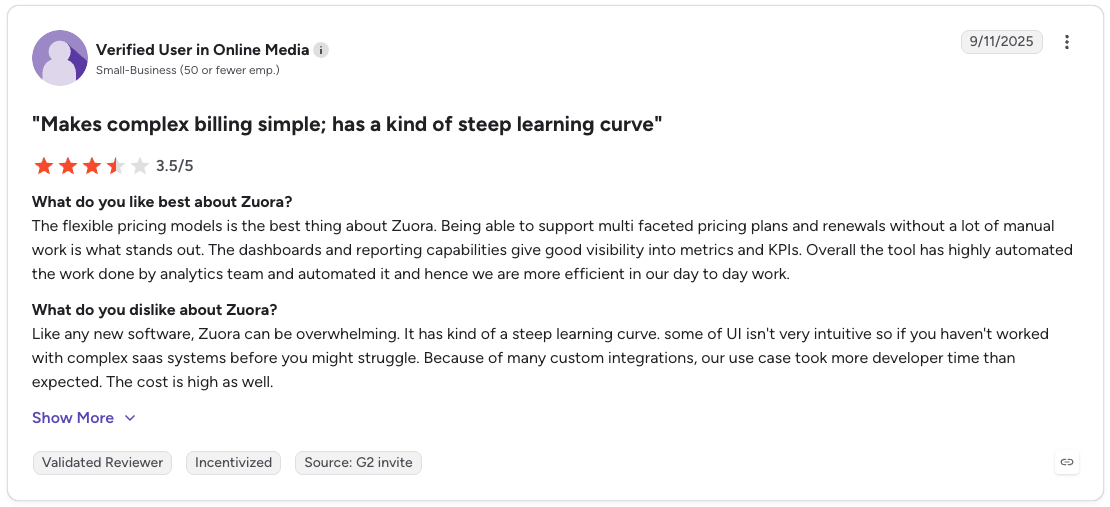
Pro: "The flexible pricing models are the best thing about Zuora. Being able to support multi-faceted pricing plans and renewals without a lot of manual work is what stands out. The dashboards and reporting capabilities give good visibility into metrics and KPIs." Verified User in Online Media, G2 Review (September 11, 2025)
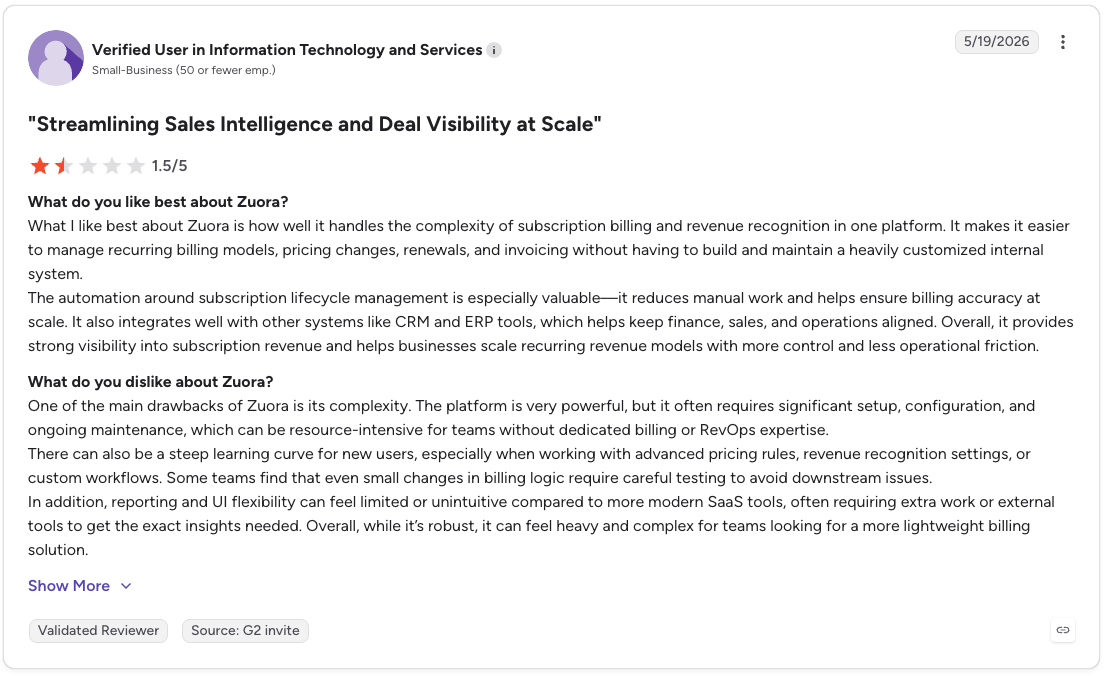
Con: "One of the main drawbacks of Zuora is its complexity. The platform is very powerful, but it often requires significant setup, configuration, and ongoing maintenance, which can be resource-intensive for teams without dedicated billing or RevOps expertise." Verified User in Information Technology and Services, G2 Review (May 19, 2026)
No pricing is listed publicly. All plans require requesting a call through a sales form asking for the company, job title, and a description of what you need.
If billing has become a finance governance problem at enterprise scale, with multiple entities, complex contracts, and audit requirements that actually need to hold up, Zuora is built for exactly that.
The metering infrastructure handles the volumes AI products generate and the platform has a long track record at that level. Just go in with clear eyes on implementation. The value doesn't show up until it's configured properly, and that takes real resources.

What it does: Open-source enterprise billing platform that handles usage metering, credit workflows, hybrid pricing, and entitlements for AI and SaaS companies in real time.
Best for: AI-native teams that need production-grade enterprise billing with the option to self-host, avoid payment gateway lock-in, and keep full control over their data and infrastructure.
Flexprice is built for teams that want billing infrastructure on their own terms, cloud-hosted or fully on-premises. For AI companies with data residency requirements or slow security reviews, SOC 2 Type II compliance and on-prem deployment mean procurement is largely handled before it starts.
The production features are worth noting: credit pooling across parent-child hierarchies, multi-year ramped contracts that update automatically, and granular usage filtering within a single event stream by metadata like model type or region.
However, it's younger and less battle-tested than Orb or Zuora, and that's a real consideration for mission-critical revenue infrastructure.

Pro: "If you’re moving to self-serve with multiple license types and contracts, Flexprice can sit on top of Stripe and handle usage, entitlements, and subscription logic without forcing you into rigid plans." Civil-Custard-8618, Reddit Comment (January 16, 2026)
Four tiers are available, plus the open-source version, which can be self-hosted for free.
Not many enterprise billing platforms offer genuine on-prem deployment, and that's where Flexprice stands out. For AI teams with data residency requirements or vendor lock-in concerns, it's worth a serious look.
The credit pooling and usage filtering architecture holds up against real enterprise complexity.
The maturity question deserves careful attention, though. It's a younger platform than Orb or Zuora, and teams running mission-critical revenue infrastructure at high volumes should do thorough due diligence before committing.

What it does: Enterprise billing platform built natively inside NetSuite, handling complex contracts, usage-based pricing, revenue recognition, and Salesforce integration without middleware dependencies.
Best for: Finance and revenue accounting teams already running NetSuite that need to automate complex subscription, usage, and hybrid billing without introducing a third-party system to maintain.
Zone's argument is that billing and your ERP should be the same system rather than two systems trying to stay in sync. ZoneBilling runs natively inside NetSuite, which means contract amendments, usage calculations, and revenue recognition all happen in the same place finance already uses for reporting and close.
The practical result is that usage flows directly into NetSuite invoicing, ASC 606 and IFRS 15 recognition runs automatically, and Salesforce CPQ amendments update billing without anyone manually rebooking anything.
It works exactly as well as that sounds, with the obvious caveat that everything above assumes NetSuite is already in the picture.

Pro: "We process transactions from different sources, and the platform makes it easier to monitor statuses without constantly switching between systems. I also appreciate how quickly transaction records can be searched when resolving client queries or reviewing payment history." Olivia S., G2 Review (May 21, 2026)
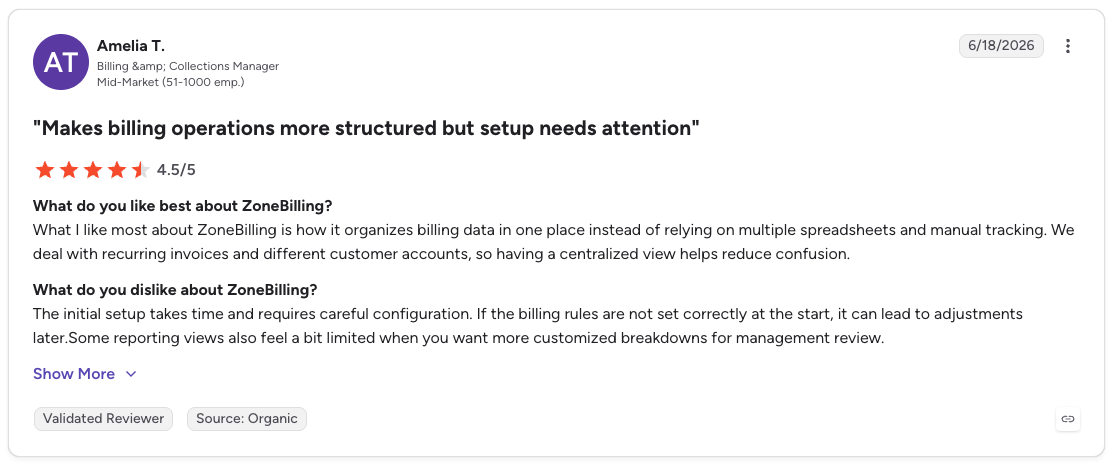
Con: "The initial setup takes time and requires careful configuration. If the billing rules are not set correctly at the start, it can lead to adjustments later. Some reporting views also feel a bit limited when you want more customized breakdowns for management review." - Amelia T., G2 Review (June 18, 2026)
No pricing is listed publicly. Evaluation starts by booking a demo through a form asking which Zone products you are interested in, covering quote to cash, treasury, record to report, and payroll management.
Zone makes a strong case for finance teams already living in NetSuite whose billing need have outgrown what spreadsheets and manual processes can handle.
The native architecture removes an entire category of problems that middleware-dependent billing systems create, and the audit trail integrity is genuinely enterprise-grade.
Outside of a NetSuite environment, the conversation ends quickly, but inside one, it's one of the stronger options on this list.
The right answer depends on what your pricing model actually is and where billing ownership lives in your organization.
Choose Orb if you:
Choose Metronome if you:
Choose Chargebee if you:
Choose Stripe Billing if you:
Choose Maxio if you:
Choose Zuora if you:
Choose Flexprice if you:
Choose Zone if you:
Skip this category entirely if:
No single platform wins across the board. The right choice comes down to two questions: how complex your pricing model actually is, and who owns billing in your organization.
Orb and Metronome are the strongest starting points for AI infrastructure with high usage volumes. Chargebee is the most complete option if you run both self-serve and enterprise motions. Stripe Billing is the obvious call if you are already on Stripe.
Maxio fits when finance is driving the decision. Zuora is for when billing has become a governance problem at scale. Flexprice is the only serious option if on-prem deployment is a hard requirement. Zone is exceptional inside NetSuite and a non-starter outside it.
One thing worth keeping in mind: Every platform on this list tells you what was consumed after the fact. The layer that decides what a customer should be allowed to do before usage happens is a different problem entirely, and one most AI product teams hit sooner than they expect.
Every platform on this list turns usage into invoices accurately and compliantly. That's a real problem worth solving. But for AI products, there's a layer none of them were built to handle.
Billing records what happened, but it’s the enforcement layer that decides what happens next.
When an AI agent burns through a monthly credit allocation in a single session, when two concurrent requests overdraw the same balance, when an enterprise customer's team hits their limit mid-sprint, the billing platform finds out after the fact. By then, the cost is already locked in.
Stigg sits above billing as the usage runtime for AI products. Entitlements, credits, usage limits, and spend governance resolve synchronously in the request path before compute runs.
Here’s what that means in practice for engineering teams:
Every billing platform on this list handles what happens after usage occurs. Stigg handles what's allowed before it does. The Stigg docs show how the enforcement layer fits into a stack that already has billing covered.
Enterprise billing software is a platform that automates invoicing, revenue recognition, usage metering, and payment collection for companies with complex pricing models and large customer bases.
Unlike basic billing tools, enterprise billing software handles multi-entity structures, contract complexity, audit-ready reporting, and integrations with ERP and CRM systems at scale.
The main difference between enterprise billing software and small business billing tools is the complexity they're built to handle. Small business tools manage straightforward recurring invoices and payments.
Enterprise billing software handles multi-entity structures, usage-based and hybrid pricing models, revenue recognition compliance under ASC 606 and IFRS 15, complex contract terms, and high-volume event ingestion that small business tools were never designed for.
Enterprise billing software handles usage-based pricing by ingesting product usage events in real time, aggregating them into billable metrics, and applying pricing rules to generate invoices.
The quality of this capability varies significantly across platforms. Tools like Orb and Metronome were built for usage-based billing from the ground up. Others like Chargebee and Zuora added it on top of a subscription core, which shows at scale.
Implementation timelines for enterprise billing software range from a few weeks to over a year, depending on the platform and the complexity of your pricing model.
Orb and Chargebee can be up and running in weeks for teams with straightforward requirements. Zuora implementations typically run six to twelve months and require dedicated implementation resources or a certified partner to configure properly.
When evaluating enterprise billing software, the most important factors are whether usage-based billing is a native capability or an add-on, how much custom engineering the platform requires to maintain, whether it supports the contract structures your sales team actually closes, and how billing data flows into your finance and reporting systems.
Teams that skip the last point tend to discover the gap at month-end close when reconciliation takes longer than expected.
%20(1).png)
%20(1).png)