Industry Insights
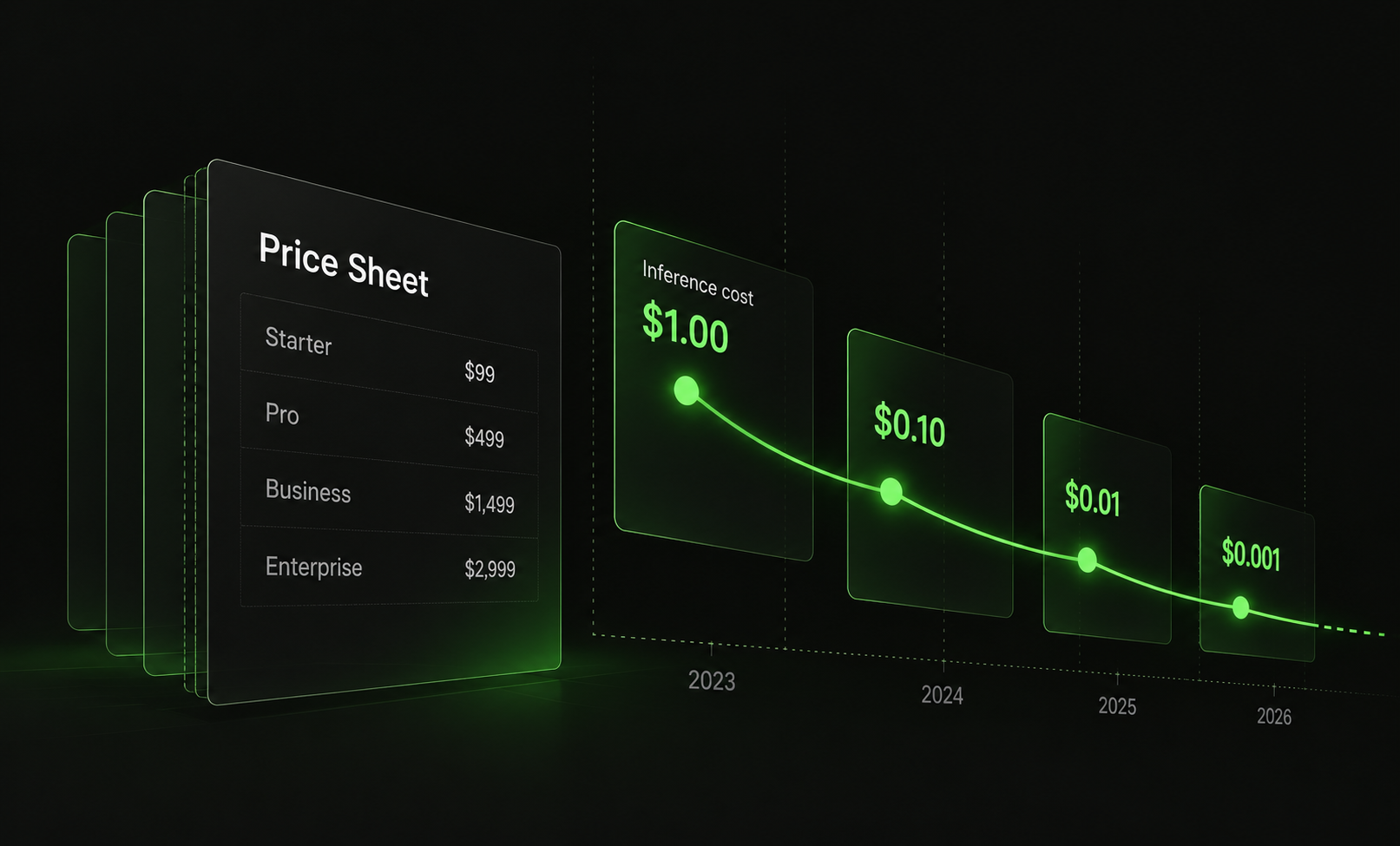
Inference gets 10x cheaper every year. Your price sheet updates once.
Inference costs fall about 10x a year while agent usage climbs. Why static price sheets leak margin, and what fast repricing takes to build.

Why acquiring three companies often means inheriting three billing systems, three entitlement models, and one massive architectural headache



In conversations with product and engineering leaders navigating multi-product acquisitions, one pattern keeps emerging:
Billing becomes the hidden integration project nobody properly scoped.
One leader recently described their architecture as having “weird tentacles”, tightly coupled entitlements, feature toggles, and billing logic stitched together over time. It worked when each product lived independently. But once those systems are forced under one roof, the complexity multiplies.
That’s the part nobody mentions in the deal room.
When companies announce acquisitions, the press releases focus on synergies, expanded TAM, and complementary product portfolios. What rarely gets discussed is that each acquired company brings its own:
Each system was optimized for its original context, built at different moments in time, under different business constraints, with different architectural philosophies.
Individually, they worked.
Together, they collide.
Post-M&A billing integration isn’t additive. It’s multiplicative.
Imagine acquiring three products and deciding to offer them as a bundle. Conceptually simple. Architecturally brutal.
You immediately face questions like:
Where does the subscription live?
If Product A uses Stripe directly, Product B uses a homegrown system with payment orchestration layered in, and Product C has its own invoicing logic, which system becomes the source of truth?
How do entitlements cascade?
If a customer buys the bundle, how does each product know what to unlock? One system might rely on SKU mappings. Another on a permissions database. A third has entitlements tightly coupled with feature flags.
What happens when customers upgrade?
Can they start with one product and later move to the bundle? Add components incrementally? Each scenario requires coordination across systems never designed to communicate.
How do you unify enterprise sales?
If one product supports credit-card enterprise purchases and another requires contract invoicing, what does a “single enterprise experience” even mean?
This is typically the moment teams pause and realize: the integration problem is bigger than anticipated.
Most companies entering this phase already have internal systems that technically work.
The question becomes: extend what exists, or introduce something new?
Often one of the acquired companies built an internal entitlement service. It handles current needs adequately. The team understands it. It’s battle-tested.
But “adequate” assumes today’s constraints.
The moment you start thinking about:
…the internal system that once felt stable now requires significant re-architecture.
The trap isn’t that internal systems are bad.
It’s that they were designed for a single-product world.
Over time, a few patterns consistently separate teams that untangle this well from those that accumulate more tentacles.
Billing answers: What should we charge?
Entitlements answer: What should the customer have access to?
When those are conflated, when a Stripe subscription directly controls feature access, pricing changes become product changes. Product experiments require billing rewrites. Everything becomes tightly coupled.
Entitlements should not live inside billing logic. Billing systems can represent SKUs. But what those SKUs mean in product terms should be defined elsewhere.
Decoupling these layers is foundational.
After an acquisition, you don’t just have multiple products. You have multiple definitions of:
The path forward requires a single canonical representation of “what we sell and what it includes,” even if execution across billing systems remains temporarily fragmented.
Without that consolidation, every integration becomes a bespoke mapping exercise.
Architecting the ideal future state is the easy part.
Getting there without breaking existing contracts is where complexity spikes.
You must account for:
It’s not enough to define the new model. You need mechanisms to move customers there safely and predictably.
Migration tooling often becomes the unsung hero, or the hidden bottleneck.
Every billing change increases operational surface area.
Refunds. Disputes. Partial credits. Subscription changes. Prorations.
When systems are consolidated, support workflows must consolidate too. Otherwise, internal teams are left juggling fragmented tooling that mirrors the fragmented architecture.
The integration isn’t just technical. It’s operational.
If you’re in the middle of a multi-product acquisition, or considering one, assume billing integration will require twice the time and engineering resources you initially scoped.
The architectural tentacles are real. And they extend further than expected.
The teams that navigate this successfully treat monetization infrastructure as a first-class integration workstream, not an afterthought once “product integration” is complete.
Because things don’t settle down after the bundle launches.
Next comes cart-based purchasing.
Then geographic pricing.
Then usage-based AI components layered into legacy plans.
And eventually, someone asks:
“Why can’t customers just buy everything together?”
The real question isn’t whether your billing system supports today’s model.
It’s whether your architecture can handle the one you’ll need 18 months from now.
This article reflects recurring patterns observed across conversations with SaaS product and engineering leaders rebuilding monetization infrastructure after acquisitions. Specific details have been anonymized, but the architectural challenges are universal.