%20(1).png)
Guides
Best Metered Billing Software: 9 Tools Ranked (2026)
I tested 9 metered billing software platforms for metering accuracy, pricing, and real-time enforcement, with honest pros, cons, and prices for 2026.

A comparison of Stripe and Zuora across payment processing, revenue recognition, multi-tenant governance, and credit management for AI usage billing.


An agentic coding assistant ships an auto-fix mode, a handful of power users start running thousands of sessions a day, and finance watches as costs on those accounts triple overnight. This Stripe vs Zuora comparison covers what each one bills well and the real-time decision neither is built to make.
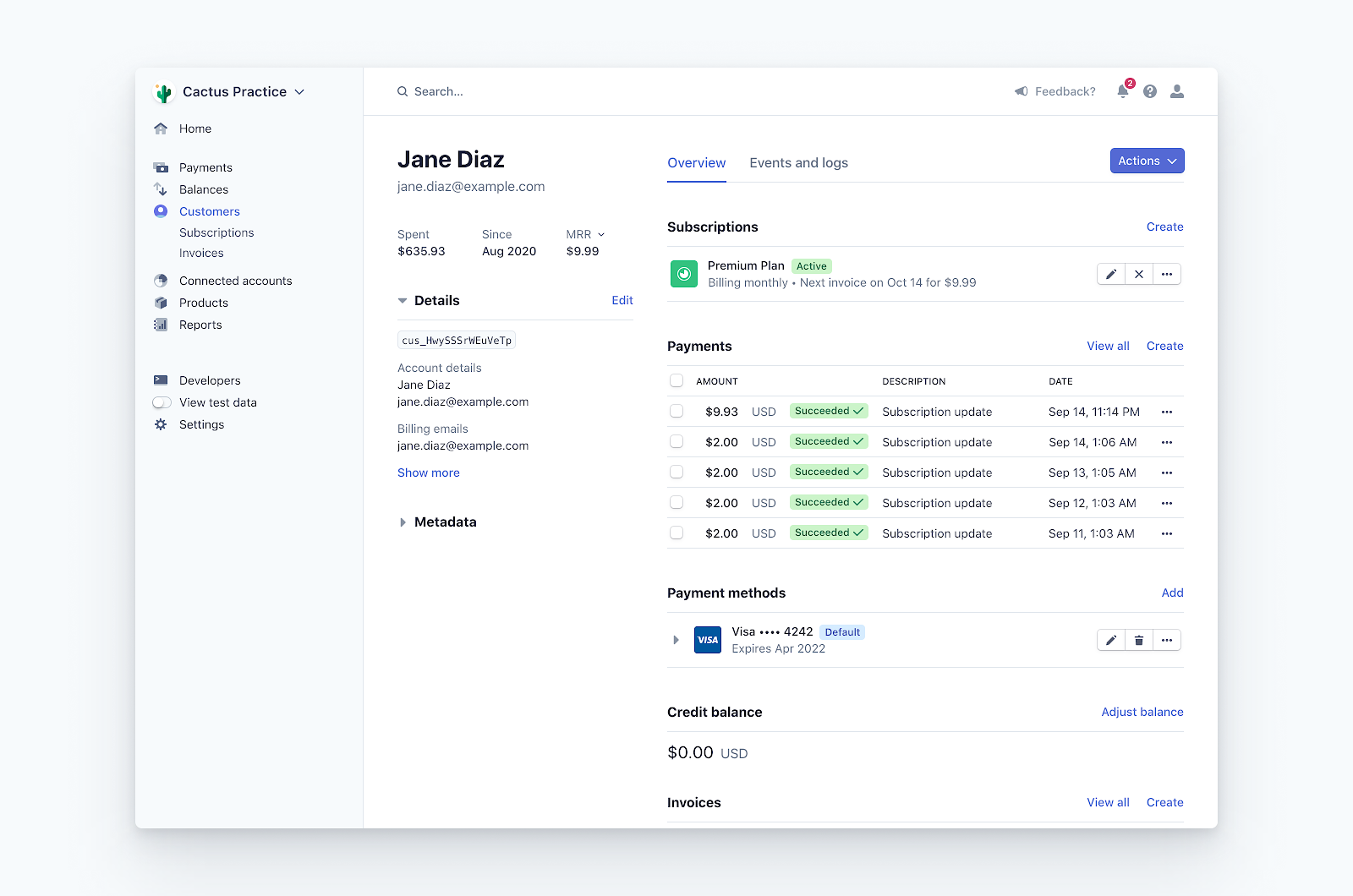
Stripe processes payments in 135+ currencies and offers Stripe Billing for subscriptions and invoicing, as well as usage-based billing built on Metronome, which Stripe acquired.
It is the default choice for companies that want a single vendor to collect payments globally without building their own payment infrastructure.
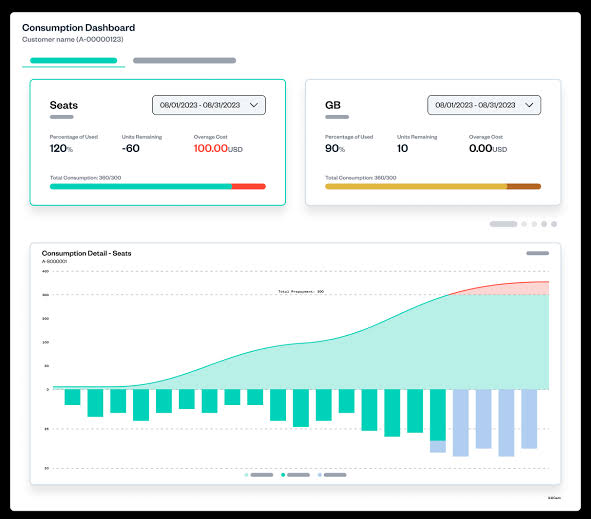
Zuora is a quote-to-cash platform, which brings CPQ, subscription billing, usage monetization, revenue recognition, and accounts receivable automation together in one system.
It's built around the CFO's problem, and delivers clean, audit-ready revenue data across complex, multi-entity businesses.
Disclaimer: Prices are subject to change without notice. Always visit the official company websites for the most up-to-date pricing information.
When you line these two up side by side, the differences show up fast. Each one clearly wins in its own lane, and knowing which lane matters most to your team makes the choice obvious.
Stripe: Billed usage is accurate once reported. There is no synchronous checkpoint that can decline a request before it happens.
Zuora: The same gap exists here. Usage is metered and rated for invoicing, treated as a finance record, separate from an access decision.
Result: Neither platform is built to enforce anything before the invoice stage.
Stripe: 100+ payment methods, 135+ currencies, adaptive localized pricing, processed directly.
Zuora: 40+ payment gateways, 20+ payment methods, 180 currencies, all routed through gateway orchestration.
Winner: Stripe on direct processing. Zuora's higher currency count comes from stitching together multiple gateways, which is a different model built for flexibility across regions and processors as opposed to a straight numbers win.
Stripe: Capable and built more for speed and simplicity than deep multi-entity GAAP or IFRS complexity.
Zuora: Purpose-built for this. Multi-entity, audit-ready revenue recognition is the product.
Winner: Zuora. If a finance org's real bottleneck is closing the books across multiple entities, this is where Zuora pulls ahead of Stripe.
Stripe: No native concept of a credit or token wallet as a commercial primitive. Usage gets modeled as billable line items.
Zuora: A similar shortcoming. Usage monetization exists as a billing construct and is separate from access control.
Result: Neither platform has this. Wallets built for credits and tokens sit outside what either one treats as a core primitive.
Stripe: Pricing changes typically involve touching billing configuration, and depending on how deeply pricing is wired into the app, some engineering effort.
Zuora: Changes route through product catalog configuration, flexible but housed inside a heavier finance-owned workflow.
Winner: Zuora, by a small margin. Its product catalog is more flexible for iteration, though both still lean on a finance-owned process.
Stripe: Customer and subscription objects exist, but per-team, per-department, or per-agent budget allocation is missing as a native concept.
Zuora: Account hierarchies exist for billing purposes, separate from real-time budget enforcement across teams.
Result: Neither platform has this. Budget enforcement across org hierarchies sits outside what either one was built to govern.
These are composite patterns drawn from engineering teams evaluating this stack. They are paraphrased impressions, separate from verbatim reviews.
Engineers reach for Stripe first because the payments API is clean, the documentation is thorough, and global coverage comes out of the box. The problem shows up once usage-based pricing gets complex.
Every request needs an access decision, and Stripe was never designed to make one. Teams end up writing a middleware layer from scratch to answer "is this customer allowed to do this right now," bolted on top of a billing system that only knows what they already did.
Zuora is the right call when the deal is complex, and finance owns the decision. Multi-entity revenue recognition, audit trails, and CPQ are directly tied to billing. Those capabilities take years to build, and Zuora has them.
However, implementation is a project, procurement is a process, and the system is built around the invoice as the unit of work. An agent asking for permission to run a task in real time is a question that lives several layers above what Zuora was designed to answer.
Stripe gets you billing in days. The API is clean, the docs are good, and most engineers have shipped a Stripe integration before.
Zuora is the call when the business has outgrown that, when finance needs multi-entity revenue recognition, CPQ connected to billing, and an audit trail that holds up at close.
An agent fires, tokens get consumed, and the billing engine records it after the fact, but neither Stripe nor Zuora sits in the request path before that happens.
Every pricing change that lives inside application code becomes an engineering ticket first. New credit model, enterprise contract, per-team budget cap. Code change, review, deployment, then the customer sees it.
The bottleneck here is usually the entitlement logic coupled to the application code.
Stigg is the usage runtime for AI products. Entitlements, credits, usage limits, and spend governance are enforced in the request path before compute is consumed, with no dependency on application code or the underlying billing engine.
For engineering teams, the architecture points that matter most are:
You don't have to adopt all of this at once. Entitlements, the credit ledger, budget controls, and the Sidecar each run on their own, so you can start with a single component, AI credits behind one line of code, say, and add the rest when the need shows up. It isn't all-or-nothing.
Read the Stigg docs to see how enforcement in the request path works alongside your current billing setup.
The main difference between Stripe and Zuora for AI billing is who is making the decision.
Stripe is faster to implement and stronger in global payment coverage. Zuora wins when finance is driving, and multi-entity revenue recognition is the real requirement. Neither enforces usage limits in real time.
No, Stigg works alongside Stripe and Zuora. It handles entitlements, credits, and spend governance in the request path, then syncs usage data into whichever billing provider a team already runs.
Yes, Stigg supports multiple billing providers simultaneously. Teams migrating from Zuora to Stripe, or running both during a transition, keep their entitlement logic intact without rewriting it.
The main difference is when the work happens. Usage-based billing counts what happened and turns it into an invoice. AI usage governance decides what is allowed to happen before the request completes.
Stigg resolves entitlement checks from a local Redis cache on the Sidecar. On a cache hit, resolution is instant. On a cache miss, the Sidecar fetches from Stigg's Edge API at around 100ms, with a configurable timeout so upstream latency never cascades into your application.
%20(1).png)
%20(1).png)