%20(1).png)
Guides
Software Billing Models: 8 Types and How to Choose
Software billing models decide how you charge and what you must build. Compare subscription, usage, credits, and hybrid models, and how to choose.

See real usage-based pricing examples and what it takes to build them. Covers metering, enforcement, credits, and scaling challenges.

Tracking usage, enforcing limits, and handling credits each introduce their own failure points, and they compound fast as you scale.
These five usage-based pricing examples break down what each model actually requires under the hood:
For each one, we cover the infrastructure it depends on and where in-house builds tend to break.
AWS charges based on actual resource consumption with no flat fee. Customers pay for compute time, storage volume, data transfer, and access frequency, each measured and billed independently.
Amazon S3 is a clear example. Pricing depends on how much data is stored and how often it is accessed. AWS offers multiple tiers, including S3 Standard for frequent access, S3 Standard-IA for infrequent access at a lower storage cost, and intelligent tiering that adjusts pricing based on observed access patterns.
Each pricing dimension needs its own metering pipeline. AWS tracks not just what a customer stores, but when and how often they access it. That requires:
Teams usually build metering for one dimension first, then bolt others on later. Each addition feels manageable in isolation, but the pipelines end up inconsistent.
When storage, access frequency, and transfer are tracked separately with no shared attribution layer, small discrepancies across streams compound into billing errors that are hard to trace and harder to explain to customers.
Snowflake splits billing into two independent metrics. Storage is billed per byte per month, while compute is billed in credits based on usage and plan tier.
This separation allows different usage patterns to be priced correctly. A customer storing large datasets but running few queries pays very differently from one running heavy compute workloads on small data.
Compute and storage must be tracked independently but resolved under the same customer account. This requires:
Usage can spike unpredictably during queries or experimentation. Enforcement needs to happen before usage exceeds limits, not after billing.
Snowflake uses credits as prepaid compute capacity, but the system does not just check a balance. It has to resolve multiple inputs before allowing a query to run.
For each request, the system needs to evaluate:
This check happens in real time, inside the query execution path. If the system gets it wrong, queries can run without coverage or get blocked incorrectly.
The failure mode is specific to Snowflake's model: a query cannot be paused mid-run because credits ran out. The entitlement check has to be accurate before execution starts, not reconciled afterward.
A wrong decision in either direction is costly. Too permissive and compute spend runs away, too strict and workflows break.
Twilio charges per communication event. This includes each SMS, voice minute, or text-to-speech request. Customers can use pay-as-you-go pricing, volume discounts, or committed-use contracts.
This model works well across both small and large customers. Startups can experiment at low cost, while high-volume users benefit from discounted rates.
Every event must be captured and priced correctly based on the customer’s contract. This includes:
The challenge is that pricing is not static. The cost of a single event depends on how much the customer has already used in that billing cycle.
Volume discounts require the system to maintain running totals and adjust pricing as thresholds are crossed. Committed-use contracts go further. The system must first check if usage should be deducted from a prepaid balance before applying standard rates.
Committed-use pricing means a single event cannot be priced in isolation. The correct rate depends on how much the customer has already consumed that cycle and what their contract says at that exact moment.
Engineers tend to build the happy path first: deduct from commitment, then fall back to standard rates. The edge cases come later.
What happens when a commitment expires mid-cycle? When a customer upgrades while a high-volume send is already in progress? Each scenario requires the pricing state to be current and consistent at the time of the request, not eventually caught up.

Supabase combines a base subscription with usage-based overages. Customers get a fixed allocation as part of their plan, and any usage beyond that is billed per unit.
This model works well for infrastructure products where teams need predictable baseline costs but still want to scale usage without upgrading immediately.
Hybrid pricing is not just tracking usage. It is deciding which pricing path applies at any point in time. The system needs to:
Both paths must rely on the same usage source. If they drift, customers either get blocked too early or charged incorrectly. The system also needs to resolve in real time:
The challenge is not just tracking usage, but resolving state at the boundary. The moment a customer crosses their limit, the system must decide how to handle the next request.
That means the entitlement check needs to return both access and pricing context. It is not just “allowed or blocked.” It is:
This decision has to stay consistent across backend enforcement and frontend messaging.
The trouble starts when customers change plans mid-cycle. Usage is already in progress, the allocation just changed, and the system has to figure out what to do with the gap. A few questions come up immediately:
Throw in legacy plans and custom limits, and the branching paths multiply quickly. None of them are impossible to handle individually, but together they all have to resolve correctly at the boundary, every time.
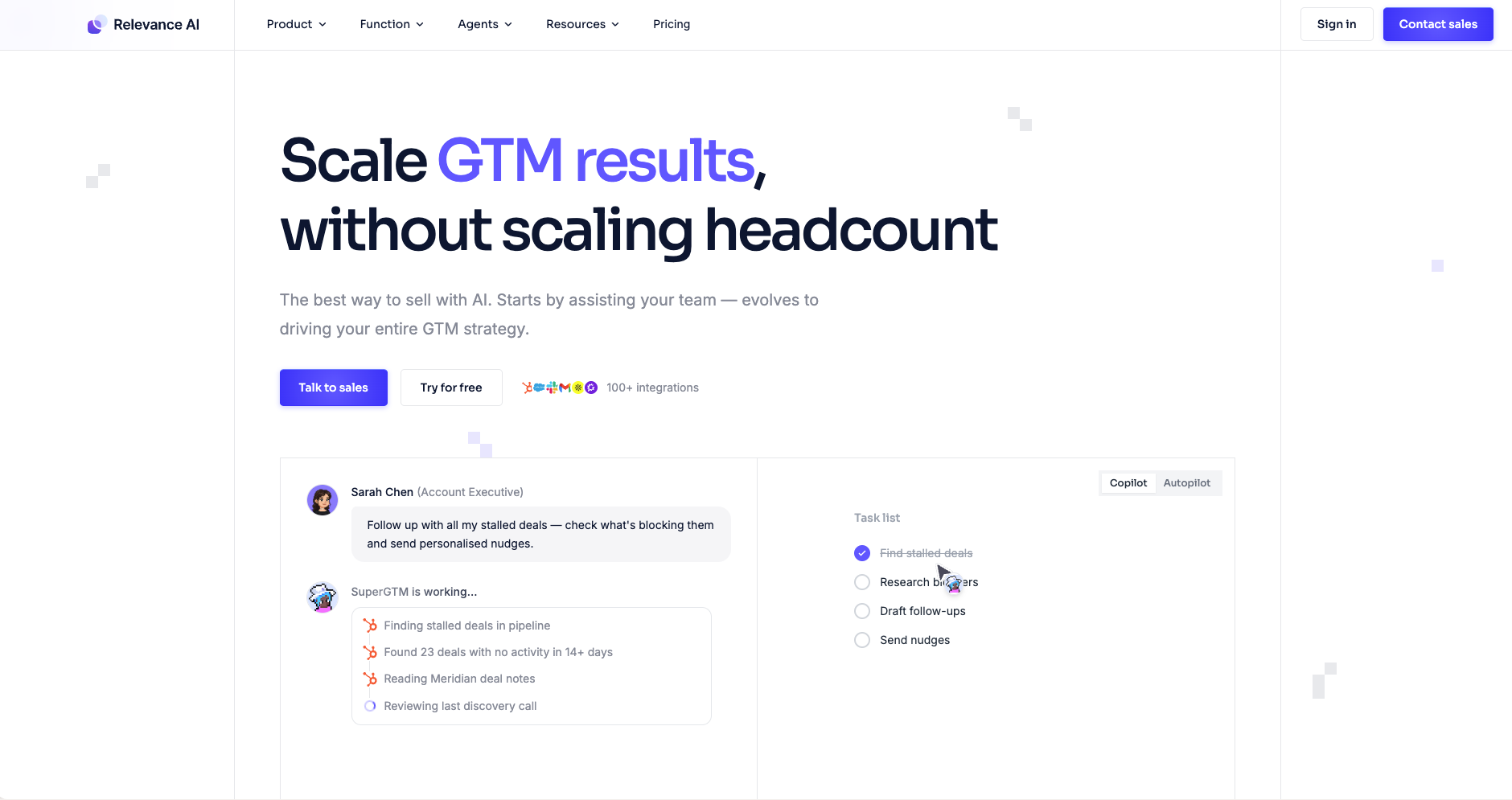
Relevance AI uses a dual-meter model. Actions count each tool run by an agent. Vendor Credits cover model inference and tool costs, passed through at provider cost with no markup. Customers can top up either meter, or bring their own API keys to bypass Vendor Credits entirely. This is common in AI products where per-request compute costs vary.
A production credit system is more than a counter. With two meters running in parallel, the system has to handle:
Each deduction must be recorded with full traceability for finance and audit purposes.
Most teams start with a simple counter: deduct on use, top up on purchase. It works fine in early testing.
The problems show up later when a credit block expires and the system has no record of which charges drew from it, or when a promotional credit gets burned before paid credits because nobody defined a burn order, or when finance needs to reconcile revenue and there is no transaction history to work from.
A counter tells you how many credits remain. A ledger tells you everything that happened to get there. You need the second one to run a billing system that holds up under real customer scrutiny and finance audits.
Usage-based pricing charges customers based on consumption rather than a fixed fee. The unit varies by API calls, tokens, storage, compute time, and credits.
The implementation challenge is the same across all of them. Engineering teams need to:
Billing systems generate invoices after usage happens, so the enforcement logic has to live elsewhere, in a separate layer that combines usage data, plan limits, and current state to make decisions at request time. Mid-cycle plan changes, retries, and partial failures all run through that same layer without breaking accuracy.
Across all these usage-based pricing examples, the same gap shows up. Billing systems handle invoices and payments, but they do not control what happens during a request.
Miro's in-house system made every plan update a multi-week cross-functional effort. With Stigg, Miro shipped a full AI credit model with enforcement, automatic resets, and seat-scaled allocations in under 6 weeks.
This logic runs inside the request path. Before executing a request, the system needs to resolve access and limits. Entitlements handle this by combining plan configuration, add-ons, trials, and promotions into a single runtime decision.
Each request triggers a check that returns:
This response drives both sides of the system. The backend uses it to allow or block requests. The frontend uses it to show limits, usage, and upgrade states.
Across all five models, the failure point is the same: enforcement that runs after usage has already happened. Stigg is the usage runtime that moves decisions into the request path, resolving entitlements, credits, and spend limits before compute runs.
For teams who recognize the pattern:
If you only need the credit ledger or entitlement enforcement layer, you can adopt either component independently with no requirement to use the full stack.
Getting this layer right before the first enterprise deal or the first overage incident is the cheaper path. See how Stigg approaches the runtime layer and fits into each of these pricing models.
Companies should use usage-based pricing when product value scales with consumption, such as API calls, compute, or storage. It works best when usage is measurable, variable, and directly tied to customer outcomes.
The main difference between usage-based pricing and subscription pricing is flexibility. Usage-based pricing adapts to actual consumption, while subscription pricing provides predictable costs. Many SaaS companies combine both to balance flexibility and stability.
Usage-based pricing can lead to unpredictable costs, billing disputes, and engineering complexity if usage is not tracked or enforced correctly. Without real-time enforcement, systems can allow overuse that only shows up after billing.
You prevent overages by enforcing limits in real time during the request, not after billing. This requires tracking current usage, resolving entitlements, and blocking or flagging requests before limits are exceeded.
Credit-based pricing works by requiring customers to prepay for usage and then deducting from that balance as they use the product. It is commonly used in AI products where costs vary per request and need upfront control.
%20(1).png)
%20(1).png)