%20(1).png)
Guides
Best Metered Billing Software: 9 Tools Ranked (2026)
I tested 9 metered billing software platforms for metering accuracy, pricing, and real-time enforcement, with honest pros, cons, and prices for 2026.

Looking for a monetization platform built for AI products? Compare 8 tools on entitlements, credit management, usage metering, and billing fit.

Every time pricing changes, someone files a ticket. Engineering picks it up, finds the logic scattered across four services, updates each one, and deploys. Two weeks later, the pricing team wants to change it again.
Scattered pricing logic is fundamentally an architecture problem. This guide compares the 8 best software monetization platforms for AI products by what each actually owns in the stack, and where each hands the problem back to engineering
| Tool | Strengths | Best For | Starting Price |
|---|---|---|---|
| 1. Stigg | Entitlements, credits, Sidecar enforcement, BYOC | Usage runtime and entitlements infrastructure for AI products | Free (Build), $399/mo (Pro) billed annually |
| 2. Stripe Billing | Payments, subscriptions, global coverage | Subscription and usage billing within the Stripe ecosystem | 0.7% of billing volume or ~$620/mo |
| 3. Orb | Raw event architecture, retroactive pricing, and metering accuracy | Complex usage-based billing and revenue recognition | Custom pricing |
| 4. Metronome | Usage tracking, revenue recognition, and enterprise contracts | Usage-based billing with finance-grade reporting | Custom pricing |
| 5. Chargebee | Subscription lifecycle, dunning, compliance reporting | Subscription billing at scale | Free to $250K billing, then $7,188/yr |
| 6. Zuora | Multi-entity billing, revenue recognition, and CPQ integration | Enterprise subscription billing and revenue recognition | Custom pricing |
| 7. Schematic | Configuration-driven entitlements, embedded components | Lightweight entitlements at the early stage | Free, $200/mo (Growth) |
| 8. Autumn | Credit ledgers, check function, no webhooks | Early-stage AI billing without webhook complexity | Free to $8K MRR, $375/mo to $50K MRR |
Disclaimer: Prices are subject to change without notice. Always visit the official company websites for the most up-to-date pricing information
This comparison focuses on system boundaries. For each platform, I looked at how it handles metering, entitlements, pricing logic, and billing integration, and where those responsibilities move back to your codebase.
I also evaluated how each tool handles scale, state management, and auditability, which are areas that tend to surface issues in production.
Pricing is sourced from official documentation. Pricing is sourced from official documentation. User feedback is drawn from G2, Reddit, and Product Hunt.
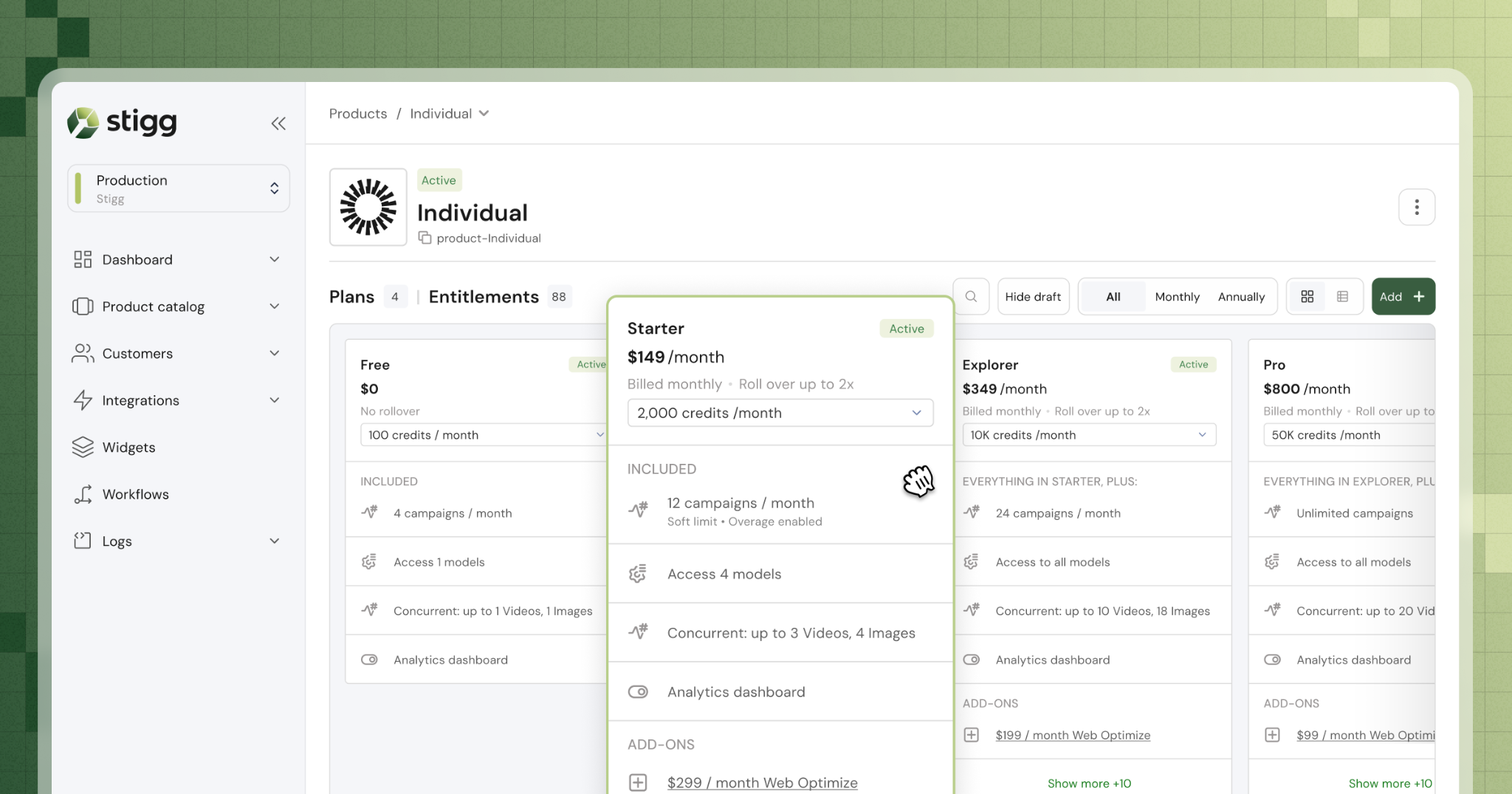
What it does: Stigg owns the product catalog, entitlement enforcement, and usage metering layer between your application and billing system.
Best for: Engineering teams building usage-based or hybrid pricing who want to move entitlement logic, metering, and pricing rules out of application code.
Stigg sits outside the billing system by design. Billing platforms handle invoicing and payments. Stigg handles the runtime decisions that billing depends on: what a customer is allowed to do, how much they can consume, and how limits are enforced.
That separation matters at the system level. Without a dedicated entitlements layer, enforcement logic ends up distributed across services, tightly coupled to one pricing model, and difficult to change without deployments.
The Sidecar architecture is the key technical differentiator. It runs as a container inside your infrastructure and caches entitlement data locally in Redis. Most checks are resolved from the local cache, so access decisions occur with minimal latency and without external calls.
On cache misses, the Sidecar fetches from Stigg’s Edge API with a bounded timeout, so upstream latency does not impact request flow. This keeps enforcement fast, consistent, and isolated from network failures.
| Pros | Cons |
|---|---|
| Entitlements are the core product, not a bolted-on feature | Not a billing engine: invoicing, tax, and payment processing still require Stripe, Zuora, or equivalent |
| Sidecar architecture provides local enforcement with millisecond-level latency on cache hits | Fewer reviews than more established billing tools |
| Supports hybrid pricing, credits, and AI usage governance in one system | |
| Layers onto existing billing infrastructure without replacing it | |
Stigg's Build plan is free. Pro runs $399/month (billed annually) with 10,000 entities and 25M events/month. Scale and BYOC are both custom, with BYOC built for AI frontier teams that need unlimited throughput and full data residency.
Stigg fits teams that want entitlement logic outside the application layer. It handles access control, usage limits, and pricing rules as infrastructure, not code.
If you're introducing hybrid pricing, credits, or AI usage, you can manage those changes through configuration rather than deployments. It also works alongside billing systems like Stripe or Zuora, rather than replacing them.
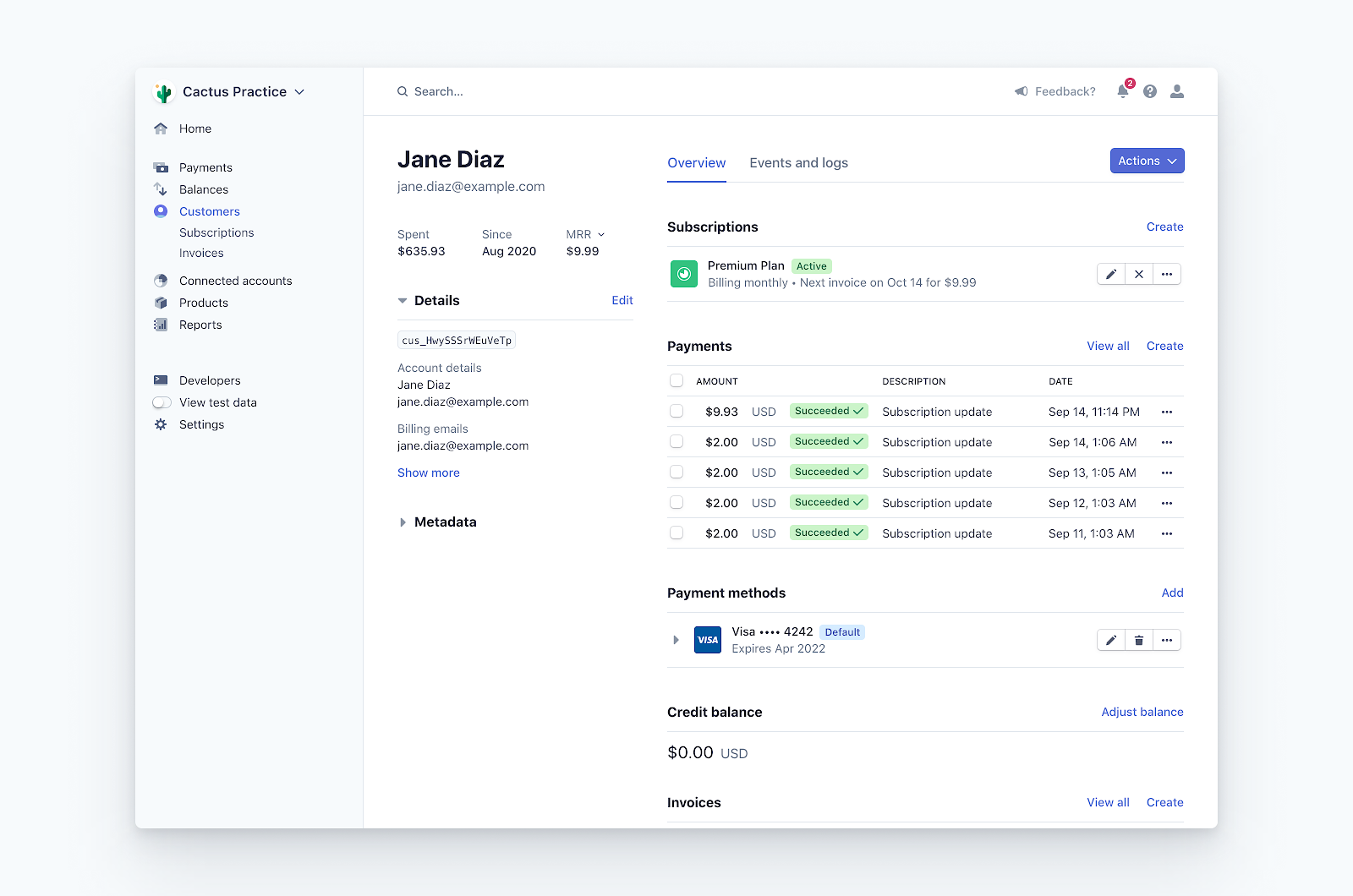
What it does: Stripe Billing handles subscriptions, invoicing, and payment processing, with support for basic usage-based billing tied to events.
Best for: Engineering teams already using Stripe who want to extend their existing stack with subscription or simple usage-based billing.
Stripe Billing is the default starting point because the payment layer is reliable and the APIs are straightforward. For standard subscription models, the integration is simple: create a customer, attach a plan, and Stripe handles invoicing and payment collection.
| Pros | Cons |
|---|---|
| Flexible enough to work around edge cases without breaking core payment and invoicing behavior | Pricing and feature availability vary by region and payment method, adding overhead for multi-country catalogs |
| Best-in-class API and CLI with clear docs make billing setup fast and easy | High costs from transaction and billing fees make it tough for startups to scale |
| One-click integration with Stigg for teams that need an entitlements layer on top | Metered billing is finance-focused, not enforcement-focused |
Stripe Billing offers pay-as-you-go pricing at 0.7% of billing volume or subscription plans starting around $620/month based on usage tiers.
Stripe Billing is the right foundation for teams that need reliable payment processing and standard subscription billing. When hybrid pricing or entitlement enforcement comes into play, Stigg handles that layer above Stripe without requiring changes to the billing setup.
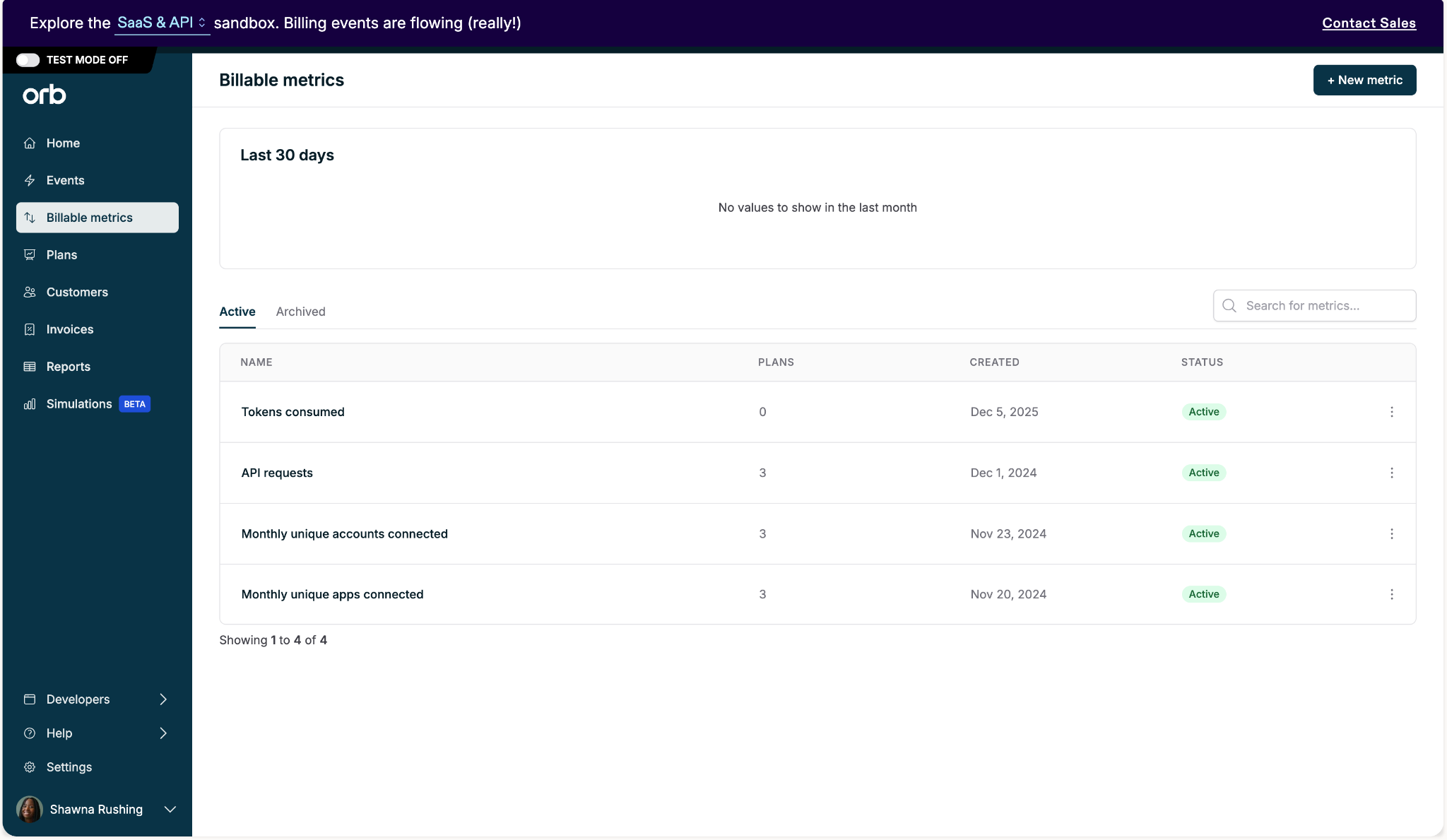
What it does: Orb is a usage-based billing platform built around a raw event architecture that ingests all usage data and applies pricing logic without dropping events. Adyen completed its acquisition of Orb on July 1, 2026, and Orb now operates as a subsidiary under Adyen's incubator model
Best for: Engineering teams with complex, high-volume usage-based billing requirements who need metering accuracy and finance-grade revenue recognition.
Orb's technical differentiation is the raw event architecture. Rather than aggregating usage before billing, Orb ingests raw events and applies pricing calculations against them. That means pricing logic can be changed retroactively without losing the underlying data. For teams running tiered, volume, or custom usage models at scale, that flexibility matters.
| Pros | Cons |
|---|---|
| Orb simplified our billing, handled complex edge cases well, and offered more flexible pricing than alternatives | No entitlements layer: product-level access enforcement is out of scope |
| Strong support for complex metering models at high volume | Data model complexity can make tracking key metrics like ARR difficult for some teams, particularly at higher volumes |
| Finance-grade revenue recognition reporting | Implementation complexity for teams coming from simpler billing setups |
| Used by teams with demanding scale and accuracy requirements | |
Orb uses custom pricing across its Core, Advanced, and Enterprise plans, based on usage volume and infrastructure needs.
Orb is the right call when billing accuracy and metering precision are the primary constraints. Product-level enforcement is a different problem and out of scope for Orb, so teams that need both end up running a separate entitlements layer alongside it.

What it does: Metronome is a usage-based billing platform focused on usage tracking, invoicing, and revenue recognition for companies with consumption-based pricing models. Stripe completed its acquisition on January 14, 2026, and it now operates as a product within Stripe's suite.
Best for: Engineering and finance teams at growth-stage companies running usage-based models who need accurate billing and revenue reporting.
Metronome sits in the usage-based billing layer, not the entitlements layer. The distinction matters architecturally: Metronome ingests usage events, applies pricing logic, and generates finance-grade invoices.
It does not enforce what customers can access within the product or evaluate entitlements at the time of request. Teams that evaluate Metronome for entitlements enforcement are solving the wrong problem with the right tool.
Where Metronome leads is in enterprise contract structures: prepaid commits, custom pricing agreements, and consumption-based billing at scale that simpler billing tools cannot model accurately.
| Pros | Cons |
|---|---|
| Handles usage-based billing at enterprise scale | No entitlements layer: product-level enforcement requires a separate system |
| Finance-grade revenue recognition and reporting | Expensive, but better suited for enterprise-scale usage |
| Flexible credit and discount system, though the setup can take time | Teams that need entitlement enforcement alongside billing metering need to add a second tool |
Starts free for basic usage, with custom pricing for scaling teams based on usage, integrations, and enterprise needs.
Metronome fits teams where usage-based billing accuracy and finance reporting are the bottleneck. Runtime entitlement enforcement is a different architectural concern that Metronome was not built to solve, and teams that need it typically add a dedicated layer on top.
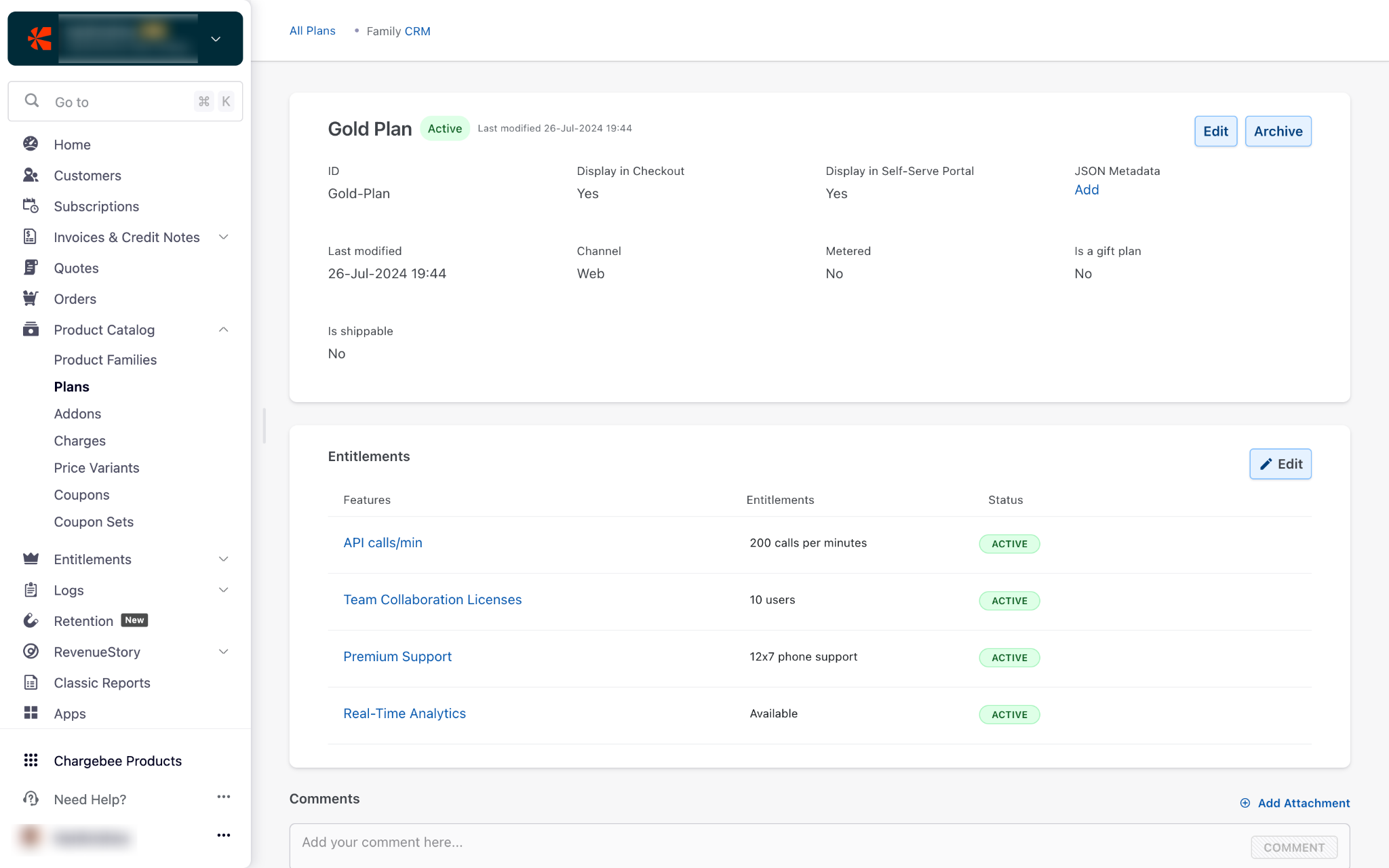
What it does: Chargebee is a subscription management platform that handles recurring billing, invoicing, dunning, revenue recognition, and subscription lifecycle management.
Best for: Engineering and finance teams at SaaS companies with complex subscription models who need subscription management at scale.
Chargebee handles the full subscription lifecycle at the billing layer. Plan management, proration, trials, dunning, and revenue recognition are all handled natively without custom engineering.
The API is well-documented, and the integration surface is predictable, which makes it a low-risk choice for teams that need subscription billing to work reliably without owning the underlying logic.
| Pros | Cons |
|---|---|
| Mature subscription management with a wide integration ecosystem | Limited customization in areas like invoices and checkout often requires workarounds or API work |
| Revenue recognition and compliance reporting built in | No entitlements layer: product-level enforcement is out of scope |
| Strong dunning and payment recovery workflows | Limited email automation and customization make it hard to tailor user lifecycle messaging |
Free to start (up to $250K in billing), then usage-based pricing at ~0.75%, with plans starting at $7,188/year and custom enterprise tiers.
Chargebee covers the subscription lifecycle well, and the integration ecosystem is mature. Entitlement enforcement and usage limits at request time are outside its scope, so teams introducing hybrid pricing or AI credit models need a separate layer to handle that.
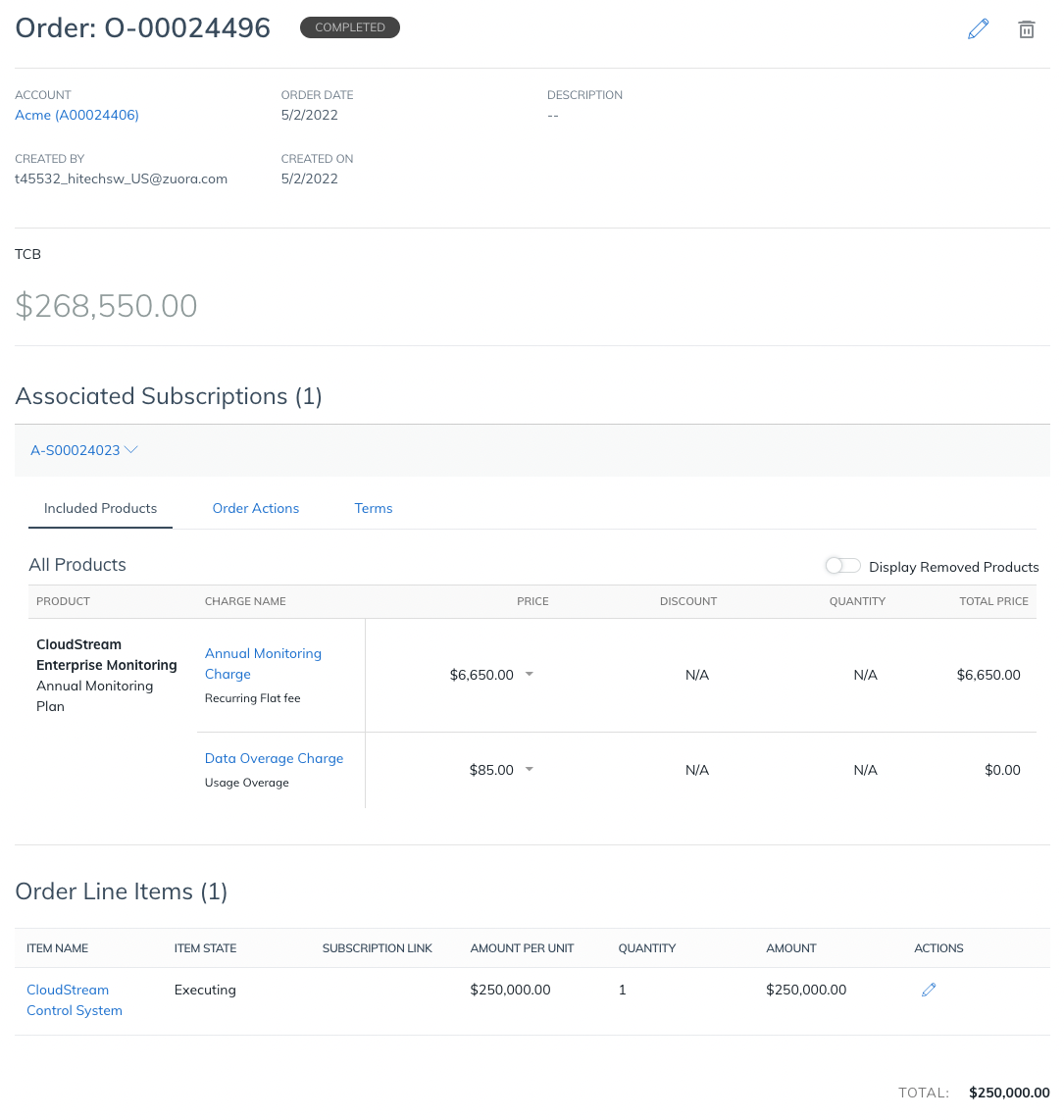
What it does: Zuora is an enterprise subscription billing platform that handles recurring billing, revenue recognition, and multi-entity financial operations at scale.
Best for: Enterprise engineering and finance teams with complex subscription billing requirements, multi-entity operations, or revenue recognition compliance needs.
Zuora handles multi-entity billing, multi-currency subscriptions, and revenue recognition at a depth most billing platforms do not support. The data model is highly configurable, giving engineering teams the flexibility to model complex contract structures and pricing relationships.
That configurability comes with a cost: implementation requires significant engineering investment and Zuora-specific expertise to get right.
| Pros | Cons |
|---|---|
| Highly flexible billing with strong automation, scalable pricing models, and solid reporting | Complex setup, non-intuitive UI, and slow support can hinder usability |
| Easy to use over time, with helpful and responsive support | Steep learning curve at the start, but easier to use over time |
| Accurate billing, strong automation, and clear reporting make subscription management easy | High cost and heavy developer effort due to custom integrations. |
Custom enterprise pricing based on product catalog complexity, usage models, and integration requirements.
Zuora is the right choice for enterprise teams with complex multi-entity billing and strict revenue recognition requirements. Stigg sits alongside it at the entitlements layer, so runtime enforcement and pricing logic can move through configuration without touching the billing infrastructure underneath.
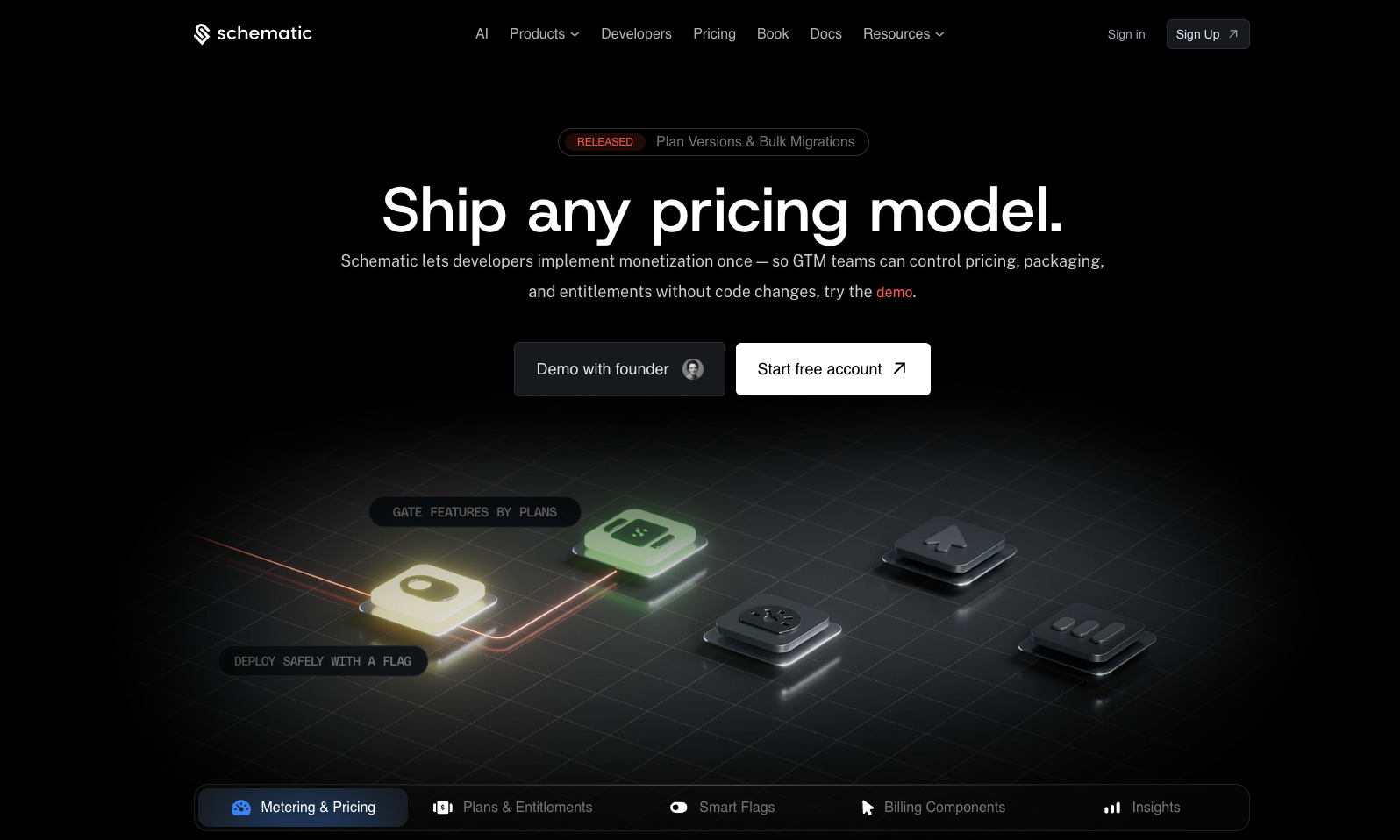
What it does: Schematic is an entitlements platform that handles feature-based access control for SaaS companies.
Best for: Early-stage engineering teams that need a dedicated entitlements system without the full infrastructure complexity of an enterprise-grade platform.
Schematic focuses on entitlements and configuration-driven pricing rather than billing. It is built on top of Stripe and designed for teams that want to move pricing logic out of application code without building billing infrastructure from scratch.
The embedded components reduce frontend engineering overhead, and the configuration-driven model means packaging changes do not require deployments. The architectural constraint is the Stripe dependency: teams that need multiple billing providers, local enforcement via a sidecar, or high-throughput entitlement checks at scale will hit the platform's ceiling.
| Pros | Cons |
|---|---|
| Enabled faster monetization with flexible pricing, feature control, and responsive support for complex enterprise use cases | Occasional edge case gaps, but quickly resolved as the product evolves |
| Takes pricing and billing complexity out of engineering, with fast iteration and continuous feature improvements | May require workarounds for advanced pricing scenarios or highly customized entitlement logic |
| Simplifies Stripe integration and reduces billing implementation overhead | |
Free starter plan, with Growth at $200/month and custom Enterprise pricing for scale.
Schematic is worth evaluating for early-stage teams that need entitlement logic out of application code without the integration overhead of a more mature platform. The ceiling shows up when pricing gets complex: hybrid models, credit ledgers, and high-throughput enforcement are where the architectural gaps start to matter.
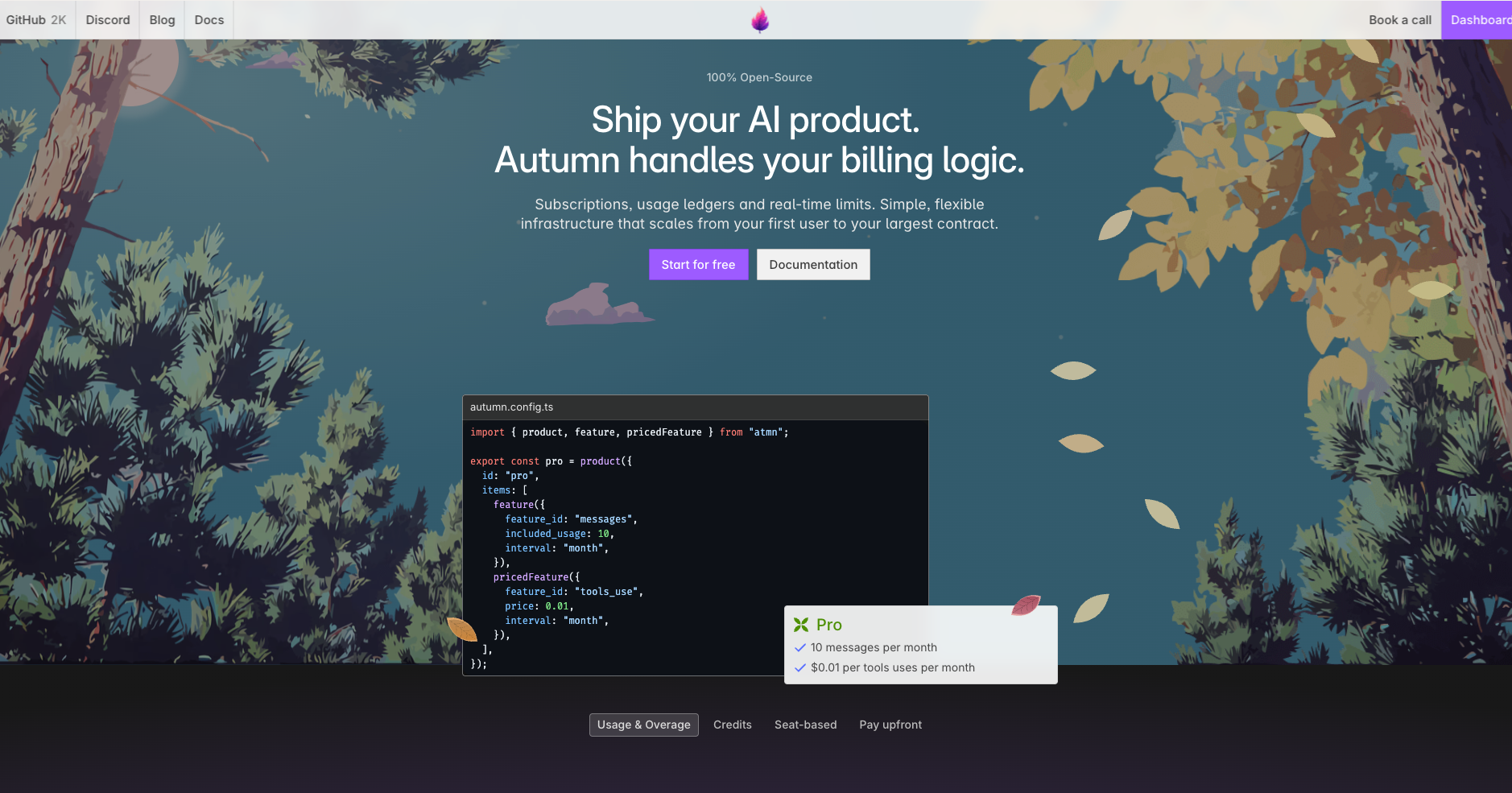
What it does: Autumn is a pricing and billing control layer between the application and Stripe that handles subscription lifecycle, credit ledgers, and entitlement state without requiring webhook logic in application code.
Best for: Early-stage AI and SaaS founders who want to avoid building billing infrastructure from scratch and need credit-based monetization running fast on top of Stripe.
Autumn's core design decision is the check function: a low-latency API called before an action is taken rather than after. Most billing tools do post-hoc invoicing. Autumn gates access before the event happens, which means entitlement state lives in Autumn rather than in the application database or scattered across webhook handlers. For a small engineering team that would otherwise spend weeks wiring Stripe webhooks, that's a meaningful reduction in scope.
| Pros | Cons |
|---|---|
| Entitlements-focused control layer, not just post-hoc invoicing | Built for early-stage teams: pricing caps out at $50K MRR before custom pricing |
| No webhook logic required in application code | Built on top of Stripe only: no Zuora, NetSuite, or multi-billing provider support |
| Fast setup for AI credit monetization | Less mature with fewer enterprise customers and integrations |
Free up to $8K monthly revenue. Pro runs $375/month for up to $50K monthly revenue. Enterprise is custom for compliance, scale, or custom requirements. Stripe fees (0.7% and 2.9% + 30¢) apply on top.
Autumn removes the webhook complexity that makes early-stage Stripe integrations painful, and the check-function model is the right approach for entitlement enforcement.
The constraint is the architecture: Stripe-only, no sidecar, and a $50K MRR cap. Teams that hit those boundaries will need to re-evaluate the stack.
The most common mistake is treating these platforms as interchangeable. They are not. Each one owns a different layer of the system. There’s no single best software monetization platform, only the one that owns the layer you’re missing.
The real question here is, which parts of the monetization stack does the team want to own in code versus delegate to infrastructure? If you’re choosing a software monetization platform for developers, that answer narrows the shortlist faster than any feature comparison.
Stigg is the right choice when entitlement enforcement and pricing logic need to live outside application code.
For teams whose primary requirement is billing accuracy or revenue recognition, Orb or Metronome handles that layer better.
The decision comes down to where the bottleneck is: if it is in the billing layer, choose a billing platform. If it is in runtime enforcement, the entitlements layer is where to start.
Most teams hit the same wall. One platform is expected to handle entitlements, metering, billing, and revenue recognition. No single platform does all of it well.
Each layer has a distinct responsibility:
Getting the separation right is what determines whether a pricing change is a configuration update or a two-week engineering project.
Stigg owns the entitlements and metering layer:
If entitlements still live in application code, that’s the first problem to solve.
You don't have to adopt all of it at once. Stigg is modular, so you can start with entitlement checks, add credits when you need them, and switch on metering when usage pricing arrives.
The best platform depends on the layer you need. Stigg handles entitlements, credits, and spend governance enforced in the request path, which is the layer AI products need most.
Stripe Billing handles payments and subscriptions. Orb or Metronome handle usage-based billing with finance-grade accuracy. Most AI-native teams end up using a combination of these.
The main difference between an entitlements platform and a billing platform lies in their roles. Billing platforms handle payments and invoicing, while entitlements platforms control product access and usage in real time.
Yes, most AI companies need both. Billing platforms manage payments, while entitlements platforms enforce access and usage inside the product.
The main difference between Stigg and Stripe Billing is their function. Stripe handles payments and invoicing, while Stigg manages entitlements and sits between your product and billing system.
The main difference between Stigg and Orb is their focus. Orb handles usage-based billing and revenue accuracy, while Stigg manages entitlements and product access.
%20(1).png)
%20(1).png)