%20(1).png)
Guides
Best Metered Billing Software: 9 Tools Ranked (2026)
I tested 9 metered billing software platforms for metering accuracy, pricing, and real-time enforcement, with honest pros, cons, and prices for 2026.

Compare 8 Metronome alternatives, including Orb, Lago, m3ter, and Stigg, by the job each does: billing, metering, or real-time control of AI usage and spend.

Here's something we see a lot: teams switch to a Metronome alternative, get billing working, then realize they still can't control who can use what, or how much AI each customer, user, or agent can consume.
Metronome, now part of Stripe, is a serious usage-based billing platform, and most teams evaluating alternatives like Orb, Lago, m3ter, and Maxio are solving a billing problem. Billing tools meter usage, rate it, and invoice for it, but they don't decide, at the moment of use, whether a customer, user, or AI agent may consume more.
AI companies that need to control their end users' AI usage and spend in real time, by enforcing credit and token budgets per customer, team, user, or agent, evaluate Stigg as their Metronome alternative. Stigg handles metering, AI credits, entitlements, and usage governance in one runtime layer, and keeps invoicing with your existing billing provider.
This guide covers 8 Metronome competitors and explains when the real issue isn't actually billing at all.
| Alternative | Best for | Starting price | Key difference vs. Metronome |
|---|---|---|---|
| 1. Orb | Complex usage-based billing and simulations on raw event data | Custom | Simulates pricing impact before rollout |
| 2. Stigg | AI companies that need real-time control of usage and spend: credits, entitlements, budgets | Free (Build); Pro from $499/month | Enforces credit and budget limits in the request path, in milliseconds, before usage is incurred |
| 3. Lago | Full control over billing logic | Custom | Open-source, no vendor dependency |
| 4. m3ter | Raw event storage with retroactive pricing | Custom | Quote-to-cash automation across Salesforce and NetSuite |
| 5. Togai | Non-engineering pricing configuration | Free tier available | UI-based model changes |
| 6. Amberflo | Billions of events per month | From $99 for 50K requests | AWS-scale throughput |
| 7. Chargebee | Subscription-first with usage add-ons | Free up to $250K | Complete billing suite in one system |
| 8. Maxio | Revenue recognition and compliance | From $599/month | Built-in ASC 606 automation |
Before comparing features, figure out which problem you're actually solving.
Product teams want to experiment, but each pricing change turns into an engineering project. If this sounds familiar, prioritize platforms where non-technical teams can own pricing configuration directly.
Metronome accepts backfills through its ingest API within a 34-day window and handles older corrections through its operations team. If you regularly re-rate months of past usage, look at platforms that store raw events and price them at query time, like Orb and m3ter.
You need to enforce credit and token budgets per customer, team, user, or agent, and gate features by plan, at the moment a request is made. Billing platforms aren’t designed to enforce access rules during product usage. If that’s your situation, you need a usage runtime like Stigg that decides in milliseconds whether a request can run.
Once you know your problem, evaluate these factors:
The right Metronome alternative becomes clear when it matches both your technical requirements and how your team actually operates.
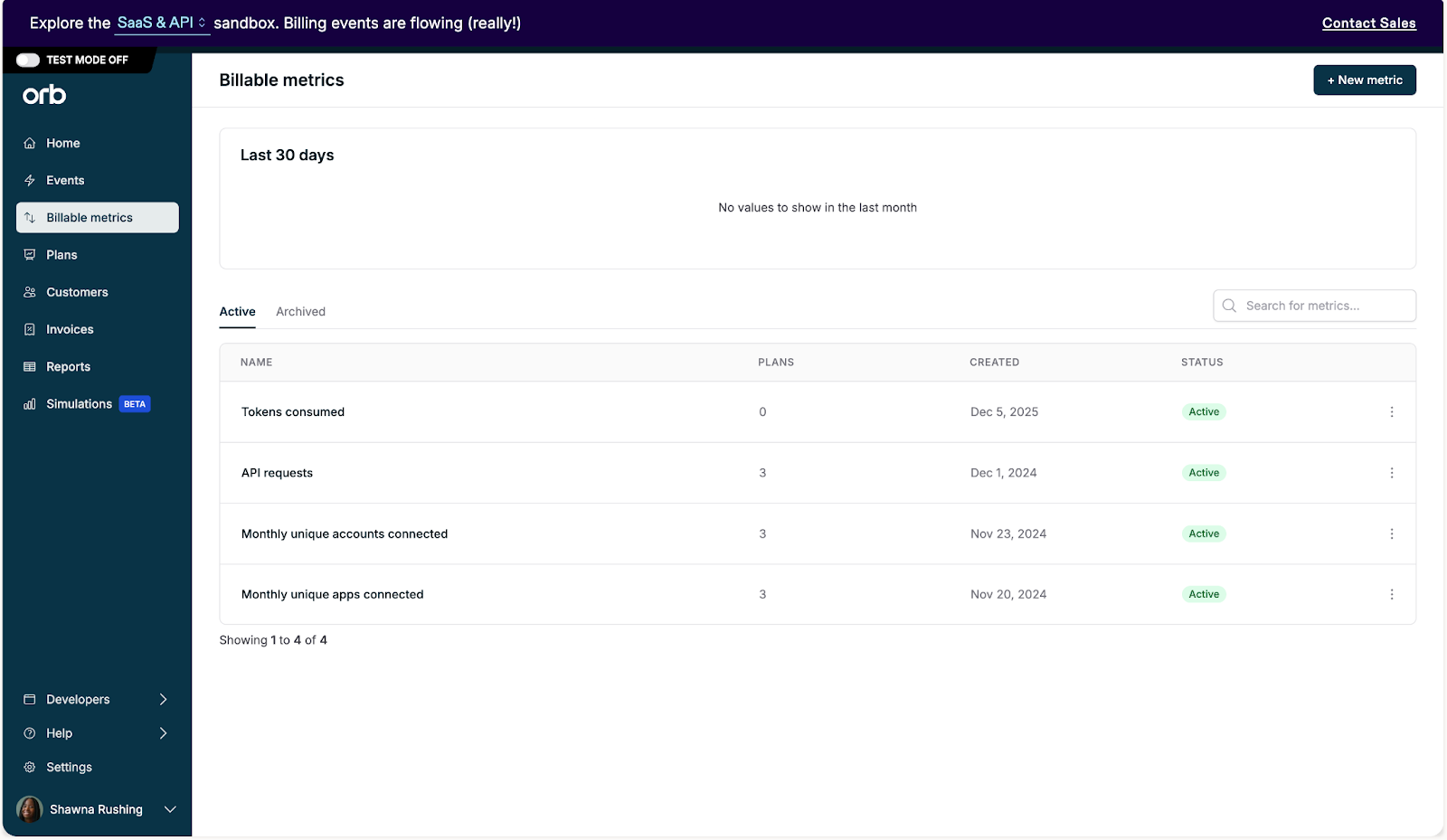
Orb is a billing engine purpose-built for usage-based pricing. SaaS and AI companies use Orb for real-time metering, flexible pricing configuration, revenue tracking, and automated invoicing. Orb is now part of Adyen; the acquisition closed on July 1, 2026.
Traditional billing systems increment counters as events arrive and discard the raw data. This works until you need to backfill late events, apply new pricing retroactively, or trace a charge to specific customer activity.
Orb's query-based approach changes what's possible:
| Pros | Cons |
|---|---|
| Backfills and corrections recalculate automatically | No public pricing or self-serve signup |
| Custom SQL metrics for complex billing logic | Learning curve for teams used to counter-based systems |
| Enterprise contracts handled through configuration, not code | User reports suggest Orb is too engineering-dependent for finance-led invoicing |
Custom quotes only. Three tiers (Core, Advanced, Enterprise), but all require contacting sales.
Choose Orb if your current billing breaks every time data arrives late or pricing changes retroactively. Orb handles these scenarios by design, not workarounds. You get simulations against real usage, clean audit trails, and the flexibility to define new metrics without re-ingesting anything.
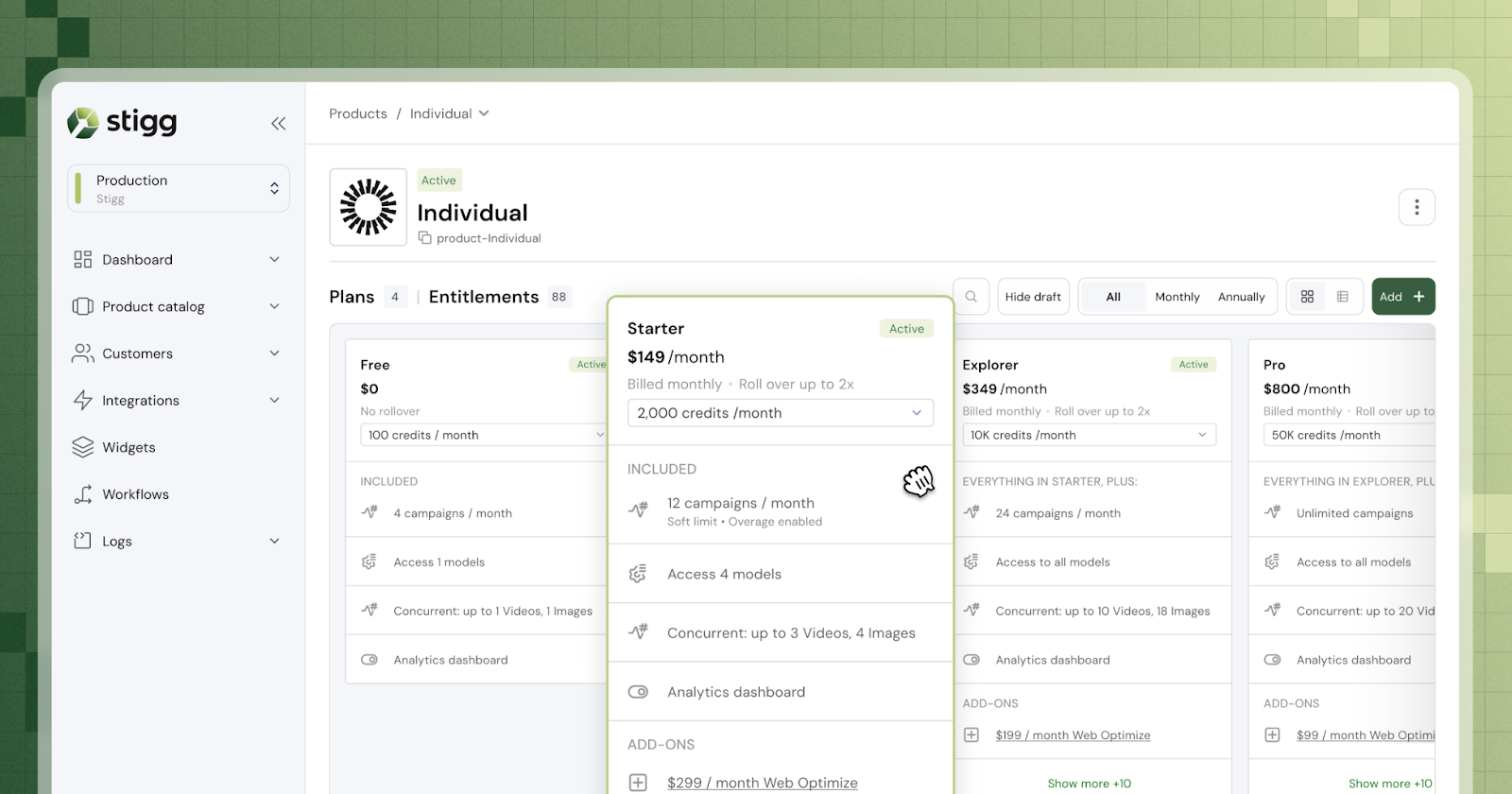
Stigg is the usage runtime for AI products: the real-time layer that decides what every customer, user, and agent is allowed to consume. AI companies, from startups to enterprises, use Stigg for real-time entitlement enforcement, AI credits, usage metering, and usage governance for agents, in a single enforcement layer.
Metronome focuses on usage-based billing: metering events, rating them against pricing and contracts, and generating invoices, and it does that well. Stigg is built for the moment of use: deciding whether a customer, user, or agent may make this request right now, given their plan, credit balance, and budget.
Most teams only discover the gap when a pricing change requires updates across multiple codebases, or when an AI feature has no enforcement layer and a single power user or runaway agent runs up a $20K overage overnight.
What Stigg covers:
| Pros | Cons |
|---|---|
| Entitlements are enforced in real time without code changes | Doesn't generate invoices: pairs with Stripe, Zuora, or your existing billing provider |
| Enforcement in the request path, in milliseconds (published p99 under 10ms for entitlement checks) | Fewer reviews than more established billing tools |
| Bridges PLG and SLG motions under one product catalog | |
| Layers on your existing billing stack, with BYOC deployment in your own VPC |
Build is free forever (10,000 managed entities and 5M usage events a month). Pro starts at $499/month. Scale uses custom pricing (contact sales for more info).
Choose Stigg if you're an AI company and the hard part is controlling usage and spend as it happens: enforcing AI credits, token budgets, and entitlements per customer, team, user, or agent, in milliseconds, before the cost lands. Stigg can replace Metronome for metering, AI credits, and enforcement. Invoicing stays in Stripe, Zuora, or the billing provider you already run, so adopting Stigg doesn't mean migrating billing.
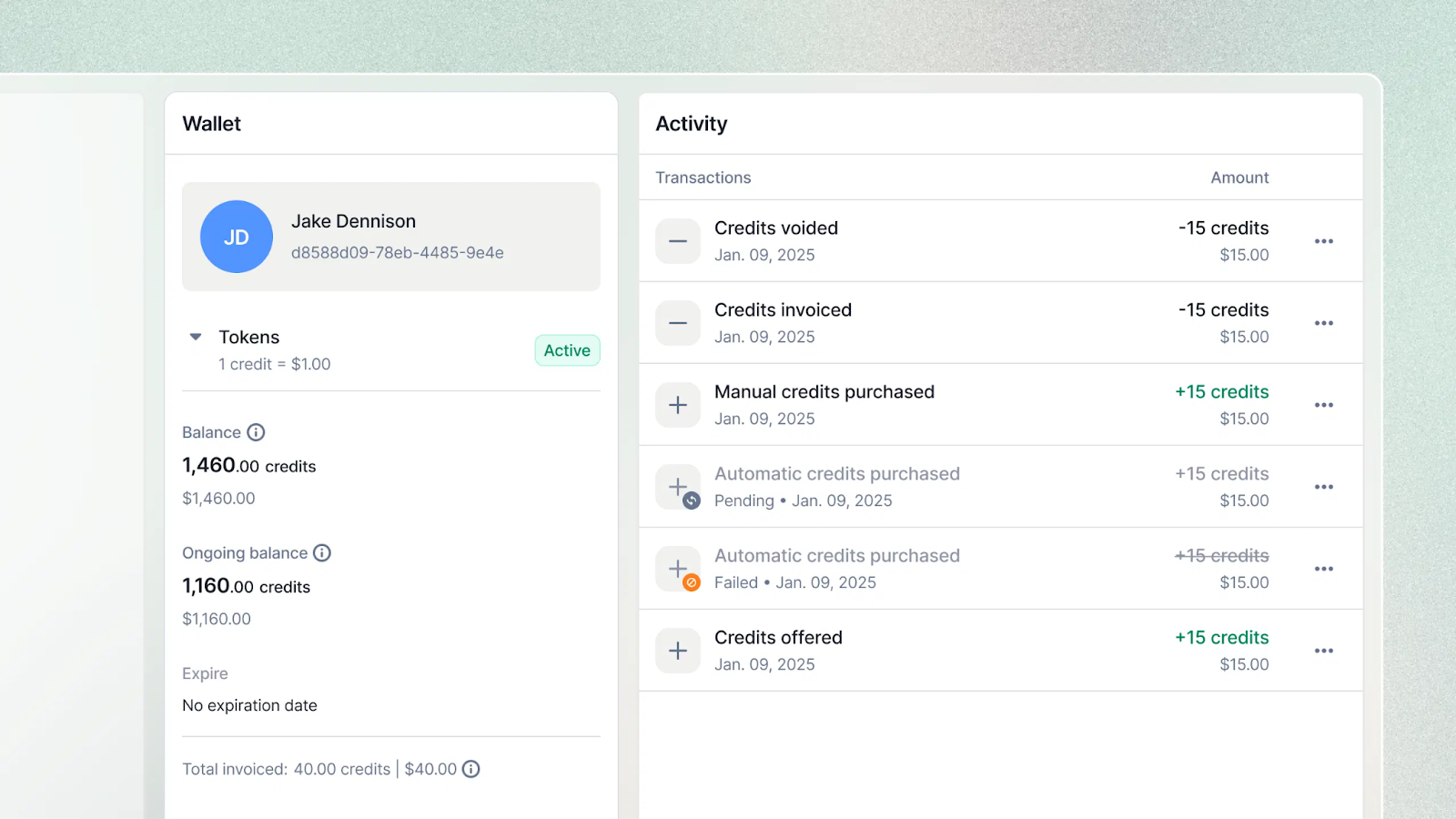
Lago is an open-source billing platform you actually own. Self-host it or run it on Lago's cloud, inspect the code, and extend it to fit your stack. No black boxes and no vendor lock-in to worry about later.
Vendor lock-in drives most Lago evaluations. When billing is core infrastructure, depending on a vendor's roadmap creates risk. Lago gives you full code ownership and processes up to 1M events per second.
Lago's open-source architecture includes:
| Pros | Cons |
|---|---|
| Open-source with full code access | User reports suggest a learning curve when migrating from Stripe Billing or Chargebee |
| API-first architecture that connects to your existing stack | A review notes limited pricing transparency and slow team communication |
| No-code UI for business teams | User reports suggest Lago's open-source flexibility comes with more dev work on your side |
Business and Enterprise tiers available. Both require contacting sales for pricing.
Choose Lago if you want to own your billing infrastructure without building it from scratch. Lago is ideal for engineering teams who value open-source transparency and don't want their billing roadmap tied to a vendor's decisions.
If your business teams also need to manage subscriptions without filing engineering tickets, Lago's no-code UI handles that too.
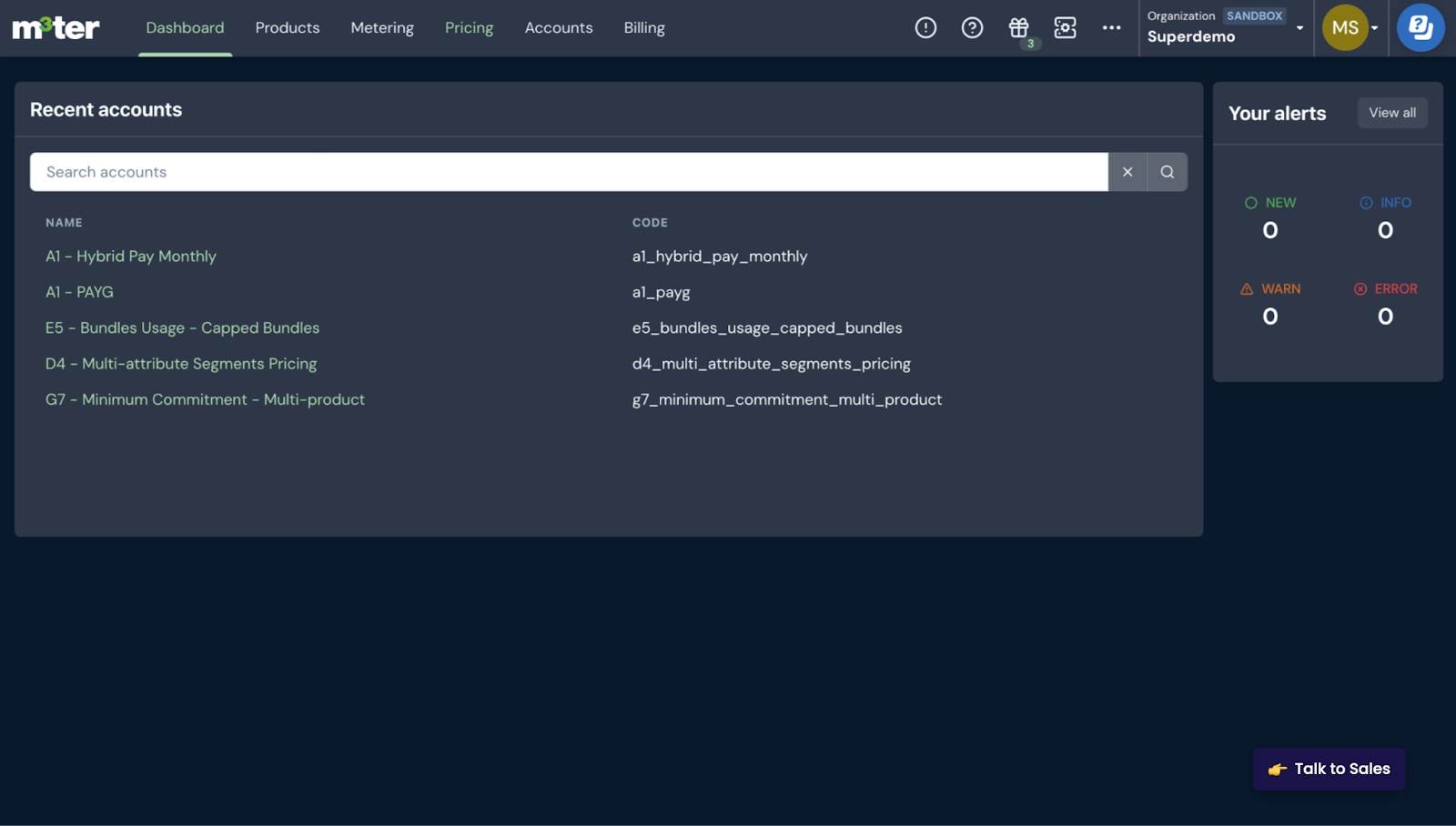
m3ter (pronounced “meter”) targets teams whose billing complexity extends beyond metering into CRM and ERP workflows. Where Metronome focuses on usage counting, m3ter automates data flows across your entire quote-to-cash stack.
Engineering configures m3ter once, then steps back. Native Salesforce and NetSuite integrations let billing operations teams manage pricing changes directly in the UI. No ongoing engineering tickets for rate adjustments or billing queries.
m3ter's architecture supports:
| Pros | Cons |
|---|---|
| Built for high-volume usage data processing at scale | Built for mid-size to large companies |
| Native Salesforce and NetSuite integrations | User reports suggest that limited self-serve documentation slows onboarding |
| Non-engineering teams can manage after setup | Review says professional services add cost if internal resources are limited |
Custom pricing with a platform fee, usage allowances, and optional add-ons for integrations and premium support.
Choose m3ter if billing data needs to flow between Salesforce, NetSuite, and your product without manual work. Built for mid-size to large B2B SaaS with complex quote-to-cash workflows. If syncing systems eats your billing team's time, m3ter automates that away.
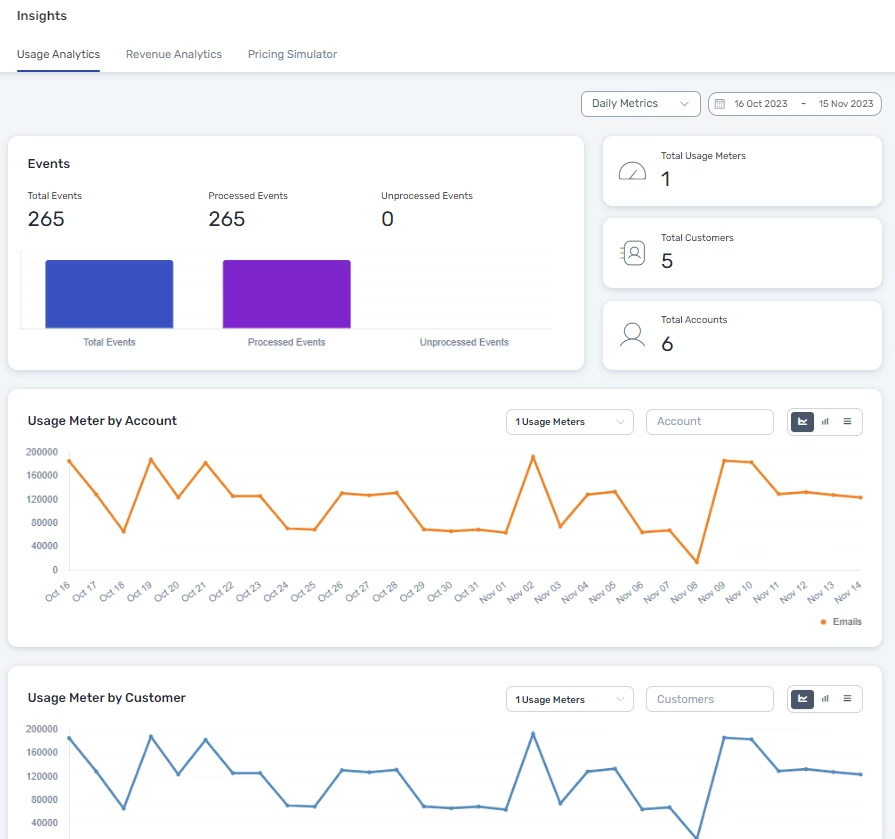
Togai joined Zuora in 2024 to bring usage-based billing to enterprise teams. The platform handles metering, pricing, and invoicing in one system. Non-technical teams configure pricing models directly, while engineering focuses on product work.
Togai's UI handles pay-as-you-go, tiered pricing, volume discounts, and custom contract terms. Finance and RevOps teams can make changes without filing engineering tickets.
Togai's platform includes:
The Zuora acquisition adds uncertainty. Packaging and integration requirements may shift as Togai integrates into Zuora's broader suite.
| Pros | Cons |
|---|---|
| No-code pricing configuration for finance teams | User reports suggest limited import capabilities for existing Stripe products and pricing; Zuora vendor lock-in is also a concern |
| Real-time usage dashboards with alerts | Documentation still maturing |
| Basic entitlement enforcement included | No public pricing |
Free tier available. Starter pricing scales with event volume and invoice amounts. Enterprise tier requires a custom quote.
Choose Togai if your finance team wants to own pricing changes end-to-end. The no-code UI removes engineering from routine billing work. Zuora's backing adds enterprise credibility, though the integration direction is still taking shape.
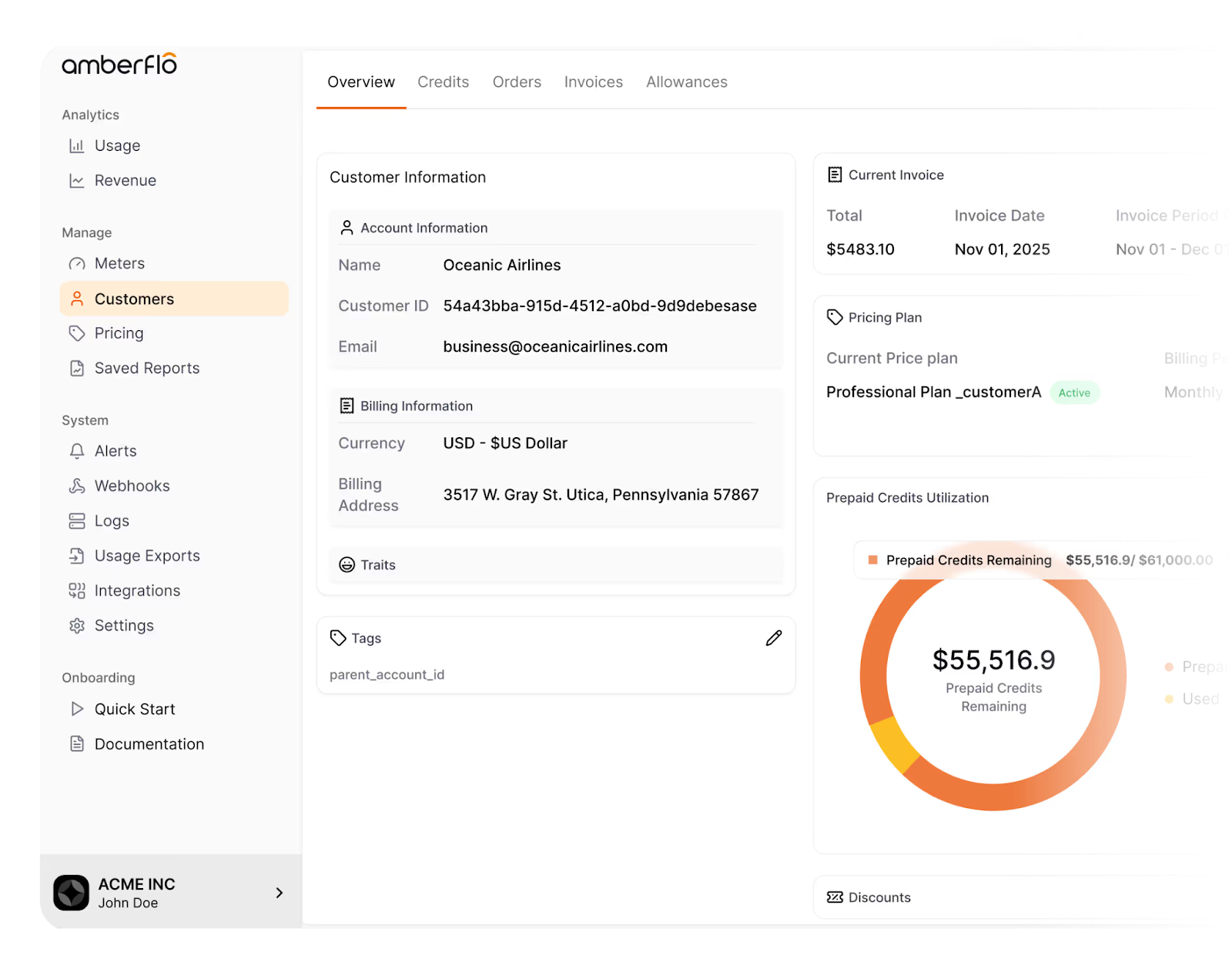
Amberflo is a cloud-scale billing infrastructure designed for high event volumes. Amberflo is designed to scale to billions of monthly events for companies where throughput is a primary constraint. Usage dashboards give customers real-time visibility into consumption, which reduces billing disputes and support tickets.
Event volume and analytics drive Amberflo decisions. If you're processing millions of events daily, you need infrastructure that handles that load without batching delays or dropped events.
Amberflo's platform includes:
| Pros | Cons |
|---|---|
| Billions of events processed monthly | A Reddit review describes Amberflo as a point solution for metering, mostly serving startups |
| Strong built-in forecasting and cost allocation tools | No public pricing available |
| Customer-facing dashboards reduce billing disputes | Overkill for teams with moderate event volumes |
$99 per 50K requests, and its 30-day free trial includes 1 million requests. Contact for volume discounts.
Choose Amberflo if you're processing millions of events and need billing that keeps up. Amberflo fits infrastructure companies, cloud platforms, and AI inference APIs where volume keeps growing. If Metronome's throughput feels like a ceiling, Amberflo removes it.
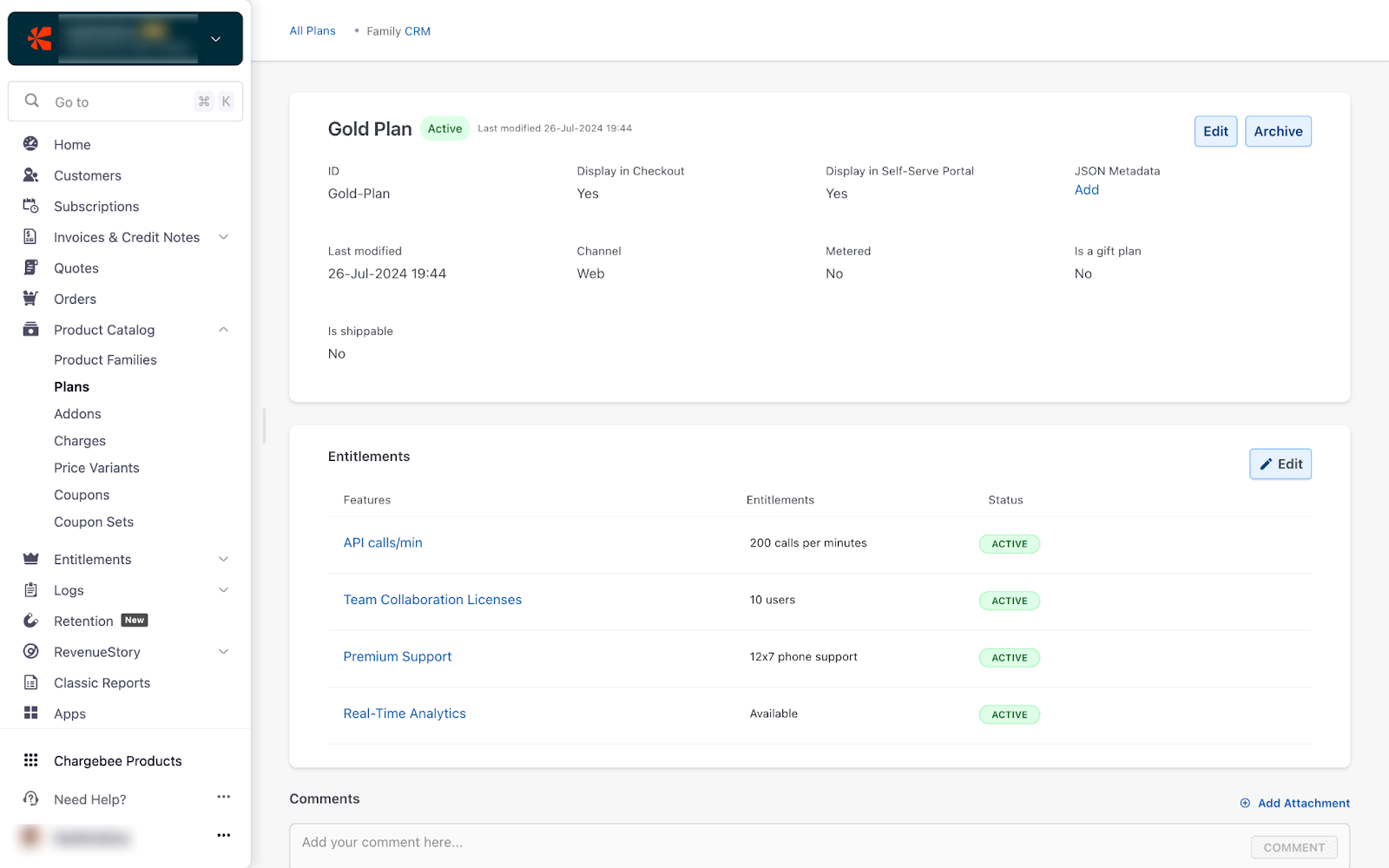
Chargebee covers subscription management, invoicing, multi-currency billing, tax automation, dunning, and revenue recognition. The platform also includes customer portals and SaaS analytics for tracking MRR, churn, and retention.
Chargebee consolidates billing into one system. Instead of integrating separate tools for subscriptions, taxes, and customer portals, engineering sets up Chargebee once and hands it to the billing team.
Chargebee's platform includes:
| Pros | Cons |
|---|---|
| Free Starter tier up to $250K revenue | Users report declined payments get marked as fraudulent, including standard card limit issues |
| Complete suite: taxes, dunning, portals included | Users flag restricted invoices and limited checkout customization options |
| Non-technical teams manage plans directly | A review mentions pricing includes fine print and annual payment requirements |
The Starter tier is free up to $250K revenue. Performance tier at $7,188/year for scaling companies. Enterprise tier with custom pricing for larger operations. GTM and Riskhub add-ons available.
Choose Chargebee if you need subscriptions, taxes, and customer portals handled in one system. Chargebee fits teams where subscriptions drive revenue, and usage is just a piece. If Metronome's pure usage focus is more than you need, Chargebee simplifies your stack.
Maxio combines subscription management with financial operations. The platform handles billing and revenue recognition in one system, which matters for teams approaching audit requirements.
Finance teams drive most Maxio decisions. Built-in dashboards track MRR, ARR, churn, expansion, and cash flow without external BI tools.
Maxio's platform includes:
Revenue recognition follows ASC 606 automatically. Maxio defers and recognizes revenue without manual spreadsheet work. For companies with audit requirements on the horizon, this automation matters.
| Pros | Cons |
|---|---|
| Revenue recognition automation built in | Users flag a tricky API and confusing invoice grouping |
| SaaS metrics dashboards for MRR, ARR, and churn | Users report limited reporting for customer revenue by signup date and monthly billing totals |
| Audit-ready logging and compliance | A review notes slow implementation and scattered documentation |
Starts at $599/month. Enterprise deployments require custom quotes.
Maxio gives you more than billing. It supports your full SaaS finance stack. If Metronome lacks the financial controls you need, Maxio fills that gap. However, Maxio is not built to handle heavy usage metering.
Metronome is a serious, well-built billing platform: large AI companies, including OpenAI, use it for usage-based billing. Teams that look at alternatives usually have a specific job in mind:
These are not dealbreakers for every team. But for companies where finance, RevOps, or product need more independence from engineering, they add up.
A company starts with a simple in-house entitlements system. A few database tables, some feature flags, maybe a middleware layer that checks subscription status before granting access. It takes a week to build and works fine.
Then the company grows. At 50 employees, the system still holds up. At 500, you're managing legacy plans, grandfathered pricing, usage limits across 5 products, and a tech stack inherited from 3 acquisitions. That one-week build now needs a dedicated team just to keep it running.
Billing tools don't fix this. Billing occurs after the purchase decision. These problems happen at runtime inside your product, which is a different architectural layer than billing.
Entitlements are commercial access rules that determine who can use which features and how much they can consume based on their subscribed plan. Unlike simple Boolean access, entitlements include measurable limits like 10 API calls per minute, 50GB of storage, or 1,000 AI credits per month.
| Billing | Entitlements |
|---|---|
| Counts usage events | Controls feature access |
| Generates invoices after usage | Enforces limits during usage |
| Processes payments | Manages product catalog |
| Finance-focused | Engineering-focused |
Billing and entitlements aren't competing categories. They're different layers in your architecture that work together.
You have an entitlements problem if:
Every billing platform in this guide handles invoicing, usage counting, and payments. Deciding at runtime what each customer, user, or agent may use and spend is a separate problem that billing platforms treat as secondary.
For most AI companies, the real alternative to Stigg isn't another vendor. It's building enforcement in-house: real-time balance checks in the request path, budgets across org hierarchies, reset cadences, an admin UI for customers' admins, and the ledger behind AI credits. That takes multiple quarters, and then it has to be maintained while the product keeps shipping.
If your team is evaluating Metronome alternatives because pricing changes take too long to ship, or because you need to control AI usage and spend before it happens, that is a runtime problem, not a billing problem. Explore how Stigg works.
The best Metronome alternative depends on your infrastructure gap. Orb works best for retroactive pricing changes. Lago fits teams that want code ownership. m3ter automates data flows between Salesforce and NetSuite. For AI companies whose main need is controlling usage and spend in real time (AI credits, token budgets per team, user, or agent, and entitlements), Stigg is the Metronome alternative to evaluate: it enforces limits in milliseconds and keeps invoicing with your existing billing provider.
Chargebee's Starter tier is free up to $250K in revenue. Togai offers a free tier. Amberflo starts at $99 per 50K requests. Stigg's Build plan is free forever, up to 10,000 managed entities and 5M usage events a month.
Billing platforms count usage and generate invoices after purchase. Entitlements platforms control feature access in real-time based on what customers paid for. These are different layers that work together.
No. Stigg doesn't generate invoices; it syncs bi-directionally with your billing provider, such as Stripe or Zuora. Stigg handles metering, AI credits, entitlements, and usage limits, and enforces them in real time. Your billing system handles payments, invoices, and revenue recognition.
You need Stigg when AI usage and spend have to be controlled in real time per customer, team, user, or agent, when AI credits need enforcement before tokens are spent, or when pricing changes require code deploys. You also need it when acquired companies bring separate access systems that need consolidation.
Yes, for AI companies whose priority is controlling usage and spend. Stigg can replace Metronome for metering, AI credits, entitlements, and usage governance, and it enforces those limits in the request path in milliseconds. Stigg doesn't generate invoices, so invoicing stays with Stripe, Zuora, or your current billing provider.
Most teams start in-house, and a few database tables and a middleware check work at first. As plans, AI credits, and agent budgets multiply, the system needs real-time balance checks, budget hierarchies, reset cadences, a ledger, and an admin UI for your customers. Stigg provides those as one runtime layer, so your engineers don't have to build and maintain them.
%20(1).png)
%20(1).png)