%20(1).png)
Guides
Best Metered Billing Software: 9 Tools Ranked (2026)
I tested 9 metered billing software platforms for metering accuracy, pricing, and real-time enforcement, with honest pros, cons, and prices for 2026.

The top AI pricing platform options for 2026, compared on packaging flexibility, setup time, wallet support, and real usage models we tested ourselves.


Charging per token, per agent action, or per generated image only works if your pricing platform can price it that way, and most weren't built to.
These 6 AI pricing platforms handle that differently:
Every platform has its strengths and its compromises. Here's a closer look at what each one handles, where it comes up short, and the teams it's the best fit for.
Disclaimer: Prices are subject to change without notice. Always visit the official company websites for the most up-to-date pricing information.
Over two weeks, I built the same live pricing model on every platform using its free or sandbox tier. The test product was a credit-based image generator that deducted credits for each image, paired with a hybrid plan that combined monthly seat fees with metered agent actions.
Each setup also went through a mid-cycle plan change. That revealed more than the initial configuration, since credit balances, entitlements, and usage rules often start to drift when a customer moves between plans.
Two additional tools did not make the final list. Zenskar leans more heavily toward usage-based billing, which overlapped with the metering platforms already covered.
Flexprice publishes direct comparisons against several tools on this list, which makes it harder to form an independent assessment I could confidently support.
I scored each platform across five areas:
Running the same model through every platform made the differences much easier to see. Some were built around the way AI products consume credits and generate costs.
Others could support those models, but the underlying workflows still felt designed for more traditional subscription and usage billing.
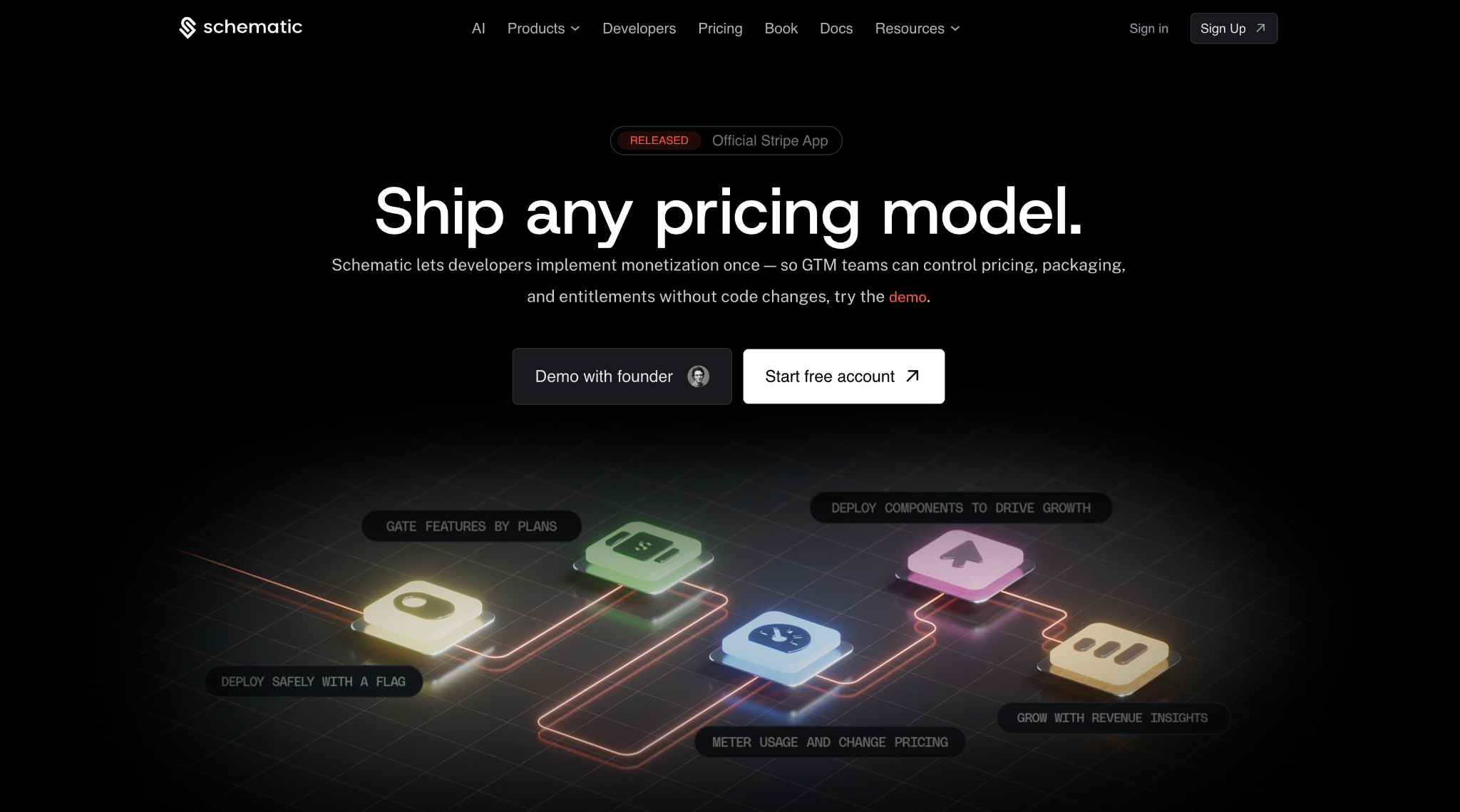
What it does: Schematic is an entitlement management platform built on Stripe. It acts as the system of record for plans, limits, trials, credits, add-ons, and exceptions, then enforces those rules inside your product at runtime instead of relying on the last billing sync.
Best for: AI and SaaS companies already running payments through Stripe that want in-app access decisions decoupled from application code, especially with a mix of self-serve and sales-led deals.
Schematic launched as an official Stripe App and raised $6.5M in 2026. Plotly, one of its customers, implemented Schematic in three weeks and shipped two new AI products with credit-based pricing in roughly half the time originally budgeted, with 5,000 signups on the new AI plan.
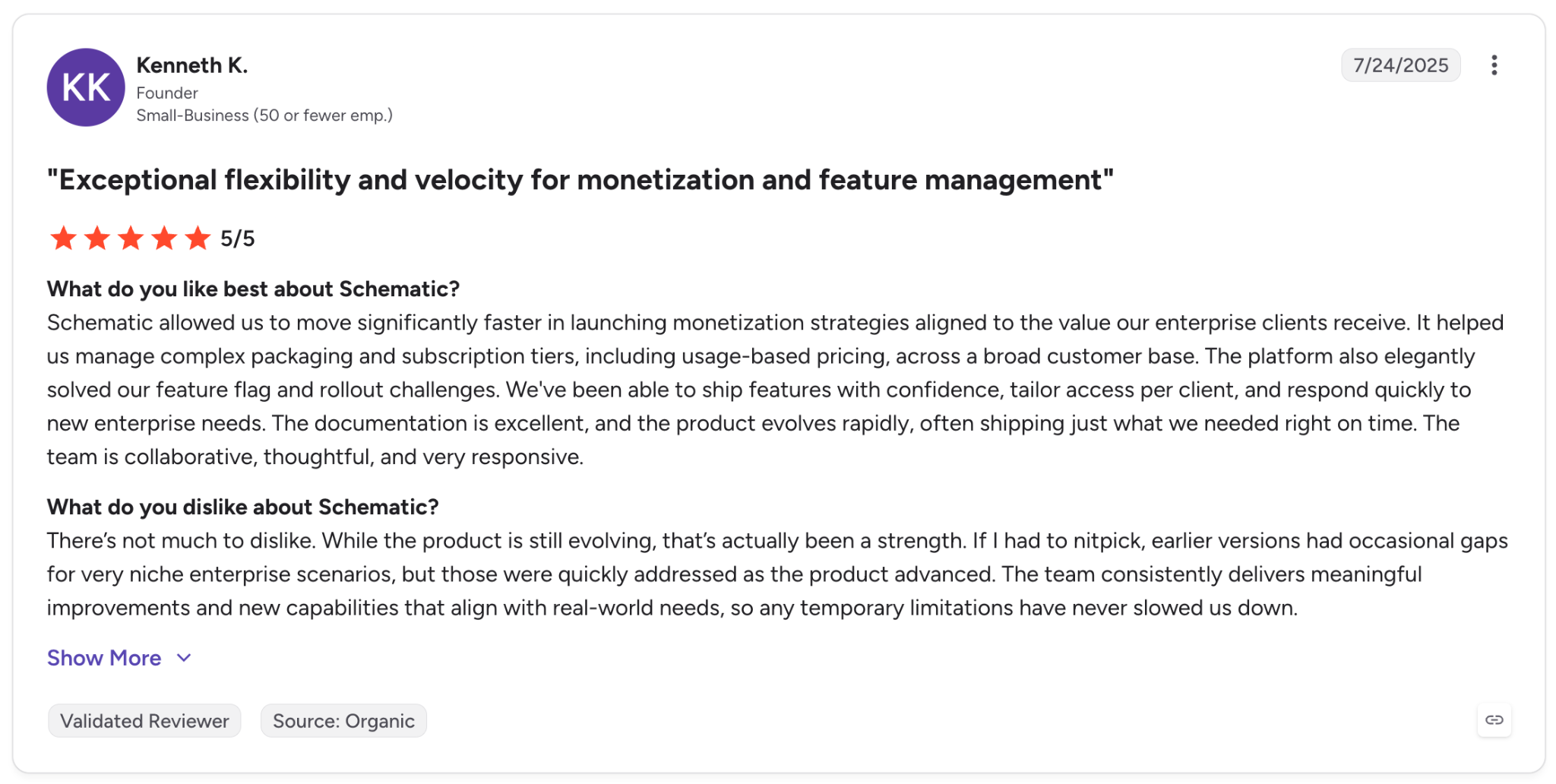
Pro: “Schematic allowed us to move significantly faster in launching monetization strategies aligned to the value our enterprise clients receive. It helped us manage complex packaging and subscription tiers, including usage-based pricing, across a broad customer base. The platform also elegantly solved our feature flag and rollout challenges.”
Con: “There’s not much to dislike. While the product is still evolving, that’s actually been a strength. If I had to nitpick, earlier versions had occasional gaps for very niche enterprise scenarios, but those were quickly addressed as the product advanced.” [Kenneth K., G2 Review, July 24, 2025]
Schematic offers a Free Starter plan, with the Growth plan priced at $200/month. Enterprise pricing is custom and requires contacting sales.
My take is that Schematic works best for AI companies already on Stripe that want to manage plans, credits, usage limits, and feature access outside application code.
I think it is especially useful for hybrid pricing models that combine subscriptions with metered actions such as tokens, generations, or agent runs.
I would look elsewhere if I needed a processor-agnostic credit ledger, multi-currency balances, or deeper real-time usage enforcement.
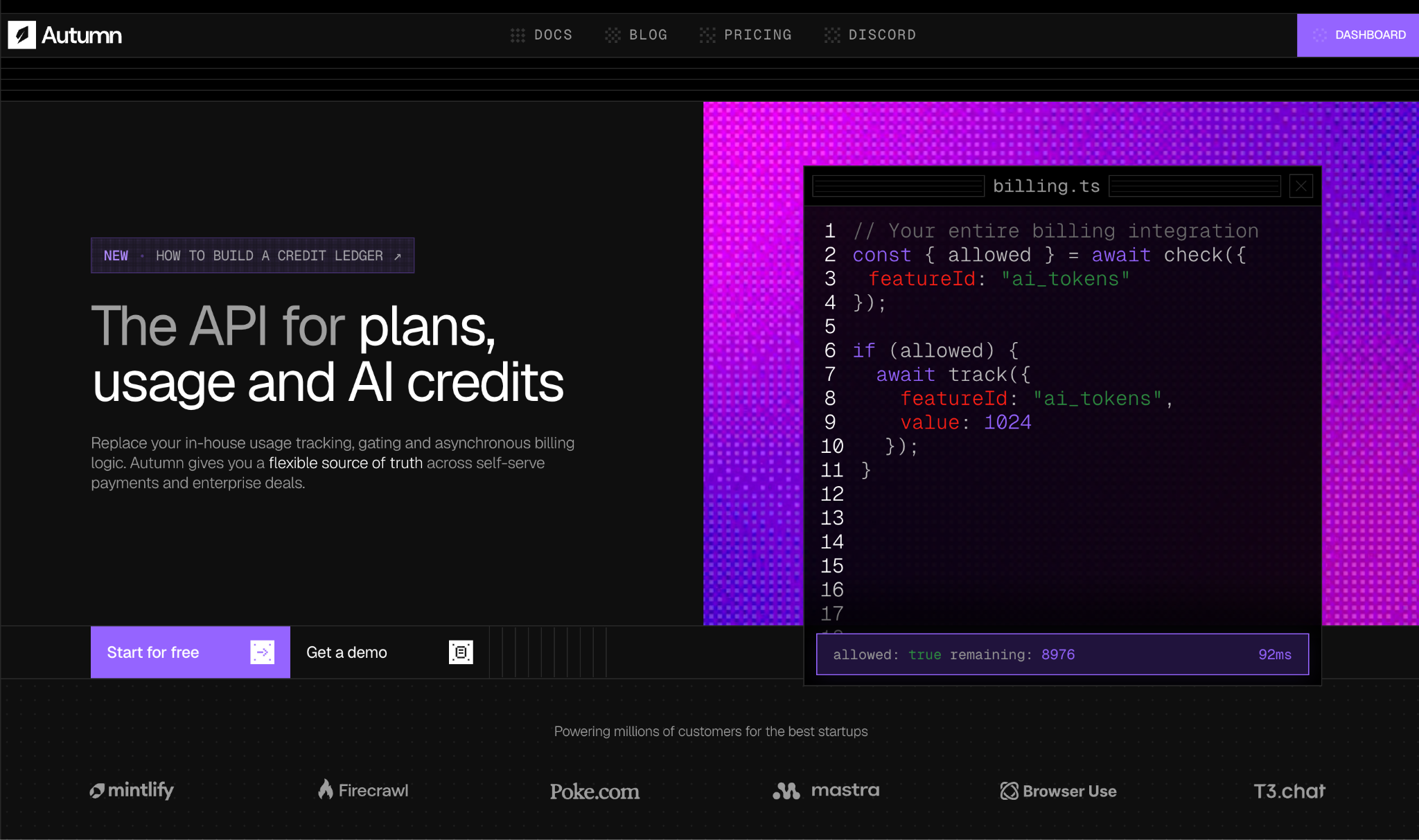
What it does: Autumn is an open-source layer between Stripe and your application. It models pricing plans, including subscriptions, credits, tiers, and add-ons, tracks usage, and enforces feature access, all without requiring you to build or maintain webhook handling yourself.
Best for: Early-stage AI companies, especially LLM or image-generation apps, that want a working pricing model live in hours instead of weeks, without hiring specifically for billing infrastructure.
Autumn reports processing more than 5 billion billing events each month, with US checks resolving in under 50ms. Its documentation also cites support for 10,000+ events per second per customer.
New teams can go live in under an hour, while Series A+ companies can get hands-on migration support with dual writing.
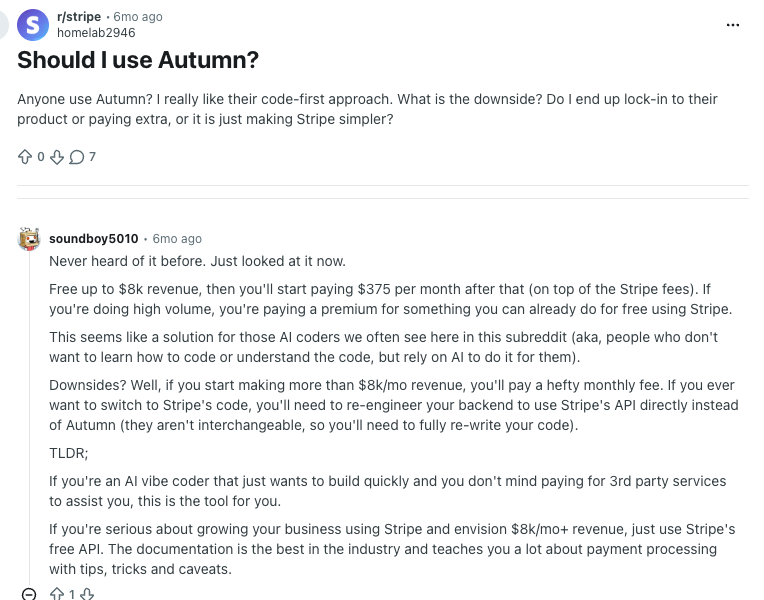
Pro: “This seems like a solution for those AI coders we often see here in this subreddit (aka, people who don't want to learn how to code or understand the code, but rely on AI to do it for them).”
Con: “Free up to $8k revenue, then you'll start paying $375 per month after that (on top of the Stripe fees). If you're doing high volume, you're paying a premium for something you can already do for free using Stripe.” [soundboy5010 Reddit user, January 12, 2026]
Start with the Free plan or upgrade to Pro for $375/month. Enterprise pricing is custom and available through Autumn's sales team.
Autumn stands out to me as the quickest route from a rough pricing idea to a working AI product. It makes sense for teams that want to launch credits, usage limits, and Stripe billing without spending weeks building the plumbing themselves.
The tradeoff is that its simplicity starts to feel restrictive once the product needs multiple processors, deeper contract logic, or more complex account structures.
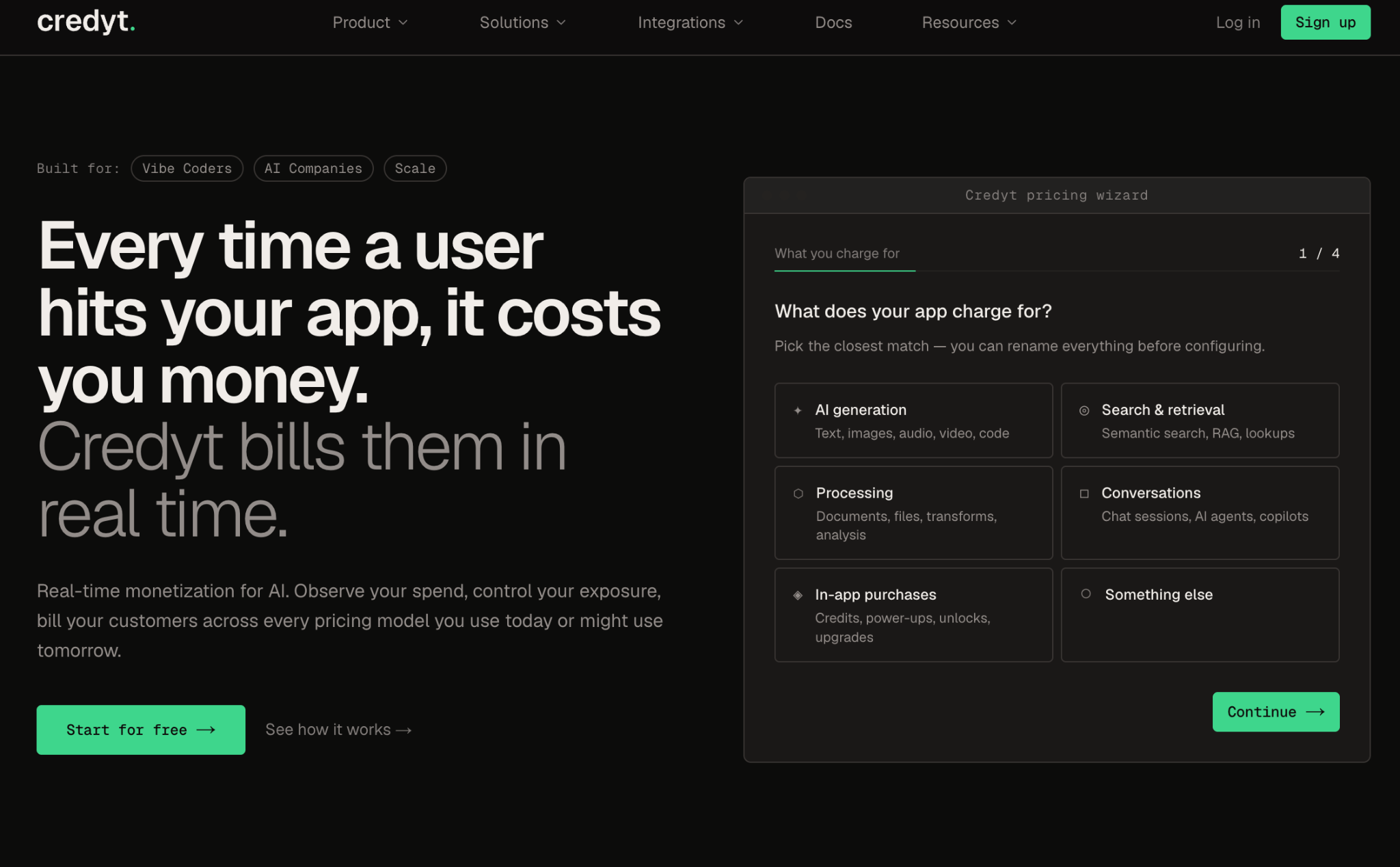
What it does: Credyt is wallet-native billing infrastructure for AI products.
It authorizes and meters usage in real time against multi-asset wallets (USD, tokens, GPU hours, or custom units), with dimensional and outcome-based pricing models built in, plus a branded, self-service customer billing portal.
Best for: AI companies that want to price by model type, quality tier, or outcome rather than a flat per-unit rate, and that are building fast enough inside AI coding tools to want billing wired up through an MCP integration instead of a traditional API integration pass.
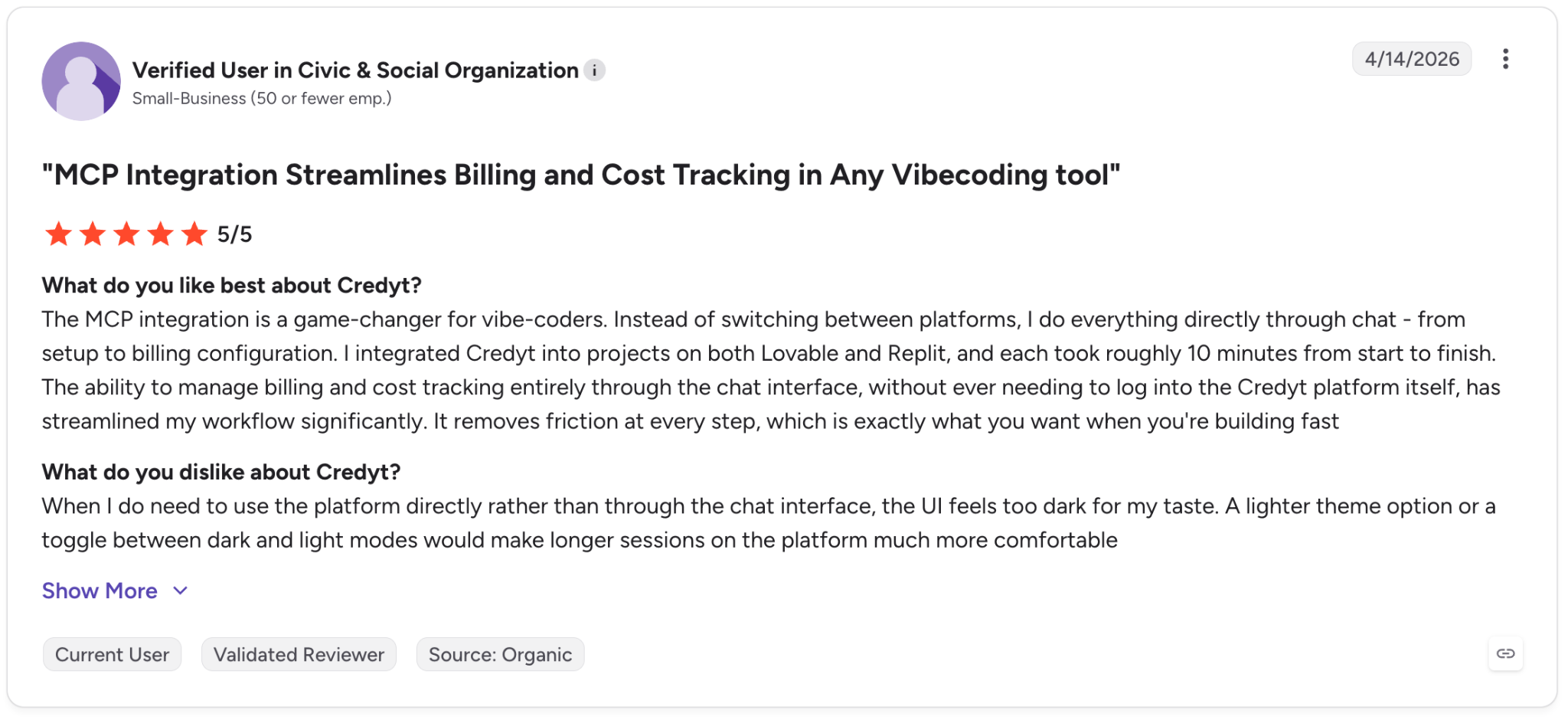
Pro: “The MCP integration is a game-changer for vibe-coders. Instead of switching between platforms, I do everything directly through chat - from setup to billing configuration. I integrated Credyt into projects on both Lovable and Replit, and each took roughly 10 minutes from start to finish.”
Con: “When I do need to use the platform directly rather than through the chat interface, the UI feels too dark for my taste. A lighter theme option or a toggle between dark and light modes would make longer sessions on the platform much more comfortable.” [Verified User in Civic & Social Organization, April 14, 2026]
Credyt is free to build and test, including the first 10 active wallets each month. Production pricing is $1 per active wallet/month, while inactive wallets cost $0 and the first 1 million monthly events are included.
In practice, Credyt makes the most sense for AI products that need more than a flat per-token or per-request price. Its wallet model and dimensional pricing fit variable AI costs well, while the MCP setup keeps implementation light.
The main thing to verify is whether the spend controls you need are live before depending on it for strict enforcement.
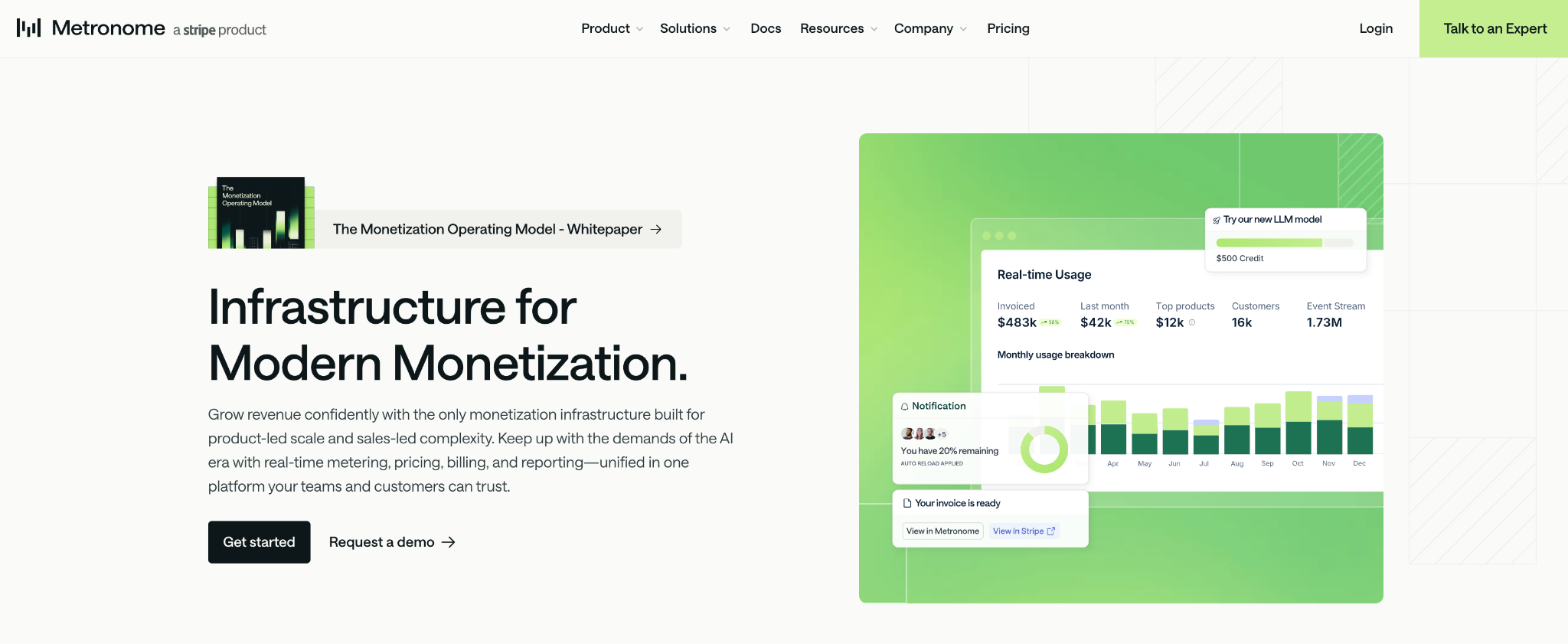
What it does: Metronome provides a pricing and billing framework built around how AI companies price and package usage, supporting usage-based, outcome-based, seat-based, hybrid, and fixed pricing metrics, plus the commit, prepaid, and enterprise agreement structures that come with each.
Best for: AI companies that need pricing to move across a full go-to-market motion, from product-led usage pricing early on to negotiated enterprise commit terms as deals get bigger, without re-platforming in between.
OpenAI moved off a homegrown, manual billing setup and onto Metronome to launch new products and manage pricing changes faster.
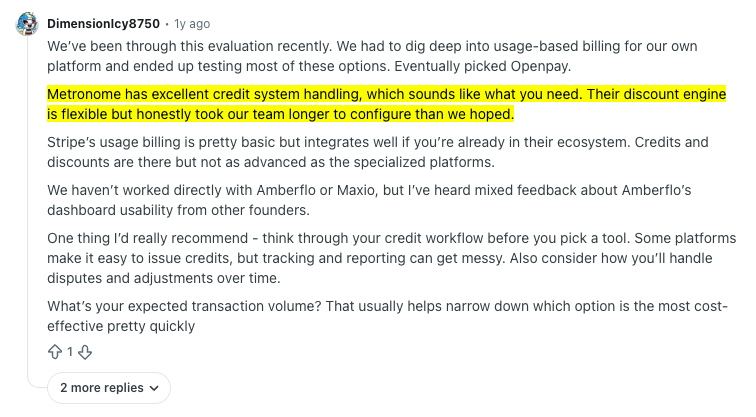
Pro: “Metronome has excellent credit system handling”
Con: “Their discount engine is flexible but honestly took our team longer to configure than we hoped.” - [u/DimensionIcy8750, Reddit User Review, July 4, 2025]
Metronome’s Starter plan charges 0.8% of billing volume plus $0.04 per 1,000 ingested events. Larger businesses can contact sales for custom pricing.
The biggest strength here is flexibility. Metronome can support evolving AI pricing models without forcing a full billing rebuild, which is useful once self-serve plans and enterprise contracts start overlapping.
The downside is that it rates usage after the fact, so it is less suited to strict pre-usage enforcement.
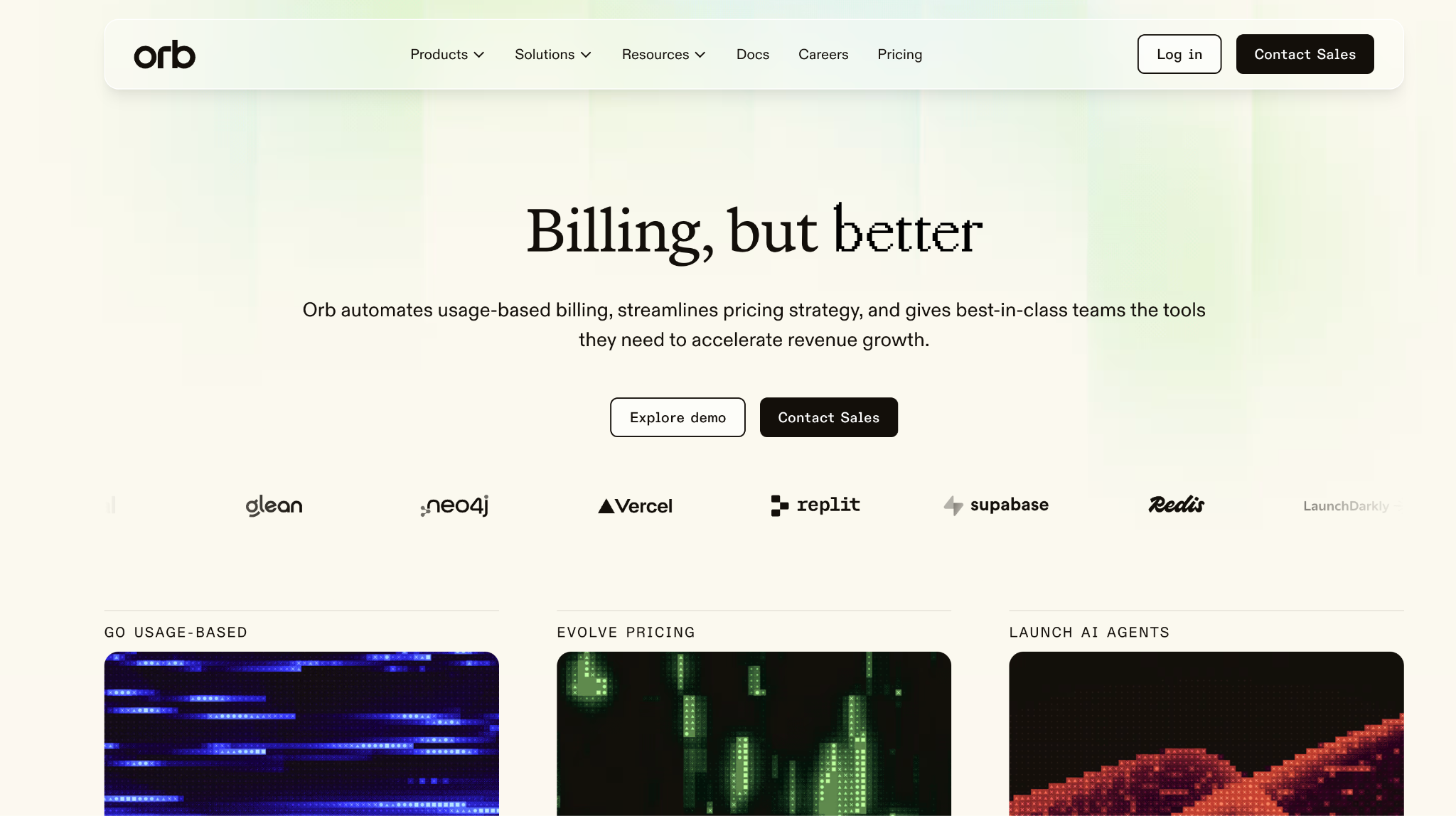
What it does: Orb models complex, evolving pricing logic on raw usage events rather than pre-aggregated totals, supporting dimensional pricing, prepaid credits, contract commits, and simulation-driven price changes built for how AI companies actually price usage.
Best for: AI companies whose pricing needs to keep evolving, across metrics, models, and mid-cycle changes, without re-architecting the billing stack every time a new pricing idea needs to ship.
Adyen closed its acquisition of Orb on July 1, 2026, and Orb now operates under Adyen's ownership, run initially under what Adyen has described as an incubator model to preserve product continuity.
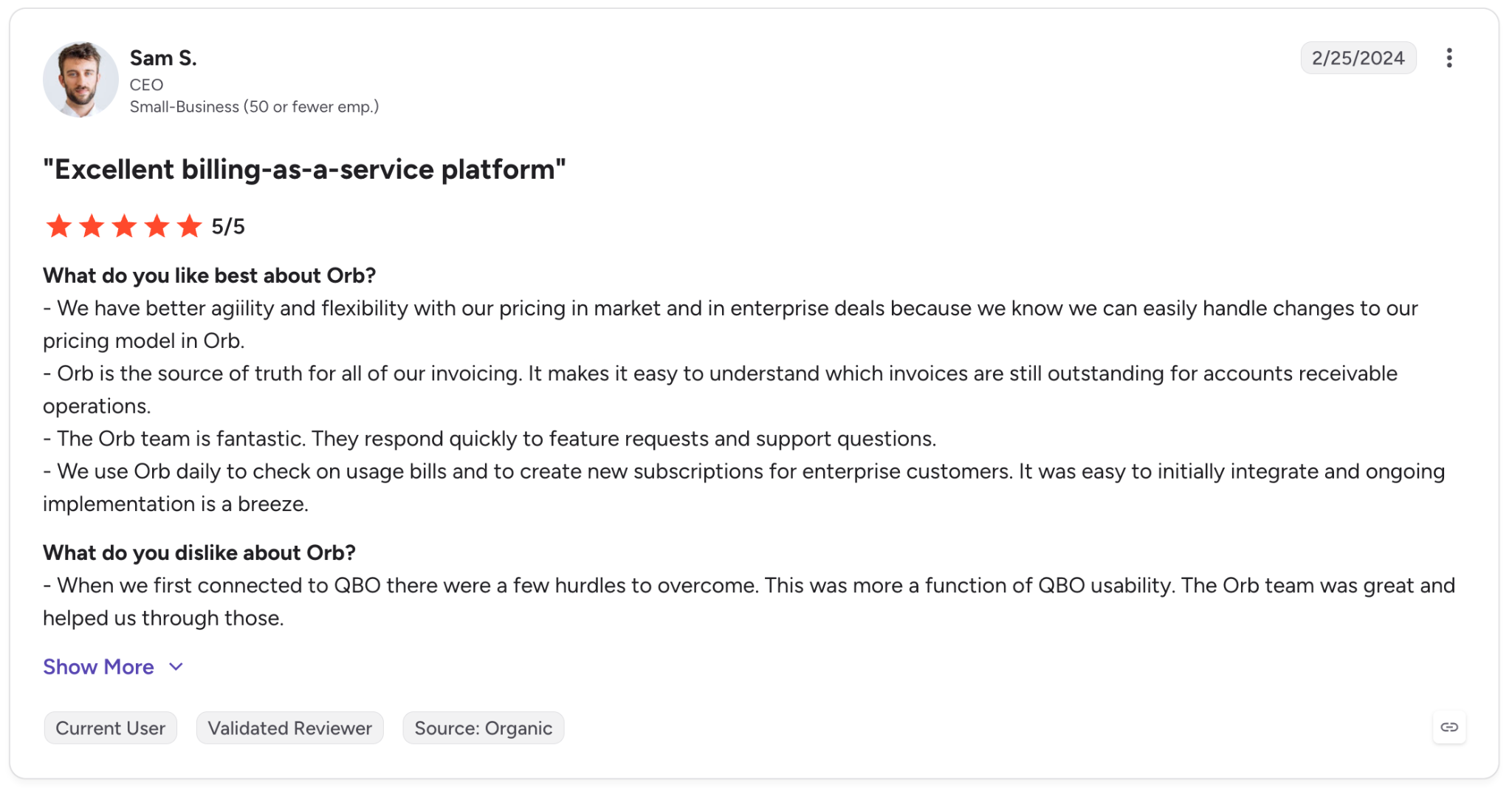
Pro: “We use Orb daily to check on usage bills and to create new subscriptions for enterprise customers. It was easy to initially integrate, and ongoing implementation is a breeze.”
Con: “When we first connected to QBO, there were a few hurdles to overcome. This was more a function of QBO usability. The Orb team was great and helped us through those.” [Sam S., February 25, 2024]
Orb does not publish fixed pricing. All plans use custom pricing across Core, Advanced, and Enterprise tiers.
Orb earns its place here through its simulation tools. For AI companies experimenting with new rates or packaging, being able to test the impact on real customer usage can prevent expensive mistakes.
Its raw-event model also gives teams room to adjust metrics, credits, and contract terms as pricing evolves. I would weigh that flexibility against the closer connection to Adyen, especially if processor independence matters long term.
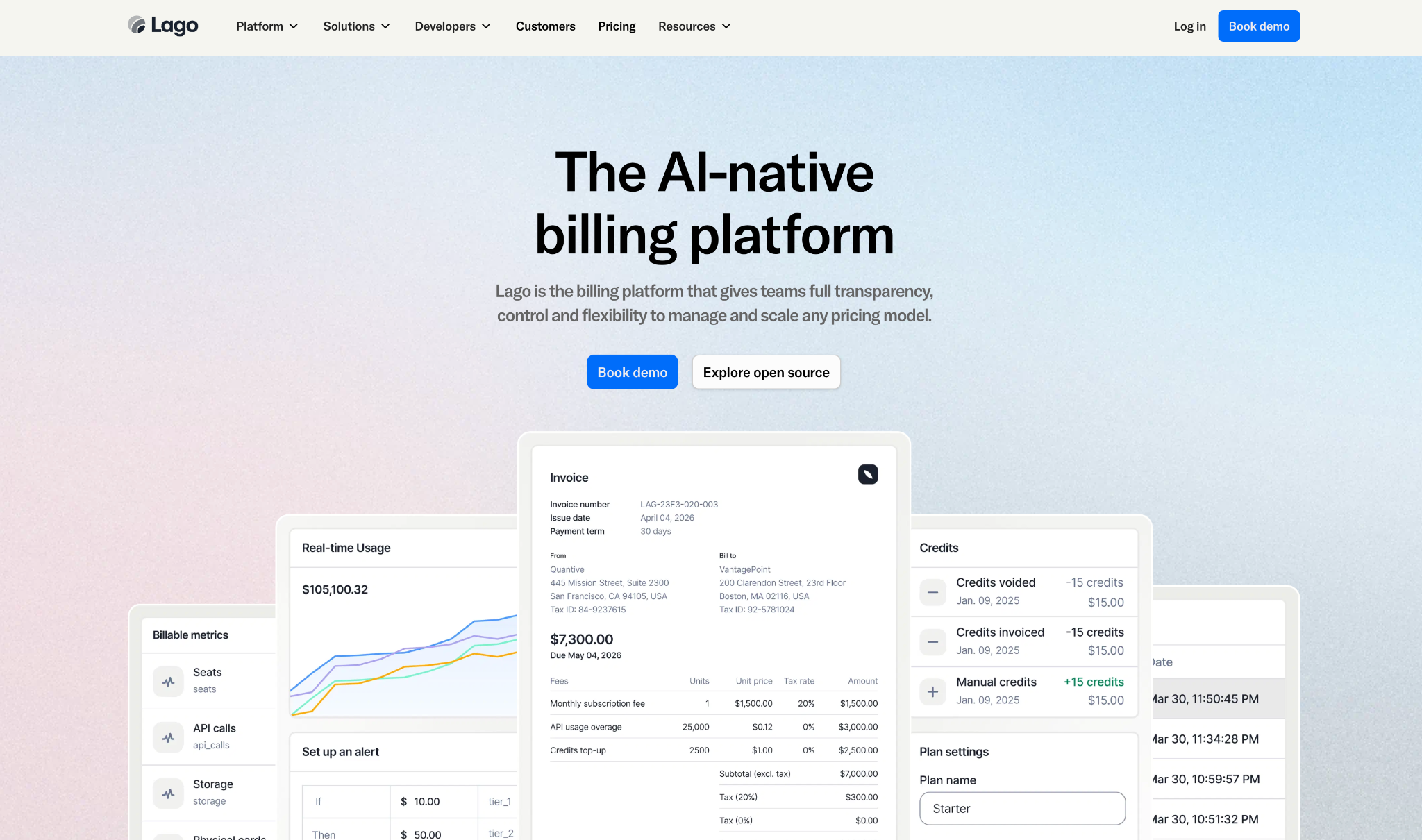
What it does: Lago is an open-source, AI-native billing system that ingests raw usage data (tokens, GPU hours, credits, API calls, outcomes) and converts it into charges, without pre-aggregation, so pricing logic can change as fast as AI margins do.
Best for: AI companies that need to bill for tokens, compute, or outcome-based usage at real event volume, and want to deploy on their own infrastructure for data sovereignty and control.
Mistral AI runs subscriptions and usage-based billing for dozens of products on Lago. Lago reports handling up to 1 million events per second, with $829M of invoices issued monthly based on total API requests in October 2025.
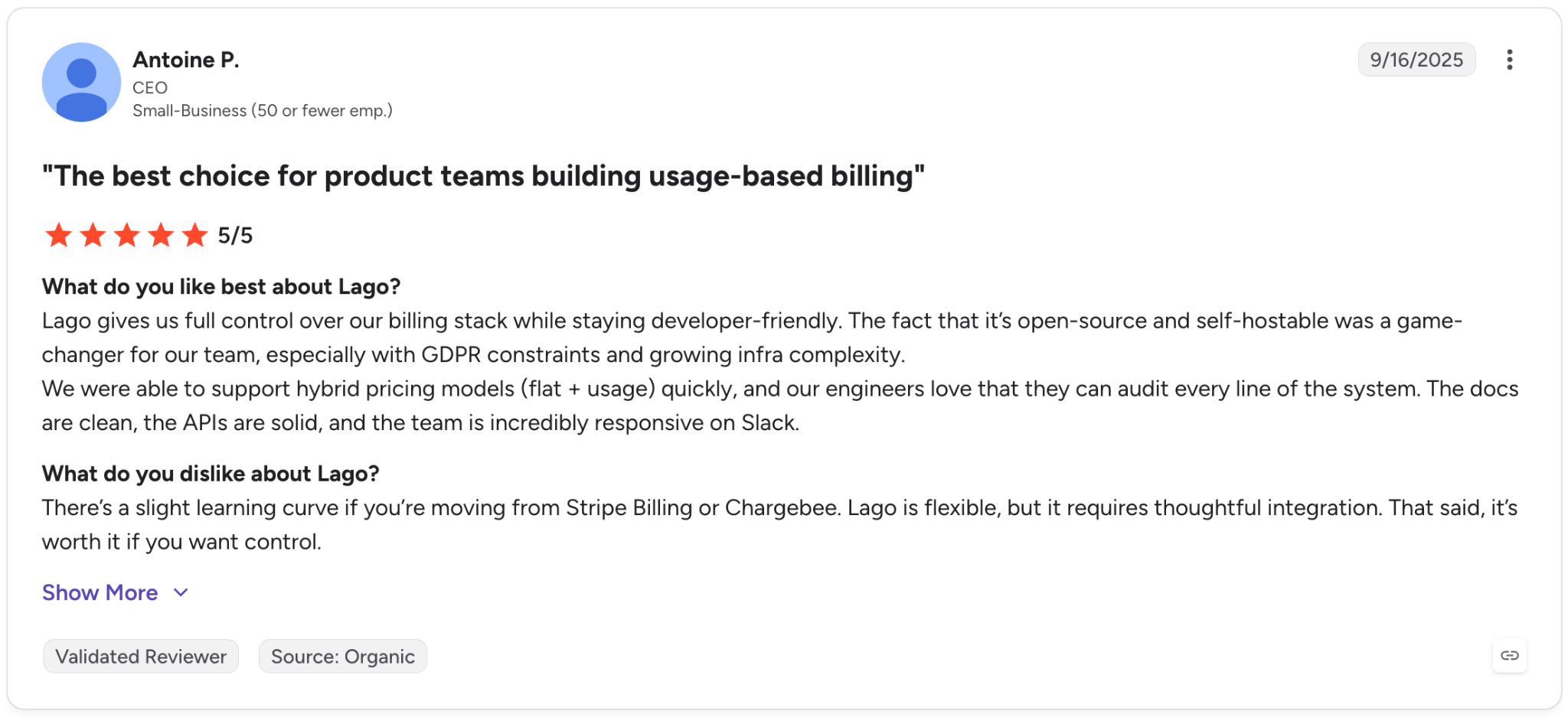
Pro: ”We were able to support hybrid pricing models (flat + usage) quickly, and our engineers love that they can audit every line of the system. The docs are clean, the APIs are solid, and the team is incredibly responsive on Slack.”
Con: “There’s a slight learning curve if you’re moving from Stripe Billing or Chargebee. Lago is flexible, but it requires thoughtful integration. That said, it’s worth it if you want control.” [Antoine P., G2 Review, September 16, 2025]
Lago does not publish fixed pricing. Its Premium plan uses custom pricing, available through cloud or self-hosted deployment.
Lago is the strongest choice if you want to own your pricing infrastructure outright, without a payment processor's acquisition later deciding the roadmap for you.
The right fit depends on how your pricing model needs to flex today, and how much of that logic you want engineering to maintain versus configure through a UI.
Choose Schematic if you:
Choose Autumn if you:
Choose Credyt if you:
Choose Metronome if you:
Choose Orb if you:
Choose Lago if you:
Skip this category entirely if your engineering team's actual bottleneck is deciding what a request should be allowed to do before it happens, not how the plan gets priced or packaged in the first place.
After testing these platforms, the clearest takeaway is that the right choice depends on where your pricing setup is today.
Autumn is the fastest route to a working model for an early-stage AI product, while Schematic makes more sense when you already use Stripe and want to move entitlements out of application code.
Credyt is the more interesting option for wallet-based pricing and pre-usage authorization, especially if you’re already building inside AI coding tools. Once pricing and usage grow more complex, Metronome and Lago become stronger candidates.
Metronome is the stronger fit for teams that need deep pricing flexibility across usage, credits, and enterprise agreements. Lago gives you more control over the infrastructure and deployment model, while Orb stands out for testing complex pricing changes against real usage before they go live.
Being able to test changes against real usage is valuable, though I would factor Adyen’s ownership into the decision if processor independence matters to your team.
Pricing platforms determine what a customer should pay. Stigg determines whether the product should allow the next request. Unlike an AI pricing platform, it acts as the usage runtime for AI products, enforcing credits, entitlements, limits, and spend governance before usage occurs.
Here are the core capabilities that make up Stigg’s usage runtime:
Ready to learn more? The Stigg docs show how to add synchronous checks, credits, and usage limits to your existing stack without replacing the pricing or billing tools you already use.
The best AI pricing platform in 2026 depends on your stage and stack.
Autumn and Schematic suit early-stage companies already on Stripe, Credyt suits companies wanting wallet-native, pre-usage authorization, and Metronome or Lago suit companies with high-volume, complex usage patterns.
No. Most AI pricing platforms define plans, packaging, and rates, then bill based on usage that already happened. Deciding whether a specific request is allowed to happen at all, before it's counted or billed, is a separate function that typically requires a dedicated enforcement layer.
Yes, AI pricing platforms can work without Stripe, though it depends on the platform. Schematic and Autumn are both built directly on Stripe, while Lago is payment-agnostic and self-hostable, and Orb and Metronome support custom billing arrangements independent of any single processor.
It varies by vendor and usage volume. Schematic offers a free Starter plan with Growth at $200/month, and Autumn is free up to $8K in revenue before Pro pricing kicks in at $375/month.
Credyt is free for the first 10 wallets and 1 million monthly events, then $1 per active wallet per month. Metronome's Starter plan charges 0.8% of billing volume plus $0.04 per 1,000 ingested events.
Orb and Lago's Premium plan uses custom pricing available only by contacting sales.
%20(1).png)
%20(1).png)