Industry Insights
Paying for Outcomes Is an Adjudication Problem
RFC v0.1: a vendor-neutral, research-backed proposal for pricing AI agents on outcomes, with a reference design and pre-registered predictions.

Caching, smart routing and the end of hard stops: what OpenAI, Databricks, Glean and more said about AI financial engineering at After Tokens 2026.
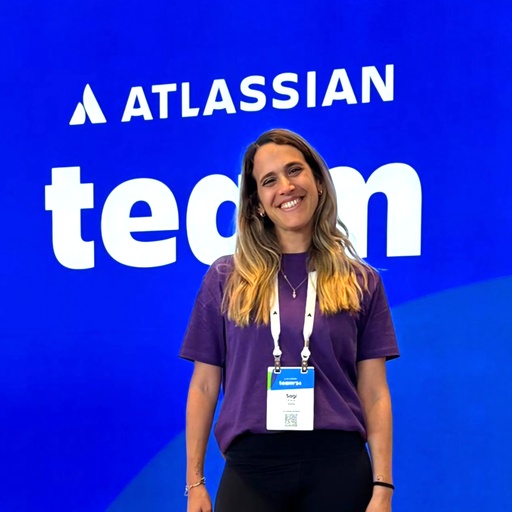


On November 10, more than 170 financial engineers joined us in San Francisco for After Tokens. They came to hear from 24 speakers from OpenAI, Databricks, Glean, Vercel and more, and to talk about what happens after the model call: metering, credits, limits, and who pays for what.
More than 1,000 people registered, far beyond what we expected. That told us two things. People care deeply about these questions, and they've been missing a place to work through them together. We heard the same line from almost everyone in the room: these are my people, and these are my problems.
Stigg CEO Dor Sasson named the discipline in his opening keynote: financial engineering. In AI, that means running cost, pricing and value capture as one system, instead of across teams that compare notes once a quarter. His prediction: "I'm very much convinced that 2027 is the year that we can no longer treat them separately." The rest of the day showed why.
This post brings the room to you. Here's what our speakers said, the questions the room kept coming back to, and what it means for teams running AI in production.

One theme dominated the stage: agents are now the main consumer of AI.
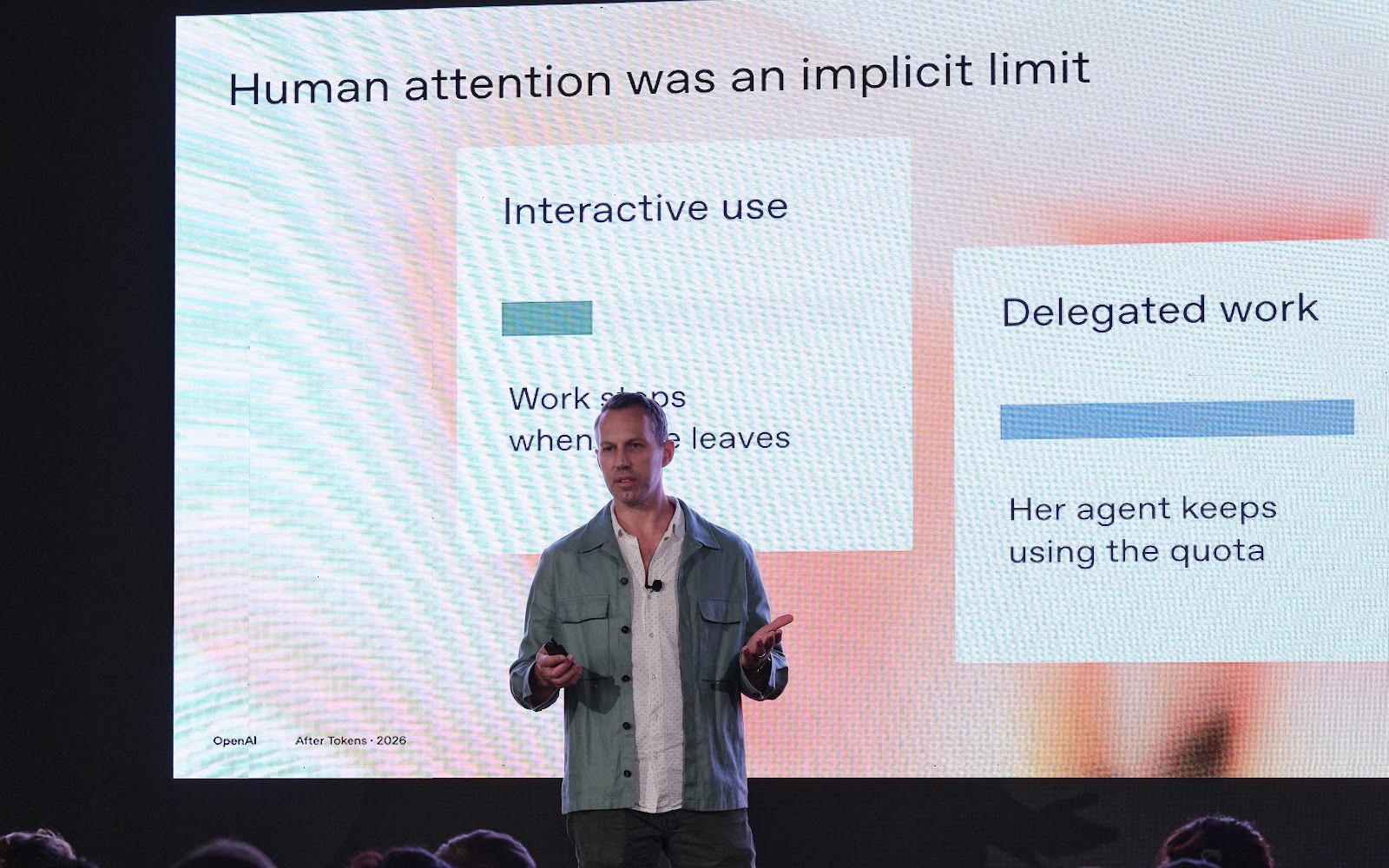
On February 6, 2026, agents used more tokens than humans on OpenRouter for the first time. Peter Walker showed weekly volume climbing from about 6 trillion tokens at the start of the year to 190 trillion. Unlike people, agents never log off. As OpenAI's Jonah Cohen put it, humans eat, sleep and rarely use their full quota. Agents use everything they're given, so hitting a rate limit is no longer an edge case. It's business as usual. That breaks any pricing model built on low utilization. WRITER's Matan-Paul Shetrit did the math: "If I have an agent that works 24/7 and doesn't rest, it can do the job of a whole department." One agent can replace 100 or 1,000 seats. That shift showed up in three places on stage: caching, routing and limits.
Cache layers came up in almost every talk, and agents are the reason. They pull about 90% of their tokens from cache, against about 30% for humans. Since cached input costs about a tenth of new input, the cache hit rate moves the bill far more than list prices do. Jonah Cohen showed how big that lever is from the provider's side: "If Sam came to me and said, 'Jonah, I need you to double our revenue overnight,' I know exactly what I would do. I would turn off the cache." For the teams paying the bill, it works the other way: poor caching costs 5 to 20x more per session. Many are already acting on it, and the median agentic cache rate across inference providers rose from 67% in January to about 90%. Peter Walker's advice: if you optimize one number, make it your cache rate.
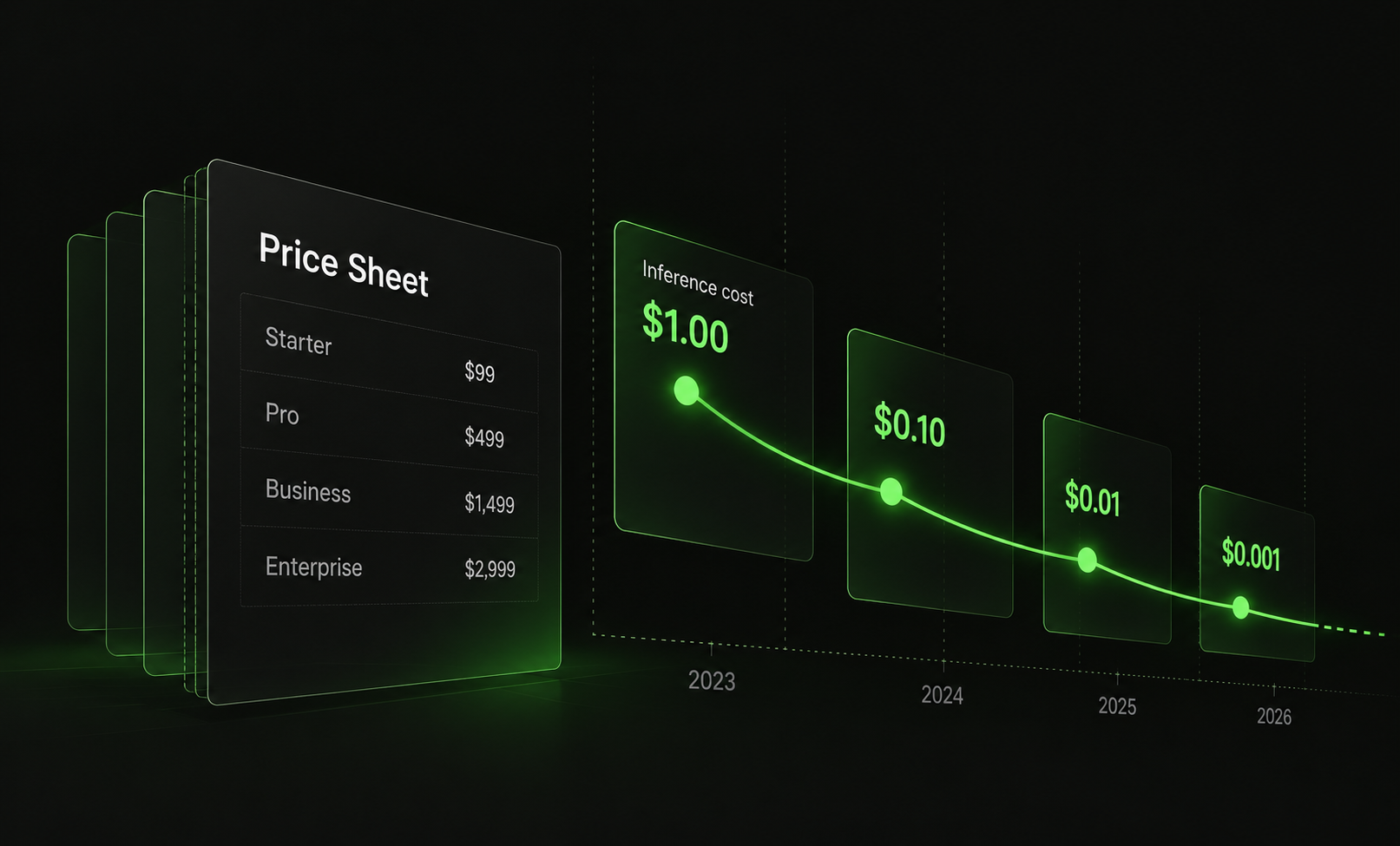
Smart routing means sending each request to the model that fits it, instead of to the most powerful one by default. It matters because cheaper tokens won't shrink the bill on their own. Peter's data showed that price per token has dropped 80% since the start of 2024, yet spend is up 70x as usage grew even faster. At that volume, sending every prompt to a frontier model is a fast way to burn cash. Picking the cheapest model on the price list isn't the answer either. Price per token says little about what a job really costs, as Jonah showed: a model at $10 per million tokens came out 40% cheaper than one at $5, because it finished with 240,000 tokens instead of 800,000. Glean shows what that looks like in practice. Advait Rane and Kathleen Qin route each request to the cheapest model that still handles it well. Token costs fell 81%, and users preferred the answers 78% of the time. Routing also can't be set once and forgotten. 73% of October tokens went to models less than 60 days old, so the best model for a job keeps changing. As Peter put it: "There is no such thing as a permanent home at the top of these leaderboards."
Work that runs around the clock also breaks how limits are enforced. Vidhi Agrawal from Databricks described an engineer who left a job running over a weekend and came back to a $50K bill, the tool's entire annual budget. The bill was accurate, but nobody saw it coming, and a surprise breaks trust as fast as a mistake. The instinct is to add a hard cap, but cutting a customer off mid-run just trades one incident for another. Temporal's Tomas Lorinc put it plainly: "None of our customers would be happy if we gave finance the control to take down the production application." Instead, teams are building the layer in between, like Databricks' ladder of show, warn, approve, adapt and only then stop. The consensus: dynamic policies and granular controls by team, user and agent, decided while the request runs.
Put it all together and you get Dor's point from the morning. Caching and routing decide what AI costs, while limits and pricing decide what it earns, and today those decisions often sit with different teams. By 2027, they'll have to work as one. That's AI financial engineering.
The people doing this work sit between engineering, product and finance, and they rarely get a room of their own. On November 10, they did. Jonah Cohen summed up the mood: "I've never felt so much like I was surrounded by 'my people'." We heard versions of that line all day.

To everyone who made it to San Francisco: thank you for spending this day with us. And to those who couldn't join, whether you were on the waitlist or on the other side of the world: consider this our way of bringing the room to you. It's just a taste. We'll share full sessions over the coming weeks, and we're already planning the next edition.