Blog
/
Guides

Usage-Based Billing Software: 6 Top Picks for 2026

The 6 best usage-based billing software platforms for AI companies in 2026, compared on pricing, deployment, features, and real user reviews.

Sara NelissenSara Nelissen
Written by
Sara Nelissen
Last updated
August 14, 2026
Usage-Based Billing Software: 6 Top Picks for 2026

Table of contents

A flat subscription plan breaks the moment a customer's usage stops resembling the average it was priced around, and finding a replacement typically falls to whoever complained about it loudest.

Here's what each of these six usage billing software platforms handles well, where it falls short, and who it's built for.

TL;DR Best usage-based billing software in 2026

  1. Metronome: Best for teams already deep in Stripe's ecosystem
  2. Orb: Best for enterprises wanting custom, SQL-defined usage metrics
  3. Lago: Best for teams that want full control over their own infrastructure instead of a vendor's roadmap
  4. Chargebee: Best for companies that need usage billing working alongside subscriptions and enterprise contracts in one system
  5. Maxio: Best for B2B companies that need usage billing and revenue recognition working together
  6. Zuora: Best for large enterprises with heavy compliance and revenue recognition needs

6 Best usage-based billing software compared

Software Pricing Deployment Standout feature
Metronome Starter includes $100K in billing volume, then 0.8%; custom pricing above that Cloud, now part of Stripe High-volume metering used by major AI labs
Orb Custom, sales-based across Core, Advanced, and Enterprise tiers Cloud, now part of Adyen Pricing simulation against historical usage
Lago Free to self-host; Premium plan custom-priced for cloud or self-hosted deployment Self-hosted or managed cloud Open-source, provider-agnostic
Chargebee Free up to $250K cumulative billing, then 0.75%; Performance from $7,188/year Cloud Combines recurring and usage charges in one invoice
Maxio Grow plan at $599/month for up to $100K in monthly billings; Scale is custom above that Cloud Combines usage billing with GAAP/IFRS revenue recognition
Zuora Custom enterprise pricing, not published Cloud Deep revenue recognition and ERP integration

Disclaimer: Prices are subject to change. Always verify current pricing on each vendor's official website before making a purchasing decision.
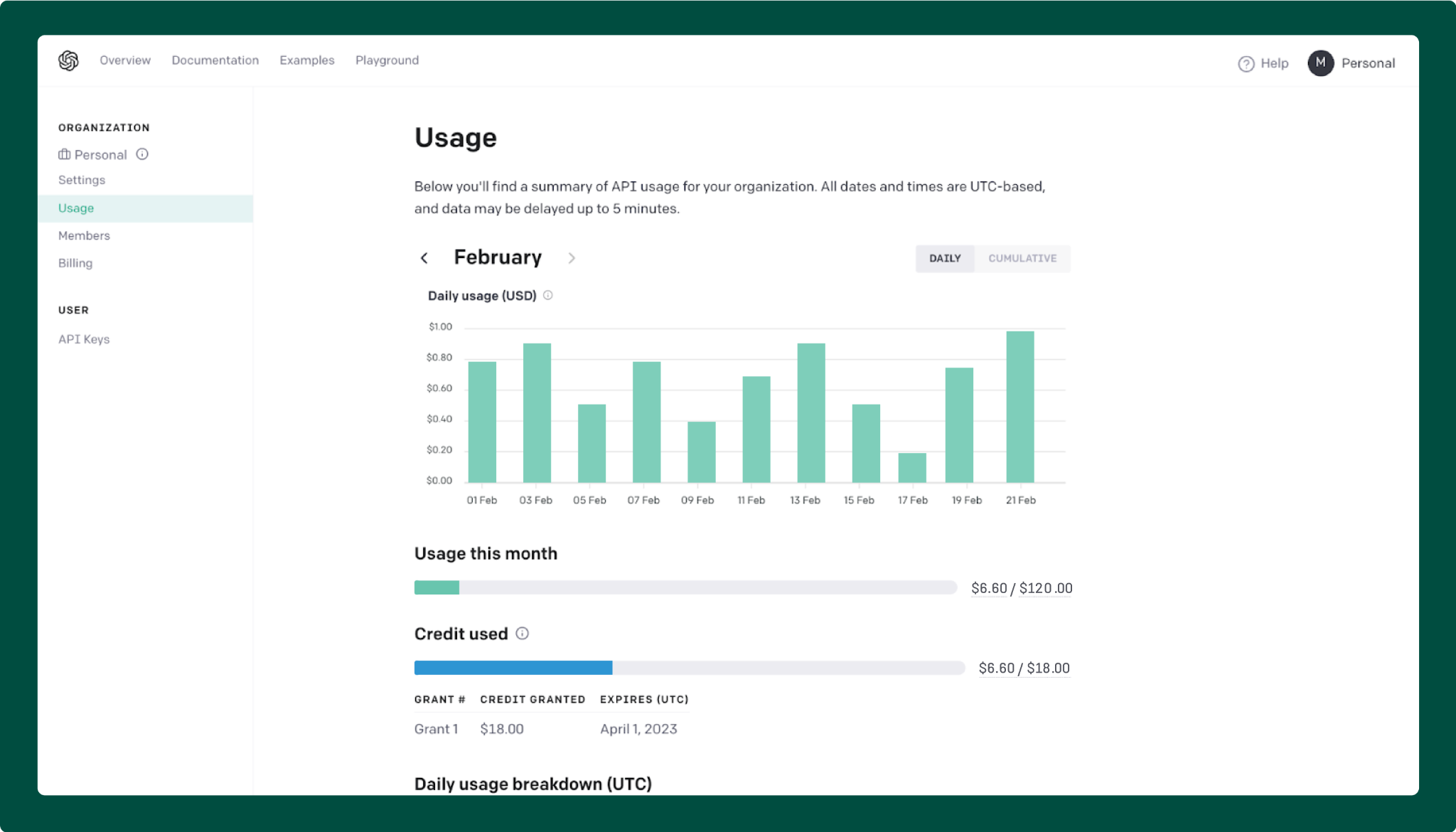
1. Metronome: Best for teams already committed to Stripe

What it does: Metronome meters high-volume usage events and converts them into billable line items, with SQL-based tools for defining custom billable metrics.

Best for: Teams already running payments through Stripe who need usage metering built to handle high-volume AI event traffic.

Metronome's client list includes OpenAI, Anthropic, Databricks, and Nvidia, which reflects the kind of usage volume it's built to handle.

Stripe completed its acquisition of Metronome in January 2026, in a deal reported at roughly one billion dollars, and Metronome's roadmap is now inside Stripe's broader billing strategy.
Key features

  • SQL-based metrics without pre-aggregation: Queries run directly against raw stored events, so pricing can be iterated or backdated without touching the underlying data pipeline.
  • Streaming metrics with low-latency alerting: Usage-based alerts can fire in near real time, useful for catching cost-intensive abuse or fraud before it accumulates into a large bill.
  • Modular pricing engine: Rate cards, commits, and credit models act as reusable building blocks for constructing different contract types without custom engineering per deal.
  • Real-time data sync: Usage and spend data flows into the product, data warehouse, and CRM or ERP systems, giving customers and internal teams the same numbers.

Pros

  • Proven at genuinely high usage volume, with named AI-industry customers to back it up.
  • SQL-level control over metric definitions means pricing changes and backdated corrections don't require touching the data pipeline itself.
  • Low-latency streaming metrics can catch cost-intensive abuse or fraud in near real time, before it turns into a large, disputed invoice.

Cons

  • Configuration takes real engineering time; setting up billable metrics and pricing structures requires SQL expertise.
  • Bills on a post-usage cycle instead of debiting a balance in real time as usage happens.
  • Pricing isn't published, and one Reddit reviewer specifically called it expensive relative to other options they evaluated.

What users say

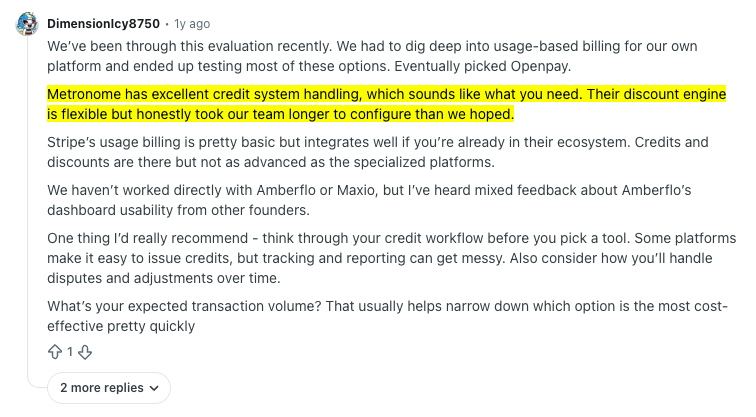
Pro: “Metronome has excellent credit system handling”

Con: “Their discount engine is flexible but honestly took our team longer to configure than we hoped.” - [u/DimensionIcy8750, Reddit User Review, July 4, 2025] 

Pricing

Metronome’s Starter plan charges 0.8% of billing volume plus $0.04 per 1,000 ingested events. The Custom plan has no published price, so businesses need to contact Metronome for a quote.

Bottom line

I'd recommend Metronome to teams that need SQL-level control over how usage gets defined and priced, and that expect pricing to change often enough that backdating and iterating metrics without pipeline rework becomes a real requirement.

If your pricing model is simple and unlikely to change much, the SQL and engineering dependency here is probably more than you need.
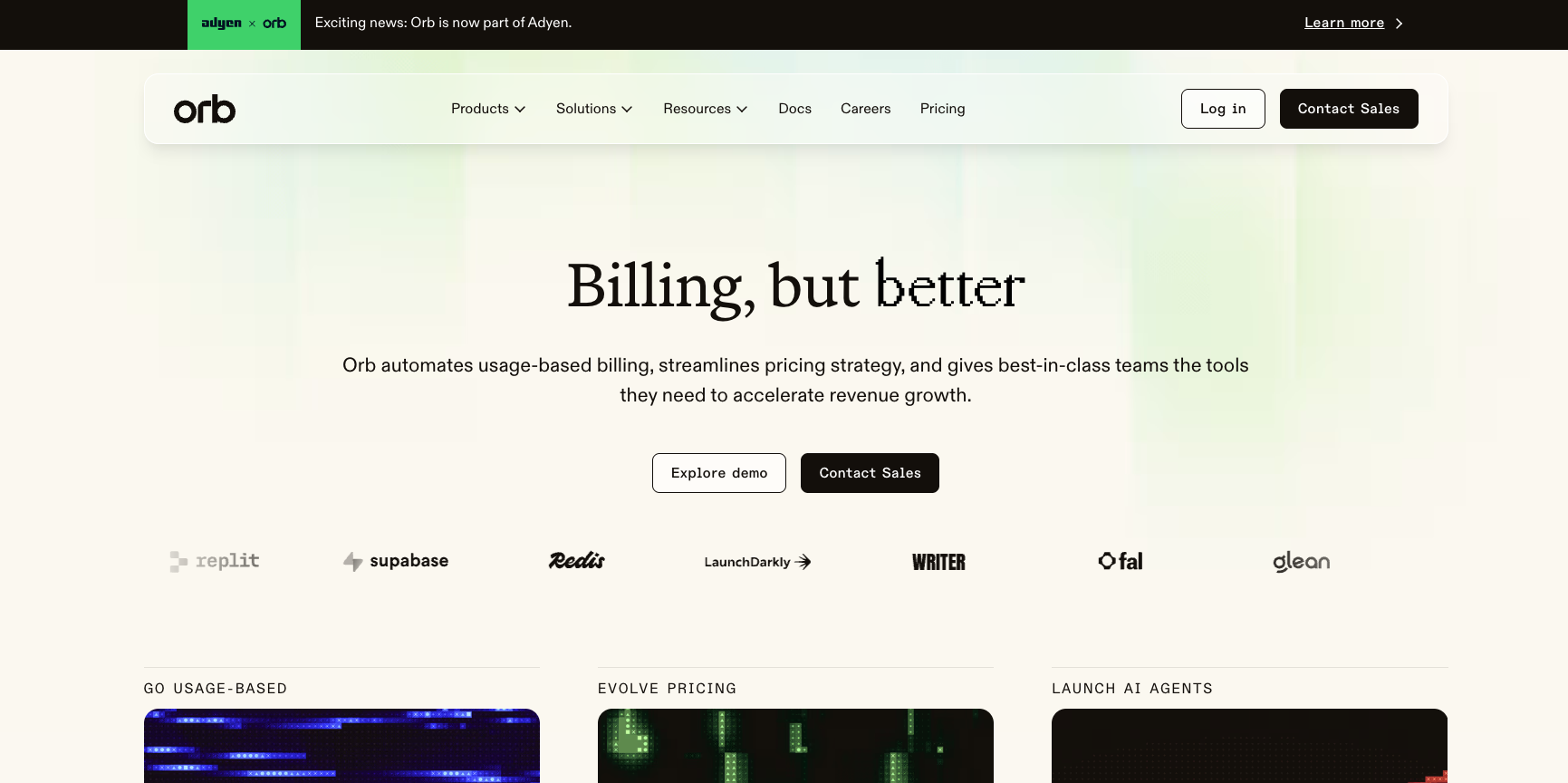
2. Orb: Best for custom, SQL-defined usage metrics

What it does: Orb stores usage events at full, individual granularity instead of pre-aggregating them, so invoices can be corrected, backdated, and audited after the fact, and proposed pricing changes can be tested against real historical usage before they go live.

Best for: Enterprises that want to test proposed pricing changes against real usage data before launching them, and that are comfortable evaluating a product now owned by a payments company instead of an independent vendor.

Adyen closed its acquisition of Orb on July 1, 2026, in a deal valued at $335 million, and Orb now operates under Adyen's ownership, run initially under what Adyen has described as an incubator model to preserve product continuity.
Key features

  • Full event-level data retention: Usage events are stored individually instead of pre-aggregated, so invoices can be corrected, backdated, and audited without rebuilding the underlying data
  • Pricing simulation against real usage: Proposed pricing or contract changes can be tested against historical data before going live, reducing the risk of an unexpected invoice
  • Version-controlled pricing rollouts: Pricing changes ship with tracking built in, useful for AI companies whose model and agent pricing shifts often
  • Customer-facing spend controls: Usage alerts and dashboards give customers visibility into their own consumption before it turns into a billing surprise

Pros

  • Version-controlled pricing rollouts and customer-facing spend dashboards give both the team and the customer visibility into changes as they happen.
  • Orb continues running as a standalone product under Adyen, with customers still free to use their own payment processor.
  • Full event-level data retention means invoices can be corrected, backdated, and audited after the fact, without rebuilding correction events by hand.

Cons

  • A Reddit user reports the underlying data model makes reliable ARR tracking difficult even months into implementation, alongside occasional service outages.
  • Pricing isn't published; enterprise deals go through a sales conversation.
  • The same Reddit discussion we saw earlier frames Orb as solid for engineering-owned billing, but a weaker fit if finance and accounting need to own invoicing directly.

What users say

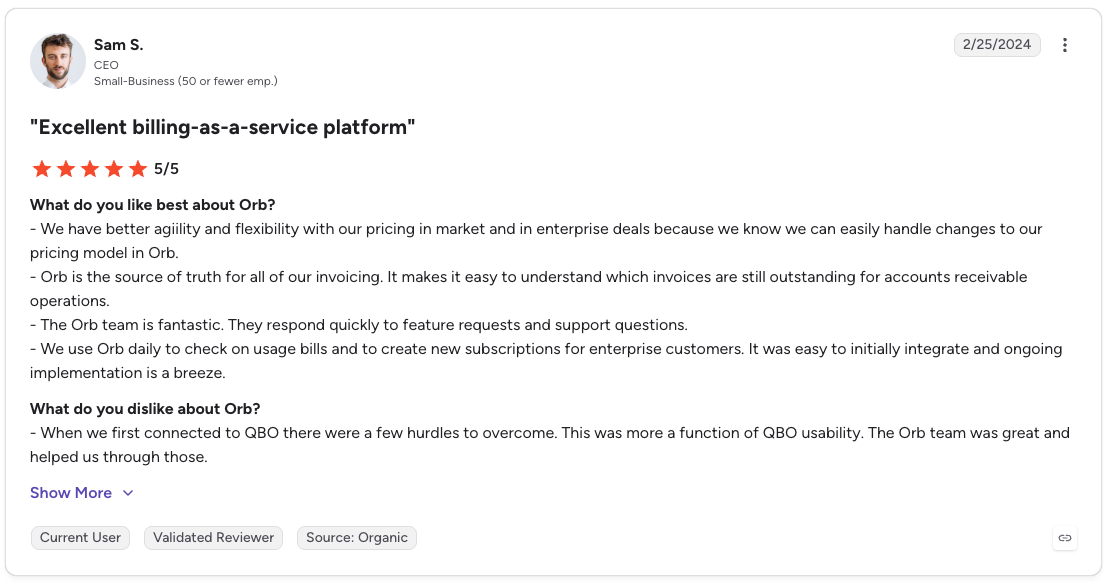
Pro: “Orb is the source of truth for all of our invoicing. It makes it easy to understand which invoices are still outstanding for accounts receivable operations.”

Con: “When we first connected to QBO there were a few hurdles to overcome. This was more a function of QBO usability. The Orb team was great and helped us through those.” [Sam S., G2 Review, February 2, 2024]

Pricing

Orb does not publish fixed pricing. All plans use custom pricing, with Core, Advanced, and Enterprise tiers that add progressively more integrations, support, and enterprise capabilities.

Bottom line

I'd recommend Orb to enterprises that want pricing simulation and custom metric flexibility, especially if you're already comfortable working with Adyen for payments. If PSP neutrality matters to you specifically, the Adyen acquisition is worth weighing carefully before committing.
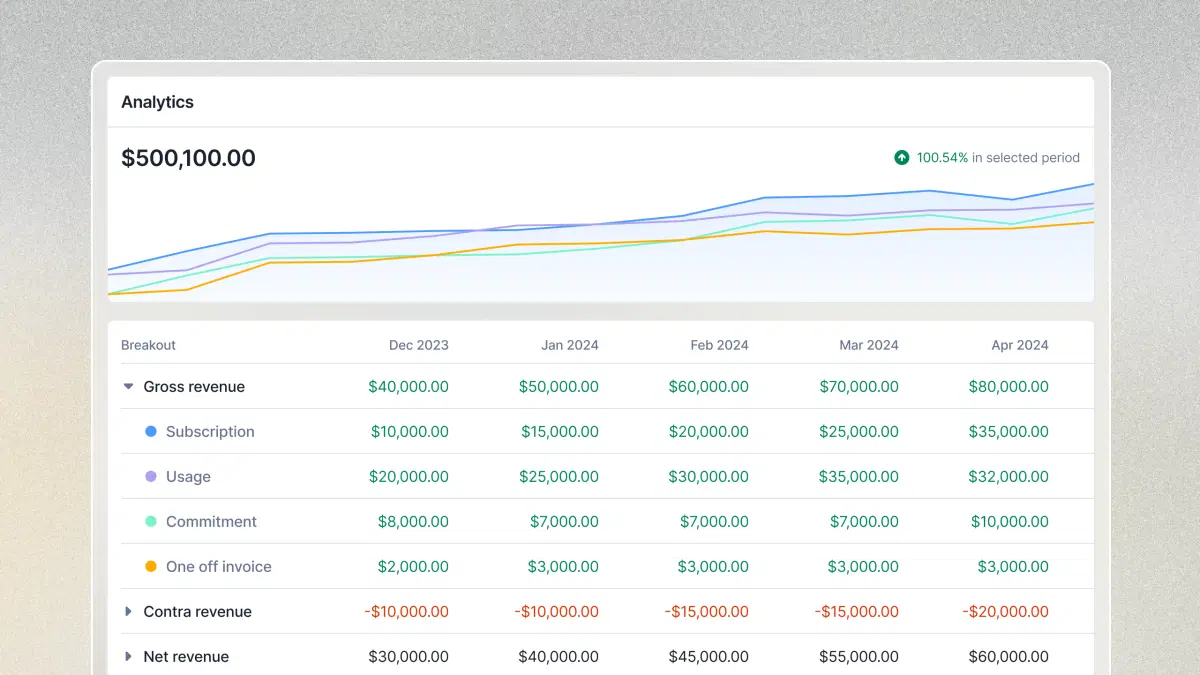
3. Lago: Best for teams that want open-source infrastructure control

What it does: Lago ingests usage events, calculates charges against billable metrics and pricing plans, and generates invoices, supporting self-serve, sales-led, subscription, credit, and usage-based models across multiple products, entities, and currencies, either self-hosted or through a managed cloud option.

Best for: Engineering teams that want full control over their billing infrastructure and don't want a payment processor's acquisition to determine their billing roadmap.

Lago is backed by Y Combinator and used by AI companies including Mistral, Groq, and Together.ai. The self-hosted version runs under an AGPLv3 license with no per-transaction fees, and its core metering engine handles a high volume of events per second.
Key features

  • Hybrid and customizable plans: Billable metrics can tie to any pricing model and combine into hybrid plans, with overrides for enterprise-specific terms like custom pricing and usage budgets.
  • Advanced billing logic: Supports threshold-based billing, proration, and automated dunning campaigns for accounts that fall behind.
  • No-code plan updates: Both engineers and non-engineers can adjust usage charges through the API or Lago's UI, instead of requiring a code change for every pricing tweak.
  • Stack-wide integrations: Connects with CRM, ERP, accounting, and reseller billing platforms for centralized revenue analytics.

Pros

  • Genuinely provider-agnostic, unlike Metronome and Orb, which are now owned by payment processors.
  • No vendor lock-in on the self-hosted version, since the codebase remains under your control.
  • One Reddit comment describes both Orb and Lago as capable, flexible options specifically for custom usage metrics.

Cons

  • Self-hosting requires real infrastructure investment and ongoing maintenance.
  • Managed cloud plans include a usage-based fee once free volume thresholds are exceeded.
  • Smaller public review footprint than more established vendors, making it harder to independently verify support quality at high volume.

What users say

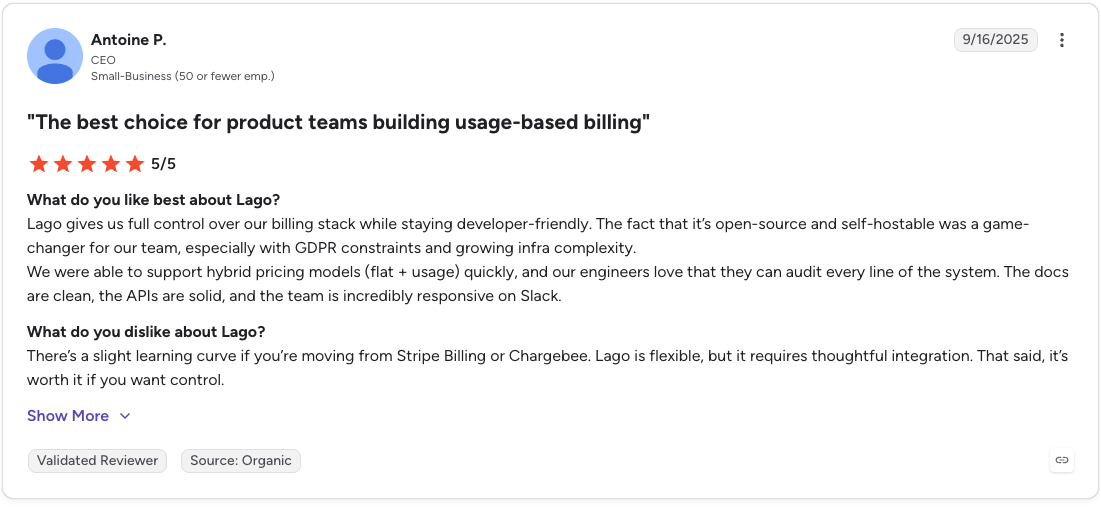
Pro: “Lago gives us full control over our billing stack while staying developer-friendly. The fact that it’s open-source and self-hostable was a game-changer for our team, especially with GDPR constraints and growing infra complexity.”

Con: “There’s a slight learning curve if you’re moving from Stripe Billing or Chargebee. Lago is flexible, but it requires thoughtful integration. That said, it’s worth it if you want control.” [Antoine P., G2 Review, September 16, 2025]

Pricing

Lago does not publish fixed pricing. Its Premium plan uses custom pricing and is available through Cloud Deployment or Self-Hosted Deployment, with pricing available by contacting sales.

Bottom line

I'd recommend Lago to engineering teams that want to own their billing infrastructure outright, without a payment processor's acquisition later deciding the roadmap for them.

Between the throughput it's built for and the production usage it already reports, it holds up as a serious option even for high-volume, custom usage models, provided your team is comfortable with the responsibility that comes with self-hosting.
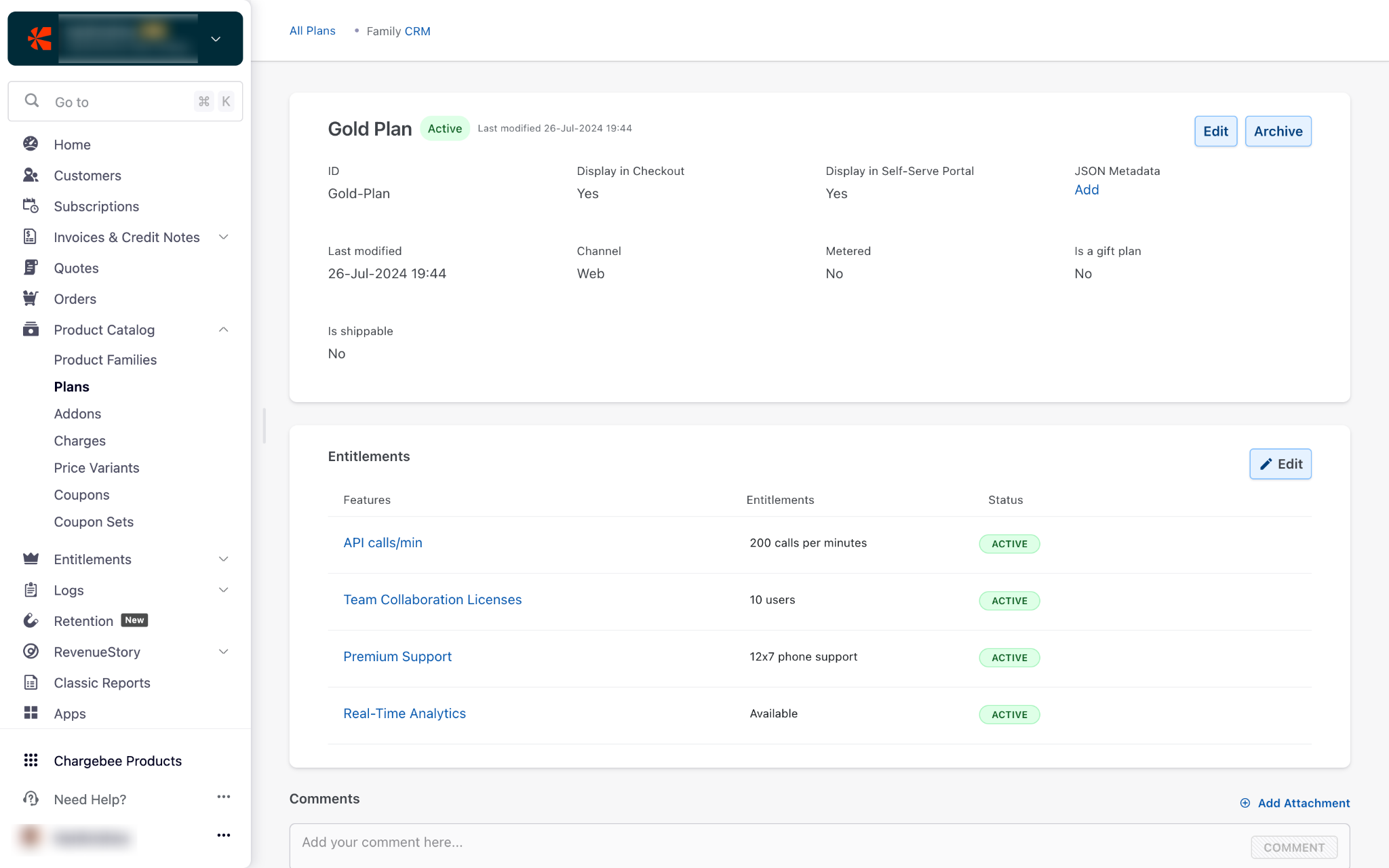
4. Chargebee: Best for hybrid subscription and usage billing

What it does: Chargebee handles usage ingestion, metering, pricing, billing, and revenue recognition together, alongside its original subscription and recurring billing engine, with quoting and contracting tied directly into the same system.

Best for: Companies that need usage-based billing to work alongside subscriptions and negotiated enterprise contracts, without building separate metering infrastructure from scratch.

Chargebee also handles quoting, renewals, and revenue recognition in one system, which makes it a common choice for companies running both self-serve plans and negotiated enterprise deals side by side.
Key features

  • Flexible usage ingestion: Accepts raw or pre-aggregated events from S3, data warehouses, flat files, or a direct API, built to handle billions of events with near-real-time aggregation, event-level failure tracking, and built-in idempotency checks
  • Visual and SQL-based metering: Simple usage rules can be set through visual filters, with SQL available for more advanced aggregation logic
  • Prepaid credits with a full audit trail: Credit packs, rollover, and expiration rules are configurable, with real-time metering against balances, burn-rate alerts, and automatic overage billing once credits run out
  • Entitlements without engineering tickets: Usage limits and feature access can be adjusted by business and go-to-market teams directly, with allocated-versus-actual consumption tracked at both account and subscription level

Pros

  • Sales can quote usage-based pricing and credits directly, with multi-year contracts billed monthly and parent-child hierarchies for enterprise deals.
  • Combines usage metering, entitlements, quoting, and revenue recognition in one system instead of stitching together separate tools.
  • Business and GTM teams can adjust pricing, entitlements, and usage limits directly, without opening an engineering ticket for every change.

Cons

  • Its usage-billing capabilities were built on top of an originally subscription-first platform, so teams with a purely usage-first model should confirm the metering engine handles their specific event volume before committing.
  • Support response times can stretch to multiple days, and some users report agents unable or unwilling to resolve the actual issue.
  • Bespoke or unusual billing models can feel constrained by the platform's existing structure.

What users say

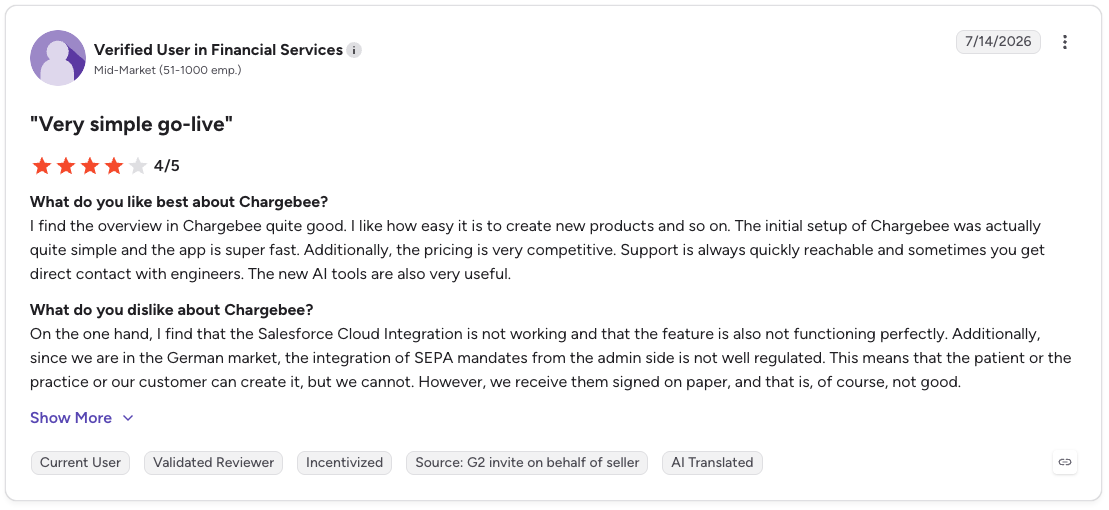
Pro: ”I find the overview in Chargebee quite good. I like how easy it is to create new products and so on. The initial setup of Chargebee was actually quite simple and the app is super fast.”

Con: “On the one hand, I find that the Salesforce Cloud Integration is not working and that the feature is also not functioning perfectly. Additionally, since we are in the German market, the integration of SEPA mandates from the admin side is not well regulated.” [Verified User in Financial Services, G2 Review, July 14, 2026]

Pricing

Chargebee’s Flow plan starts at 0.80% of monthly billing value with no platform fee and includes 100M usage events per month. A monthly commitment option charges $99 plus 0.65%, while Enterprise Plus uses custom pricing.

Bottom line

I'd recommend Chargebee to companies that need usage billing, prepaid credits, and entitlements working alongside subscriptions and enterprise contracts in one system, without a separate build-out for each.

If your business is usage-only with no subscription component at all, confirm the metering engine's throughput matches your actual event volume before committing.
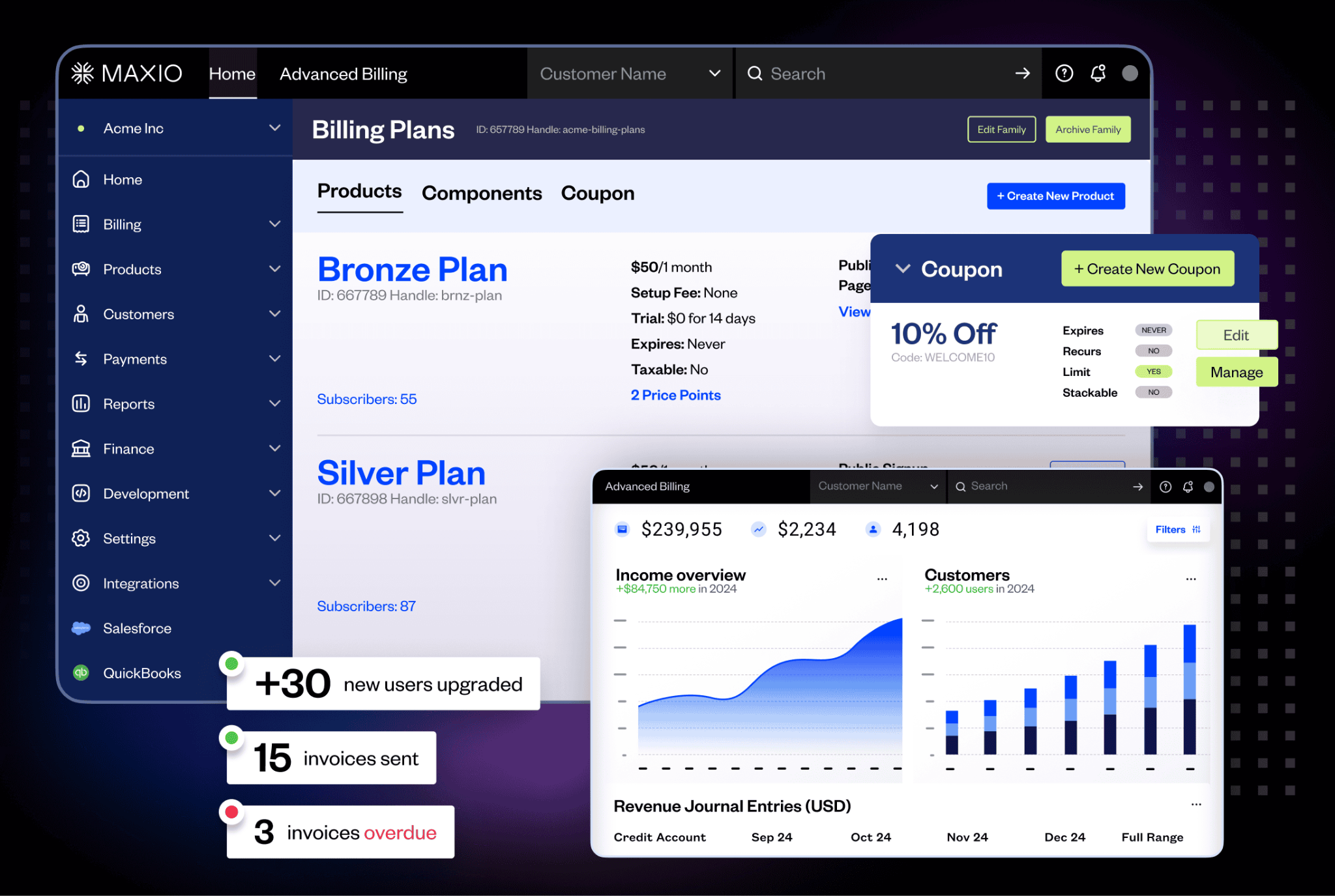
5. Maxio: Best for B2B combining usage billing with revenue recognition

What it does: Maxio meters usage, rates it against a configured pricing model, generates invoices, processes payments, and runs GAAP/IFRS-compliant revenue recognition on that same billing data, so usage-based pricing and financial reporting run through one system instead of two.

Best for: B2B companies that need usage billing and revenue recognition working together, without hiring a separate team to reconcile the two.

Maxio formed from the merger of Chargify (subscription billing) and SaaSOptics (revenue recognition), and it still shows in the product: billing and financial reporting live in the same system instead of as bolted-together tools.
Key features

  • High-throughput usage metering: Metering and rating handle up to 100,000 events per second, with data aggregation happening as events arrive instead of in a separate batch step.
  • Native support for multiple pricing models: Pay-as-you-go, volume, per-unit, tiered, flat-rate, and hybrid pricing can all be configured directly, with thresholds, minimums, and overages built in.
  • No-code pricing changes: New price points, bundles, or usage-based trials can be configured and rolled out through the UI, without a code change or engineering involvement.
  • Built-in pricing analytics and backtesting: Proposed pricing, credit, or bundle changes can be tested against existing data to see the revenue impact before rolling them out.

Pros

  • Combines usage billing and GAAP/IFRS revenue recognition in one platform, reducing the need for a separate finance tool for compliance reporting.
  • A published starting price and free sandbox environment make it easier to evaluate before committing to a contract.
  • Handles a wide range of transaction types through its API, useful for teams with multiple payment entry points across an app or website.

Cons

  • Pricing gets defined by finance and product teams, but real-time enforcement of usage limits typically lives outside the platform, so a separate entitlements layer is still needed for that.
  • Reporting customization is frequently described as limited compared to some competitors, and API documentation can be difficult for developers to navigate.
  • Users report needing multiple bolt-on modules and separate accounts to access all functionality, with initial setup described as a longer, more laborious process than expected.

What users say

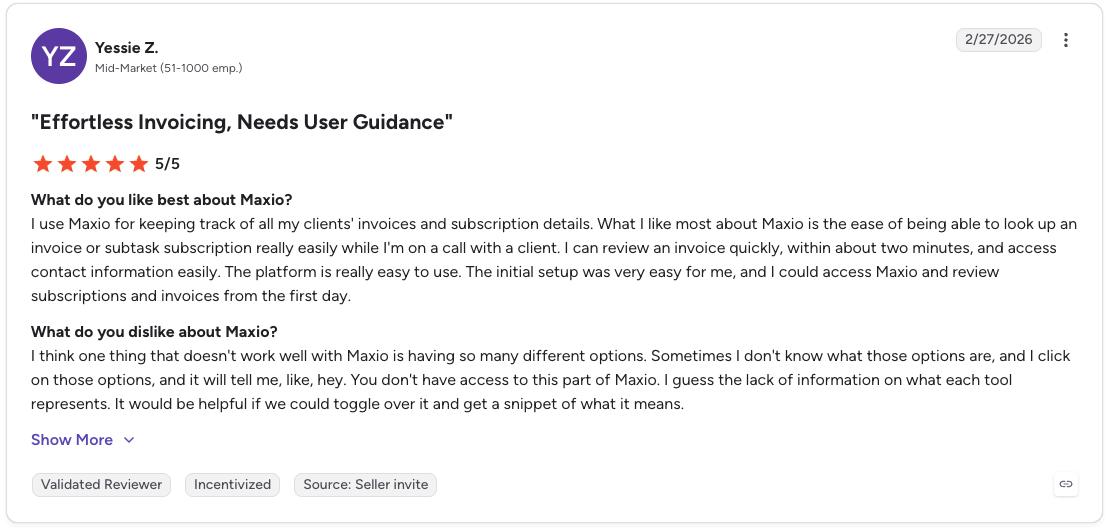
Pro: “What I like most about Maxio is the ease of being able to look up an invoice or subtask subscription really easily while I'm on a call with a client. I can review an invoice quickly, within about two minutes, and access contact information easily. The platform is really easy to use.”

Con: “I think one thing that doesn't work well with Maxio is having so many different options. Sometimes I don't know what those options are, and I click on those options, and it will tell me, like, hey. You don't have access to this part of Maxio. I guess the lack of information on what each tool represents. It would be helpful if we could toggle over it and get a snippet of what it means.” [Yessie Z., G2 Review, February 27, 2026]

Pricing

Maxio publishes a Grow plan at $599 per month for up to $100,000 in monthly billings, plus a free Build sandbox for testing. The Scale plan, which includes advanced revenue recognition, accounts receivable, multi-entity support, and metering, is quote-only above that volume.

Bottom line

I'd recommend Maxio to B2B companies that need usage billing and revenue recognition working together without hiring a separate team to reconcile them.

If real-time enforcement of usage limits matters more to you than invoicing and revenue reporting, pair it with a dedicated entitlements layer instead of expecting Maxio to cover that.
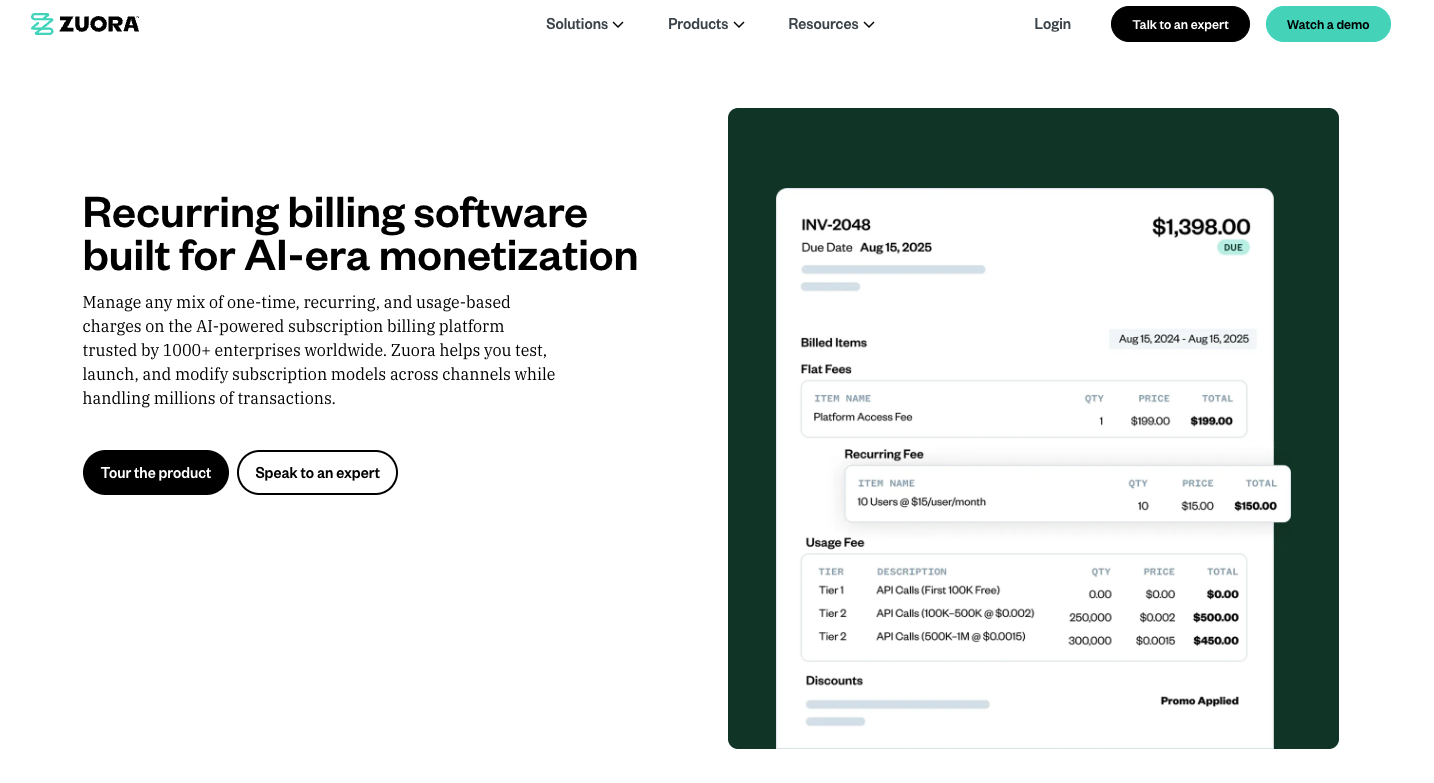
6. Zuora: Best for large enterprises with complex contracts

What it does: Zuora is an enterprise order-to-revenue platform that reconciles subscriptions, one-time charges, and usage under strict financial controls, with mediation, rating, quoting, and revenue recognition in one system, alongside integrated CPQ and payments orchestration.

Best for: Large enterprises with dedicated billing operations teams, complex multi-product catalogs, and audit-ready reporting requirements.

Zuora Billing handles usage metering and rating natively, without requiring a separate mediation tool, and supports account hierarchies for parent-child billing relationships common in enterprise contracts.
Key features

  • High-throughput usage metering: A native mediation engine streams up to 200,000 usage events per second.
  • Global payments orchestration: Connects to 40+ payment gateways and 20+ payment methods, enabling secure, frictionless transactions across currencies and geographies to maximize payment success.
  • Integrated CPQ: Sales can quote subscriptions, usage, and one-time charges together, with AI drafting orders from contracts and flagging downstream billing or revenue impact before a deal is finalized.
  • Deep revenue recognition and ERP integration: Connects with systems like NetSuite and Salesforce for a unified financial workflow, with audit-ready reporting built in.

Pros

  • Native MCP server support means billing, revenue, and usage data can be exposed directly to AI agents and LLMs, without a team having to build that integration layer themselves.
  • The Extension Studio and Integration Hub let teams configure custom business logic and workflows directly, without waiting on Zuora's own engineering team to ship a feature request.
  • Supports 50 pricing models, including multi-attribute and formula-based pricing, covering most enterprise pricing structures without custom development.

Cons

  • No public self-serve signup or free trial; evaluating the platform hands-on requires going through a sales conversation first.
  • Requires significant setup, configuration, and ongoing maintenance, resource-intensive for teams without dedicated billing or RevOps expertise.
  • Reporting and UI flexibility can feel limited or unintuitive compared to more modern tools, often requiring extra work or external tools to get the insights you need.

What users say

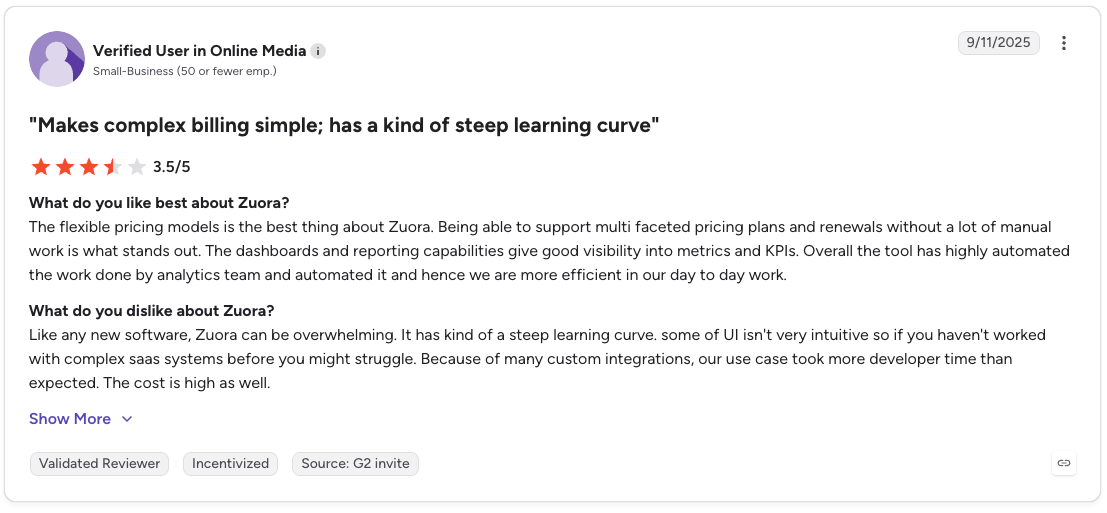
Pro: “The flexible pricing models is the best thing about Zuora. Being able to support multi-faceted pricing plans and renewals without a lot of manual work is what stands out. The dashboards and reporting capabilities give good visibility into metrics and KPIs.” 

Con: “Like any new software, Zuora can be overwhelming. It has kind of a steep learning curve. Some of the UI isn't very intuitive, so if you haven't worked with complex SaaS systems before, you might struggle. Because of many custom integrations, our use case took more developer time than expected. The cost is high as well.” [Verified User in Online Media, G2 Review, September 11, 2025]

Pricing

Zuora does not publish fixed pricing. All plans use custom pricing, with quotes available by contacting sales based on your billing, monetization, and enterprise requirements.

Bottom line

I'd recommend Zuora to large enterprises that genuinely need its depth of revenue recognition, CPQ, and ERP integration, and have a dedicated team to manage implementation. For smaller or mid-market teams, the setup cost and complexity are likely more than the job requires.

Which usage-based billing software should you choose?

The right choice depends more on your deployment preferences, existing stack, and who owns pricing changes than on any single best answer.

Choose Metronome if you:

  • Need metering proven at genuinely high AI-industry usage volume, with named customers like OpenAI and Anthropic to back it up.
  • Are already committed to Stripe and want a platform whose roadmap now sits inside Stripe's own billing strategy.

Choose Orb if you:

  • Want to test proposed pricing changes against real historical usage data before launching them.
  • Are comfortable evaluating a product now owned by Adyen, and have confirmed how much PSP flexibility that leaves you.

Choose Lago if you:

  • Want full control over your billing infrastructure, self-hosted or managed.
  • Need to stay independent of any single payment processor's roadmap or acquisition.

Choose Chargebee if you:

  • Need usage billing, prepaid credits, and entitlements working alongside subscriptions and enterprise contracts in one system.
  • Want business and GTM teams able to adjust pricing and usage limits directly, without opening an engineering ticket each time.

Choose Maxio if you:

  • Need usage billing and GAAP/IFRS revenue recognition working together, without stitching together a separate finance tool.
  • Are a growing B2B company, not yet a large enterprise with highly complex, negotiated contracts.

Choose Zuora if you:

  • Run a large enterprise with complex, negotiated contracts and heavy revenue recognition needs.
  • Have dedicated billing or RevOps expertise on hand, since setup and ongoing maintenance are resource-intensive without it.

Skip this category entirely if:

  • Your actual bottleneck is real-time entitlement enforcement instead of invoicing or revenue recognition, in which case a dedicated entitlements layer is the better starting point.
  • Your usage model is genuinely simple, one metric, one tier, low volume, in which case a lighter tool or your existing payment processor's built-in usage support may be enough.

Final verdict

For most AI companies with genuinely high-volume, variable usage, Metronome or Lago are the strongest starting points. Metronome is best if you're fully in the Stripe ecosystem already, Lago if you want to own your infrastructure outright.

Chargebee is a strong fit if you need usage billing working alongside subscriptions and enterprise contracts in one system, and Maxio is the better pick if revenue recognition and financial reporting matter as much as the billing itself.

Zuora remains the right call for complex enterprises, provided you have the dedicated expertise to run it.

Orb is excellent for pricing simulation and custom metric flexibility, but comes with one real tradeoff worth weighing directly against your own constraints: ownership by a payments company now sits behind the product.

What happens before the invoice

Every platform on this list answers some version of "what should this customer be charged." Deciding whether a specific request should be allowed before that cost is incurred is a different question, one none of them are built to answer.

Stigg is the usage runtime for AI products. Entitlements, credits, usage limits, and spend governance are enforced synchronously in the request path.

You don't have to adopt all of it at once. The credits engine, entitlements, and metering can each be adopted independently, and many teams start with a single SDK integration before layering in more:

  • Synchronous entitlement checks enforced in the request path, resolving instantly from local Redis on a cache hit, and in about 100ms from Stigg's Edge API on a cache miss, with a configurable timeout so upstream latency never cascades into your application.
  • A centralized product catalog for pricing and packaging, independent of any single billing provider.
  • Credit and usage tracking that feeds accurate, event-level detail into invoicing.
  • Support for complex tenancy: per-user, per-team, per-product, per-department.
  • BYOC deployment for teams with data residency requirements, built to stay reliable under high-volume traffic.
  • Compatible with your existing billing stack, including Stripe, Zuora, and the others on this list, so there’s no need to replace any of them.

Picking a usage-based billing software from this list solves half the problem. The other half is what happens the moment a request comes in. See the Stigg docs for details on entitlements and usage-based governance.

FAQs

1. What is the best usage-based billing software for AI companies?

Metronome and Lago are generally the strongest fits for AI companies with high-volume, variable usage. Metronome suits teams already committed to Stripe, while Lago suits teams that want open-source, provider-agnostic infrastructure they control directly.

2. What's the difference between usage-based billing software and a payment gateway?

The main difference between usage-based billing software and a payment gateway is function. A payment gateway processes the transaction itself, while usage-based billing software decides what to charge based on metered consumption and generates the invoice the gateway then collects on.

3. Does usage-based billing software replace real-time entitlement enforcement?

No. Most usage-based billing software generates invoices after usage has been recorded. Deciding whether a specific request should be allowed the moment it happens typically requires a separate, real-time entitlements layer running alongside it.

4. How much does usage-based billing software typically cost?

It varies by vendor and volume. Some platforms publish real starting prices, Chargebee’s Flow plan starts at 0.80% of monthly billing value with no platform fee and includes 100M usage events per month, while its monthly commitment option costs $99 plus 0.65%.

Maxio’s Grow plan starts at $599 per month for up to $100,000 in monthly billings. Others, including Orb, Lago's Premium plan, and Zuora, use custom pricing available only through a sales conversation.

Latest news.

One email per month.
From engineers, for engineers.

Thank you! Your submission has been received.
Oops! Something went wrong while submitting the form.