%20(1).png)
Guides
AI Usage Control: Tokens, Credits & Real-Time Enforcement
Learn how AI usage control handles token limits, credits, entitlements, concurrency, and request-time enforcement before AI workloads run.

Flat monthly plans are the easy case. Here are 6 subscription management platforms that handle the harder requirements most AI products actually run into.

Most subscription management software handle flat monthly plans reliably. The problems start when usage-based pricing, hybrid models, or enterprise contracts enter the picture. Here's where each one fits best:
The breakdown covers what each platform handles well, where it starts to struggle, and whether it was actually designed for the challenges of AI products.
Disclaimer: Prices are subject to change without notice. Always visit the official company websites for the most up-to-date pricing information.
To compare the best subscription management software fairly, I looked at the billing and subscription challenges AI teams deal with in practice, like usage-based pricing, credit models, mid-cycle plan changes, enterprise contracts, and revenue recognition.
I paid particular attention to pricing flexibility, proration handling, API quality, and support for more complex commercial agreements. All pricing information was taken from official pricing pages.
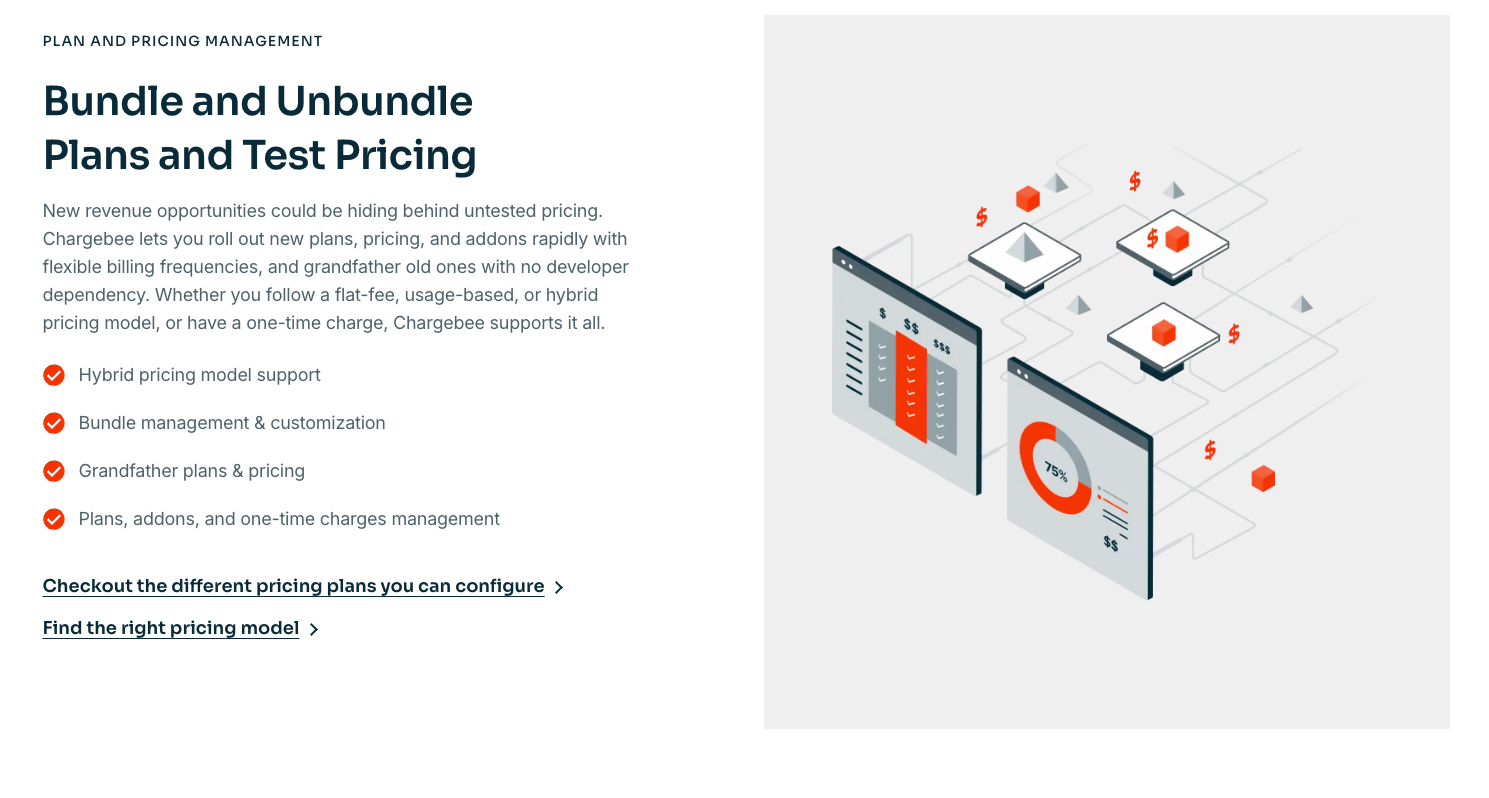
What it does: Chargebee is a subscription management platform covering plan and pricing management, subscription lifecycle automation, trial management, and entitlement management for SaaS and ecommerce companies.
Best for: AI SaaS companies that need to launch and iterate on pricing plans rapidly without engineering involvement and automate the full subscription lifecycle from trial through renewal.
Chargebee lets teams roll out new plans, pricing, and add-ons with flexible billing frequencies and grandfather existing plans without a code deployment. It supports flat-fee, usage-based, hybrid, and one-time pricing from the same platform.
Product teams can bundle and unbundle features using the UI, map features to plans, and offer limited-period feature trials for upsell.
Subscription lifecycle automation covers upgrades, downgrades, proration, renewal management, and trial-to-paid conversion. A self-service portal lets customers manage their own subscriptions.
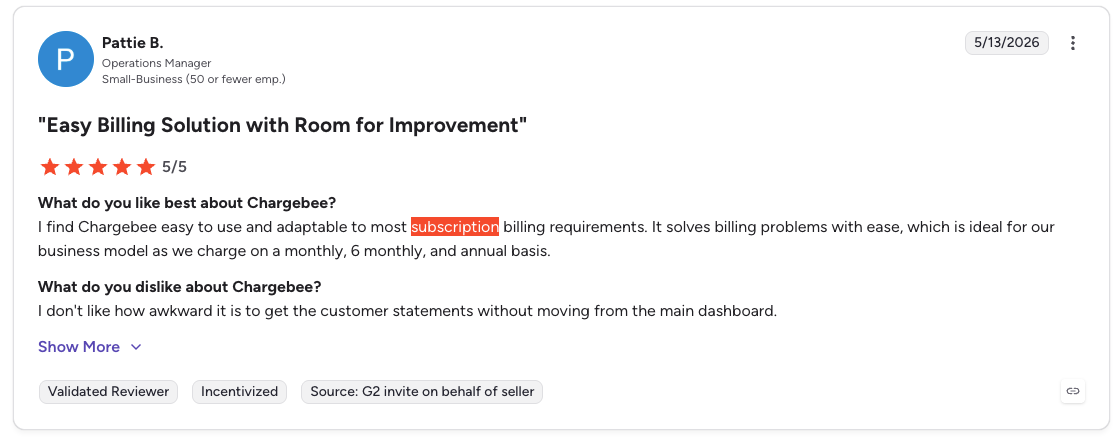
Pro: "I find Chargebee easy to use and adaptable to most subscription billing requirements. It solves billing problems with ease, which is ideal for our business model as we charge on a monthly, 6 monthly, and annual basis." [Pattie B., Operations Manager, G2 Review (May 13, 2026)]
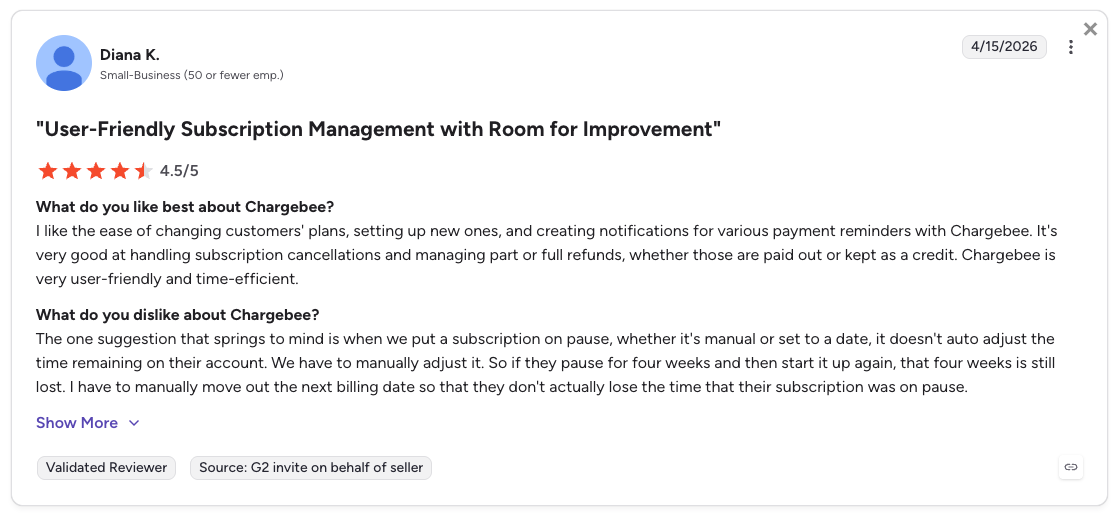
Con: “The one suggestion that springs to mind is when we put a subscription on pause, whether it's manual or set to a date, it doesn't auto adjust the time remaining on their account. We have to manually adjust it. So if they pause for four weeks and then start it up again, that four weeks is still lost. I have to manually move out the next billing date so that they don't actually lose the time that their subscription was on pause.” [Diana K., G2 Review (Apr 15, 2026)]
Chargebee offers a free Starter plan for the first $250K in cumulative billing, then charges 0.75% of billing volume.
Paid plans start at $7,188/year (billed monthly) for up to $100K in monthly billing, with custom Enterprise pricing available for larger organizations.
Chargebee is a strong fit for AI SaaS teams that need to iterate on pricing models and automate subscription lifecycle management without engineering involvement at each step. Teams that need real-time enforcement will need additional tooling.
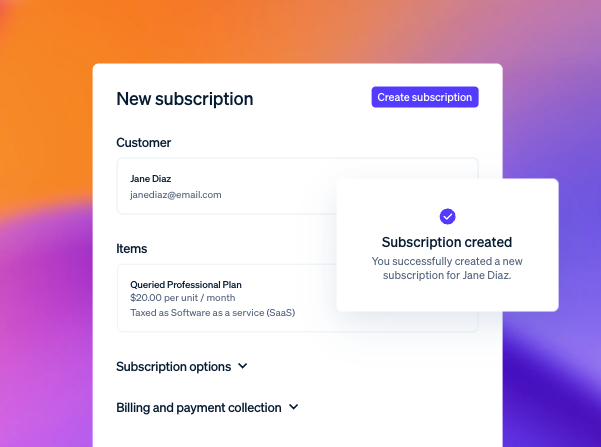
What it does: Stripe Billing is a subscription management platform supporting 15+ pricing models including usage-based, hybrid, tiered, flat-fee with overages, and custom billing logic, built on top of Stripe's payments infrastructure.
Best for: Teams already processing payments through Stripe that need to launch flexible subscription models, including hybrid and usage-based pricing, without building additional infrastructure.
Stripe Billing lets teams launch prebuilt pricing models in a few clicks or write custom billing logic directly into Stripe without separate infrastructure.
Trials, coupons, and proration are supported natively. For global operations, the platform covers 100+ payment methods across 135+ currencies with adaptive pricing for localized markets. Subscription analytics track MRR, failure rates, and churn by segment with 1-hour reporting freshness.
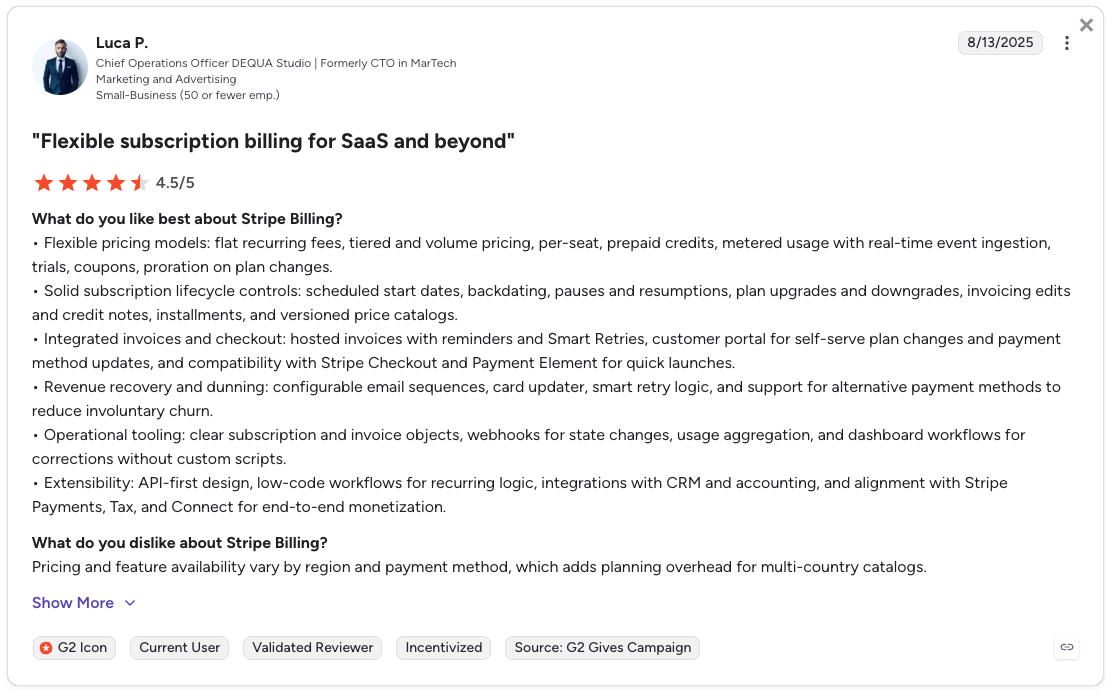
Pro: "Flexible pricing models: flat recurring fees, tiered and volume pricing, per-seat, prepaid credits, metered usage with real-time event ingestion, trials, coupons, proration on plan changes." [Luca P., Chief Operations Officer, G2 Review (Aug 13, 2025)]
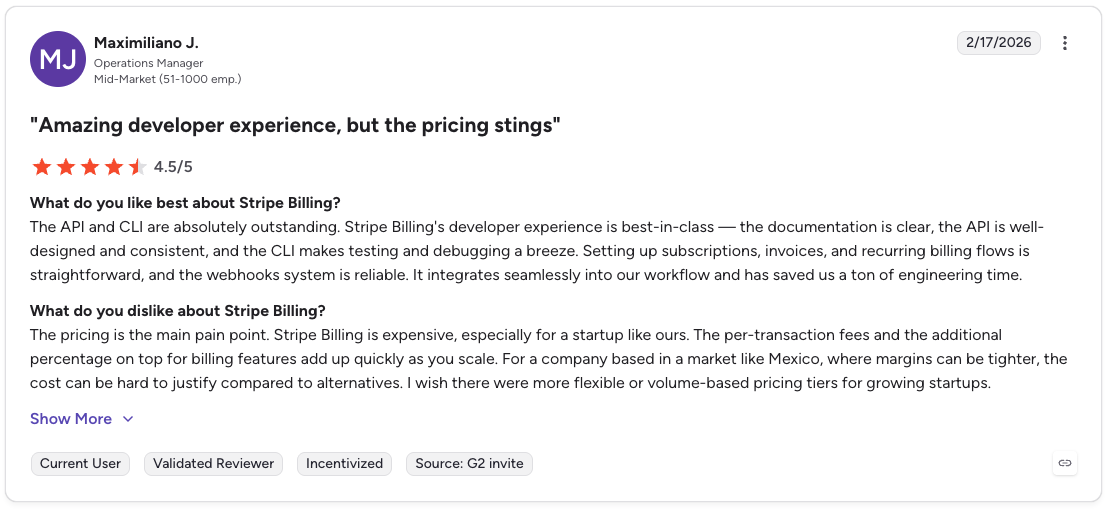
Con: "The pricing is the main pain point. Stripe Billing is expensive, especially for a startup like ours. The per-transaction fees and the additional percentage on top for billing features add up quickly as you scale." [Maximiliano J., Operations Manager, G2 Review (Feb 17, 2026)]
Stripe Billing offers a pay-as-you-go option at 0.7% of billing volume, or annual plans starting at $620/month for up to $100K in monthly billing volume.
Custom pricing is available for high-volume businesses and unique billing requirements.
Stripe Billing is the strongest choice for teams already in the Stripe ecosystem who need flexible subscription model support without introducing a new vendor. Teams building complex AI credit or token-based enforcement on top of it will need custom logic.
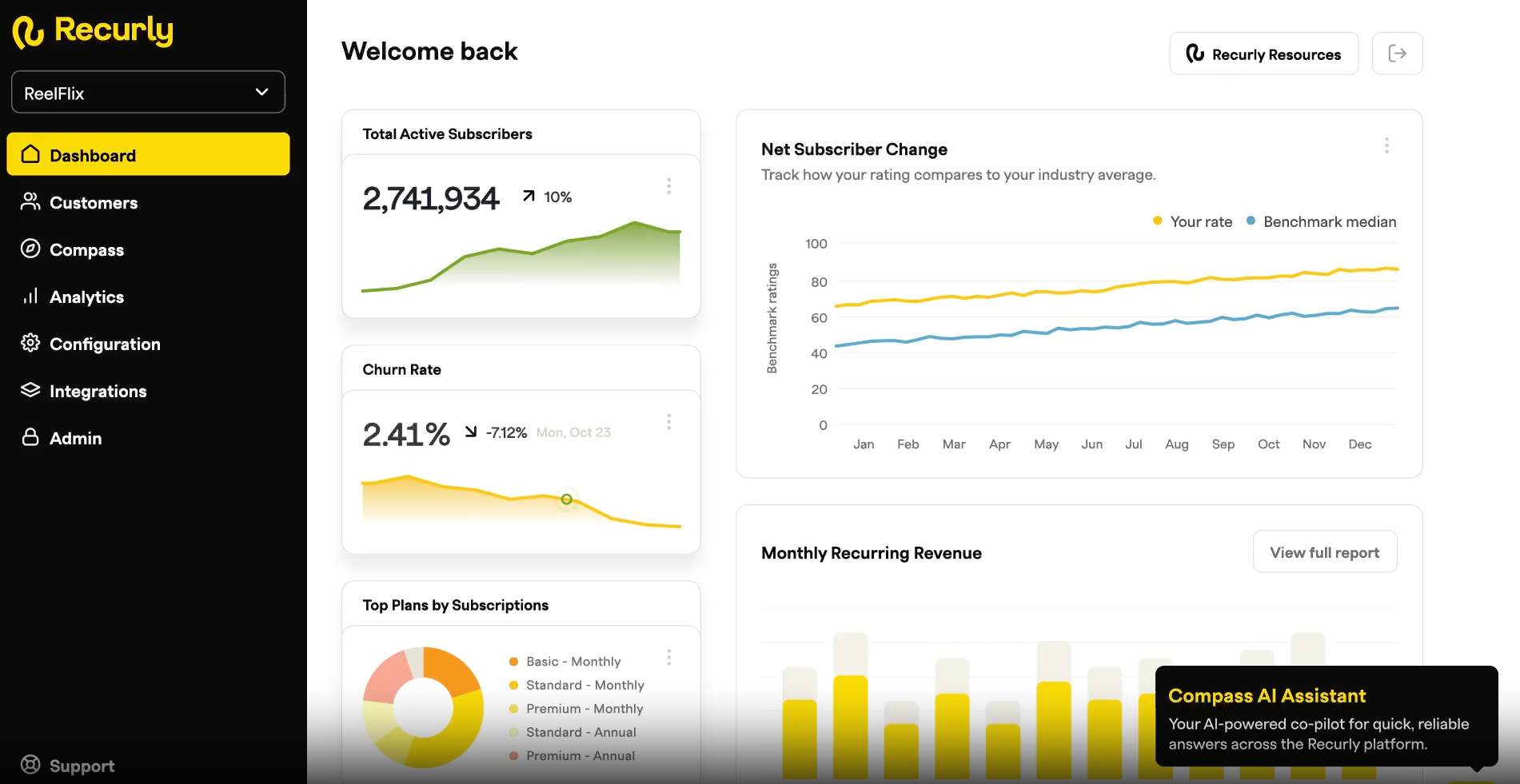
What it does: Recurly is a subscription management platform built for high-volume subscription businesses, supporting a wide range of pricing models within a single plan.
Best for: High-volume AI subscription businesses that need to combine multiple pricing models within a single plan and iterate on pricing without rebuilding plan structures.
Recurly lets teams mix pricing models within a single plan. Fixed, tiered, volume-based, usage-based, prepaid, ramp pricing, and one-time purchases can all sit alongside recurring subscriptions.
New plans launch quickly and pricing can be updated without recreating the full plan structure. The platform supports free trials, setup fees, and add-ons without requiring new plans from scratch.
Billing periods are configurable to daily, weekly, monthly, annual, or custom frequencies. For teams using Klaviyo, the integration syncs billing and subscription events in real time for payment reminders, upgrade flows, and win-back campaigns.
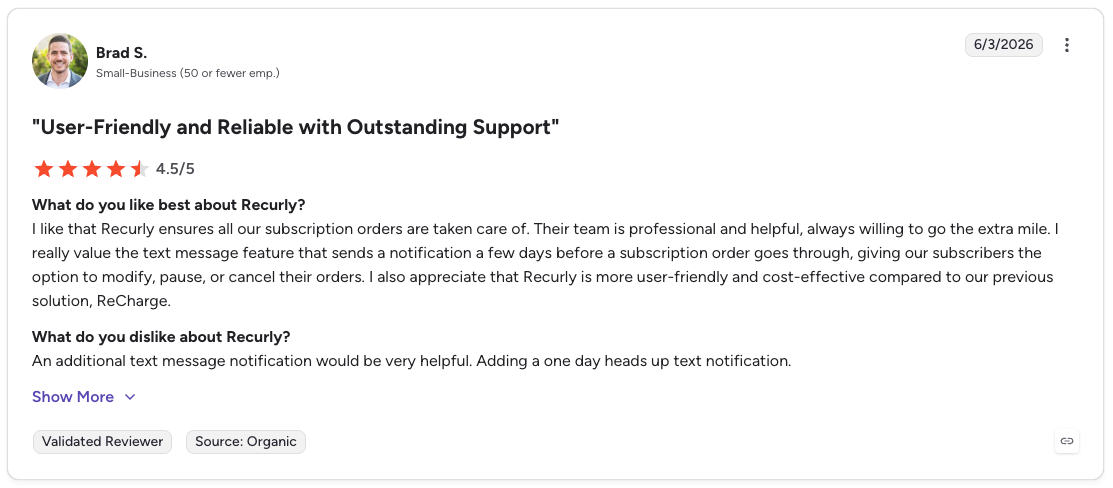
Pro: "I like that Recurly ensures all our subscription orders are taken care of. Their team is professional and helpful, always willing to go the extra mile. I really value the text message feature that sends a notification a few days before a subscription order goes through, giving our subscribers the option to modify, pause, or cancel their orders." [Brad S., Small Business User, G2 Review (June 3, 2026)]
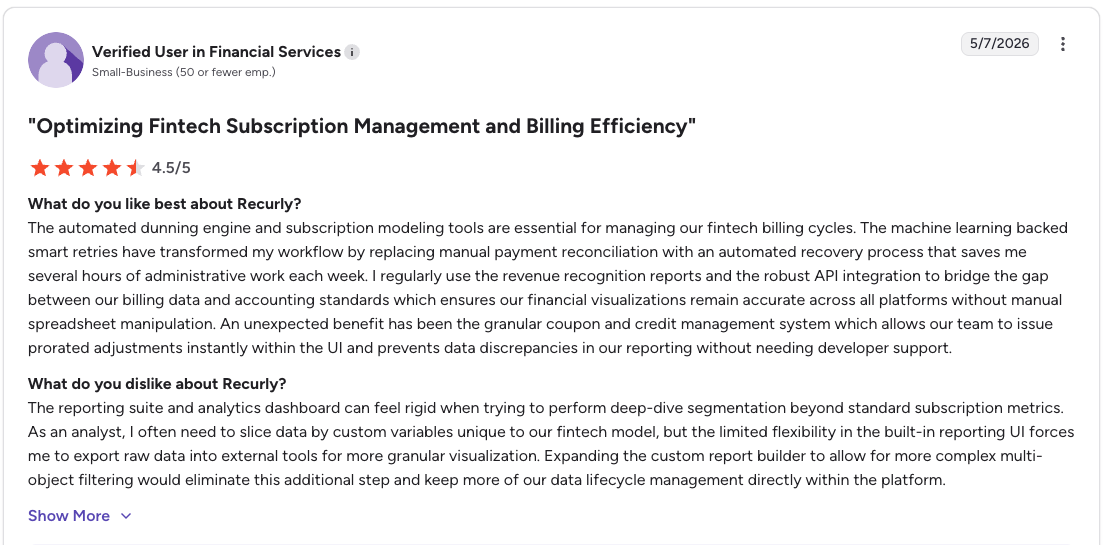
Con: "The reporting suite and analytics dashboard can feel rigid when trying to perform deep-dive segmentation beyond standard subscription metrics. As an analyst, I often need to slice data by custom variables unique to our fintech model, but the limited flexibility in the built-in reporting UI forces me to export raw data into external tools for more granular visualization." [Verified User in Financial Services, Small Business User, G2 Review (May 7, 2026)]
Recurly's Starter plan begins at $249/month plus 0.9% of billing volume, with the first $40K in monthly billings included.
For larger subscription businesses, pricing starts below 1% of billing volume and scales based on annual billing volume.
Recurly is worth evaluating for high-volume AI subscription businesses that need pricing model flexibility without rebuilding plan structures on each iteration. Teams with heavy AI inference billing requirements should verify the depth of usage-based support before committing.
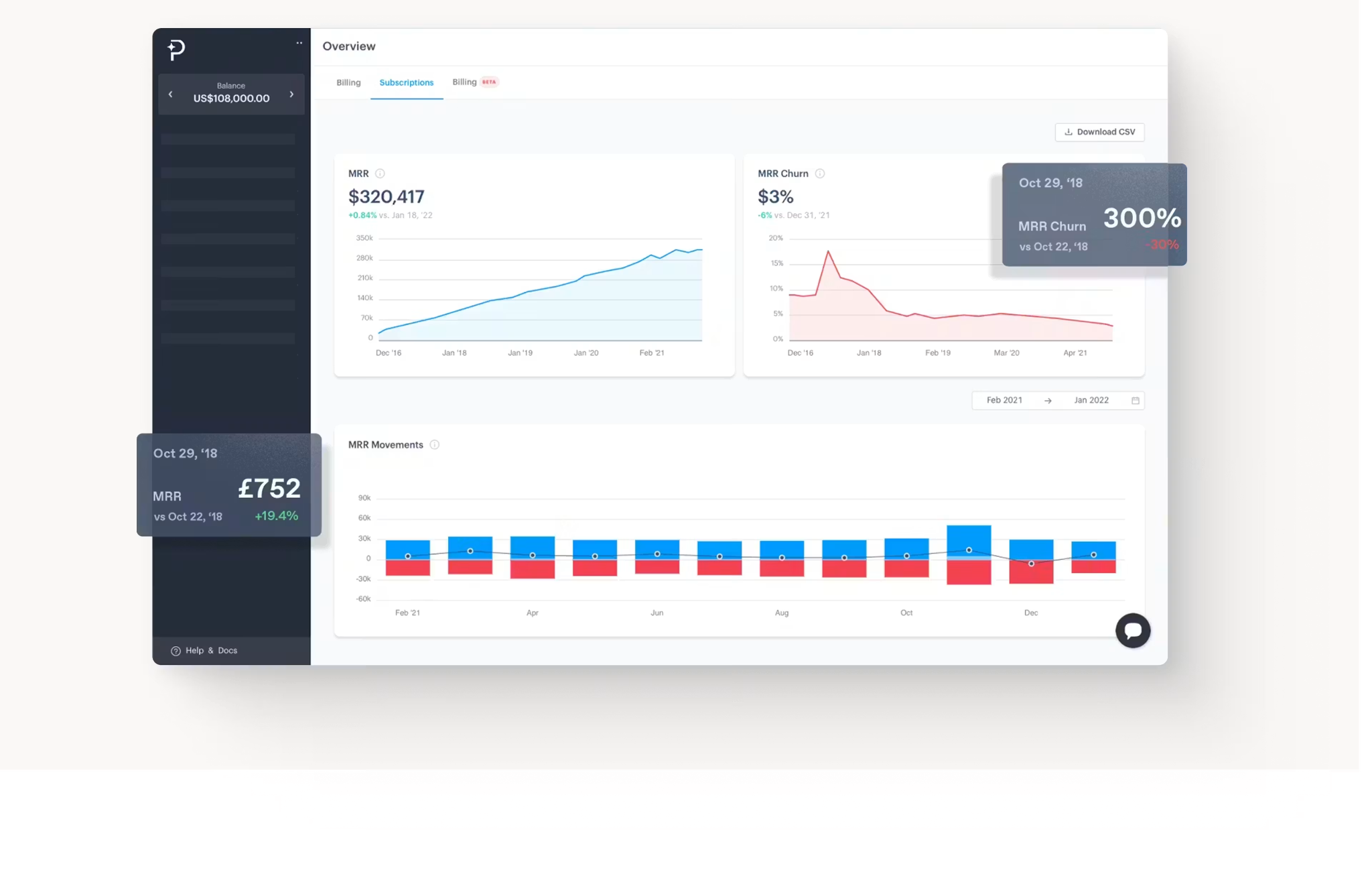
What it does: Paddle is a subscription management platform that acts as merchant of record, handling global tax compliance alongside subscription operations for large subscription companies.
Best for: AI companies selling internationally that need automatic tax compliance handled alongside subscription management, without managing tax obligations across jurisdictions.
Paddle handles automatic proration, multi-seat plans, bundles, and add-ons from one platform. A built-in customer portal lets subscribers cancel, update payment methods, add or remove products, and change quantities without teams building their own.
Instead of canceling at-risk subscribers, teams can pause accounts and reactivate them on return, with retention reporting to track the impact.
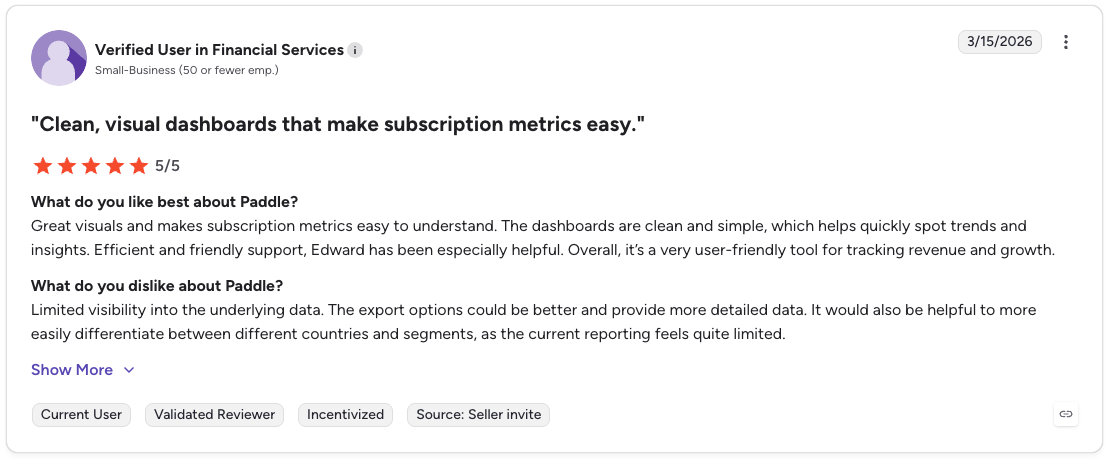
Pro: "Great visuals and makes subscription metrics easy to understand. The dashboards are clean and simple, which helps quickly spot trends and insights." [Verified User in Financial Services, G2 Review (March 15, 2026)]
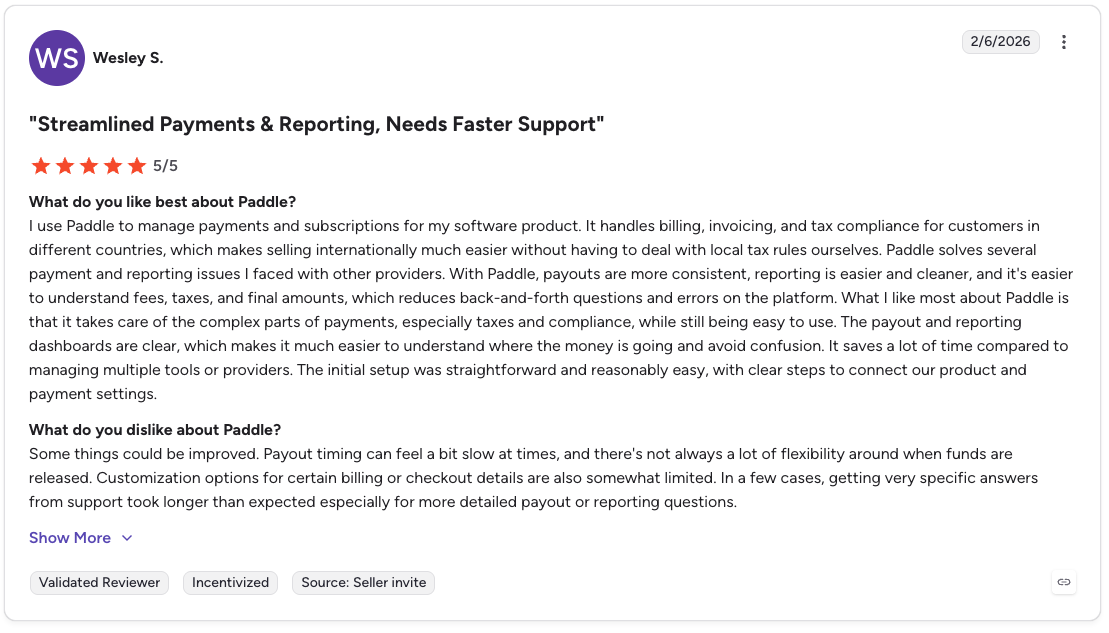
Con: "Some things could be improved. Payout timing can feel a bit slow at times, and there's not always a lot of flexibility around when funds are released. Customization options for certain billing or checkout details are also somewhat limited." [Wesley S., G2 Review (February 6, 2026)]
Paddle offers pay-as-you-go pricing at 5% + $0.50 per checkout transaction, with no monthly fees or hidden charges.
Custom pricing is available for high-volume businesses, invoicing needs, or unique business models.
Paddle is the right call for AI companies that need global tax compliance handled automatically alongside subscription management. Teams that need deep API control or complex AI usage billing configurations should verify whether Paddle's options match their requirements.
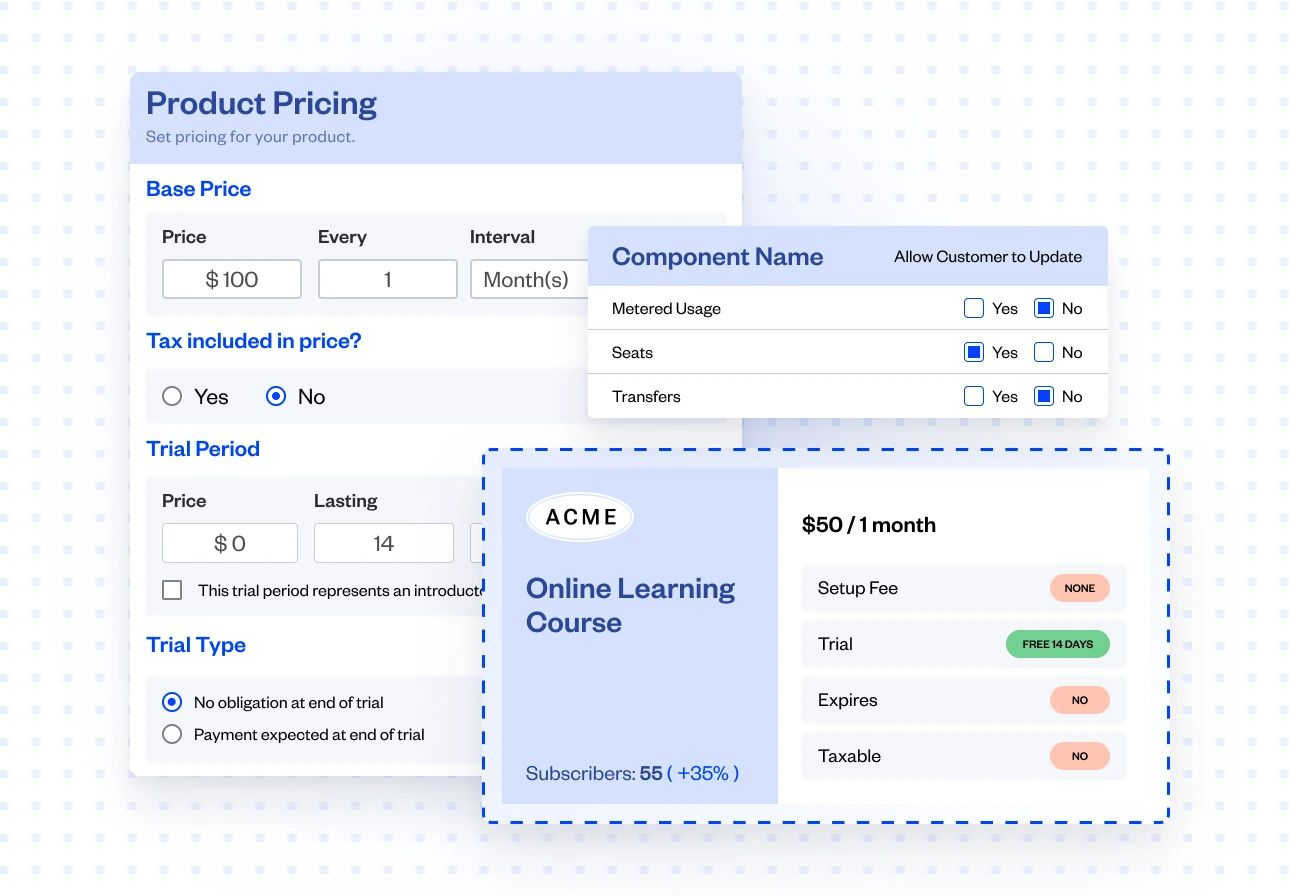
What it does: Maxio (formerly SaaSOptics and Chargify) is a subscription management platform for B2B SaaS companies that supports contract-level pricing customization, usage-based billing, automated renewals, and self-serve plan management.
Best for: B2B AI SaaS teams with complex per-customer pricing contracts who need to customize subscription plans without engineering involvement and automate renewals, dunning, and self-serve changes.
Maxio lets teams create individual contracts or build subscription billing plans from defined items, with pricing tailored per contract, plan, or individual subscription without developer involvement. Usage-based pricing is configurable from simple metered billing to more complex models.
Customers upgrade, downgrade, cancel, and update payment methods through a self-service portal with automatic proration. Renewal automation alerts teams before contracts expire, and dunning runs before invoices go unpaid.
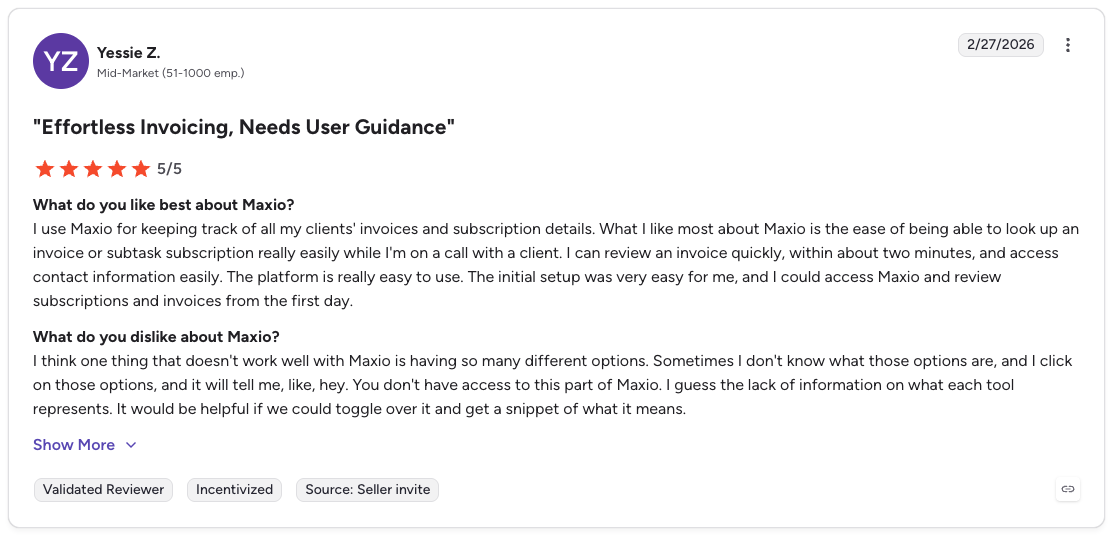
Pro: "I can review an invoice quickly, within about two minutes, and access contact information easily. The platform is really easy to use. The initial setup was very easy for me, and I could access Maxio and review subscriptions and invoices from the first day." [Yessie Z., G2 Review (February 27, 2026)]
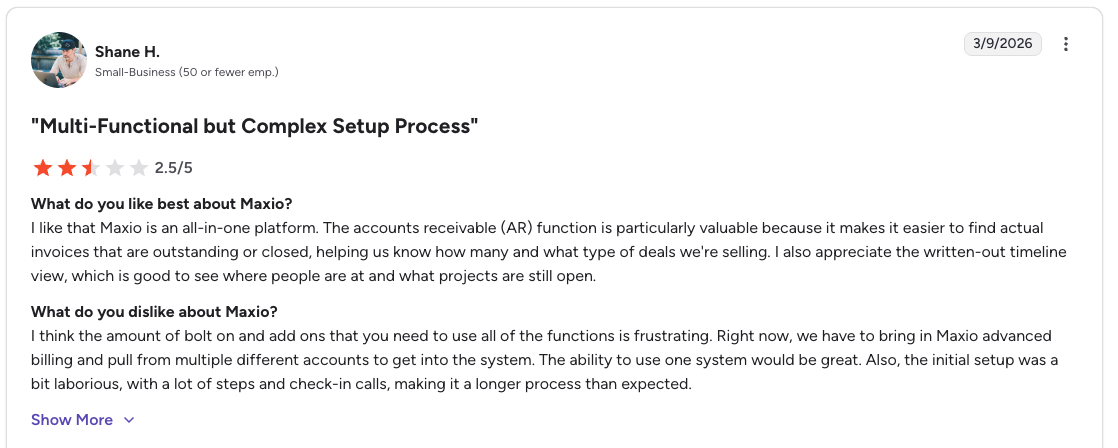
Con: "I think the amount of bolt on and add ons that you need to use all of the functions is frustrating. Right now, we have to bring in Maxio advanced billing and pull from multiple different accounts to get into the system." [Shane H., G2 Review (March 9, 2026)]
Maxio’s standard pricing starts at $5,000 annually based on trailing twelve-month billing volume.
Maxio is a strong fit for B2B AI SaaS teams with complex per-customer pricing contracts and a need for self-serve subscription management with automated renewals. Teams at earlier stages or without dedicated operations resources may find it more than they currently need.
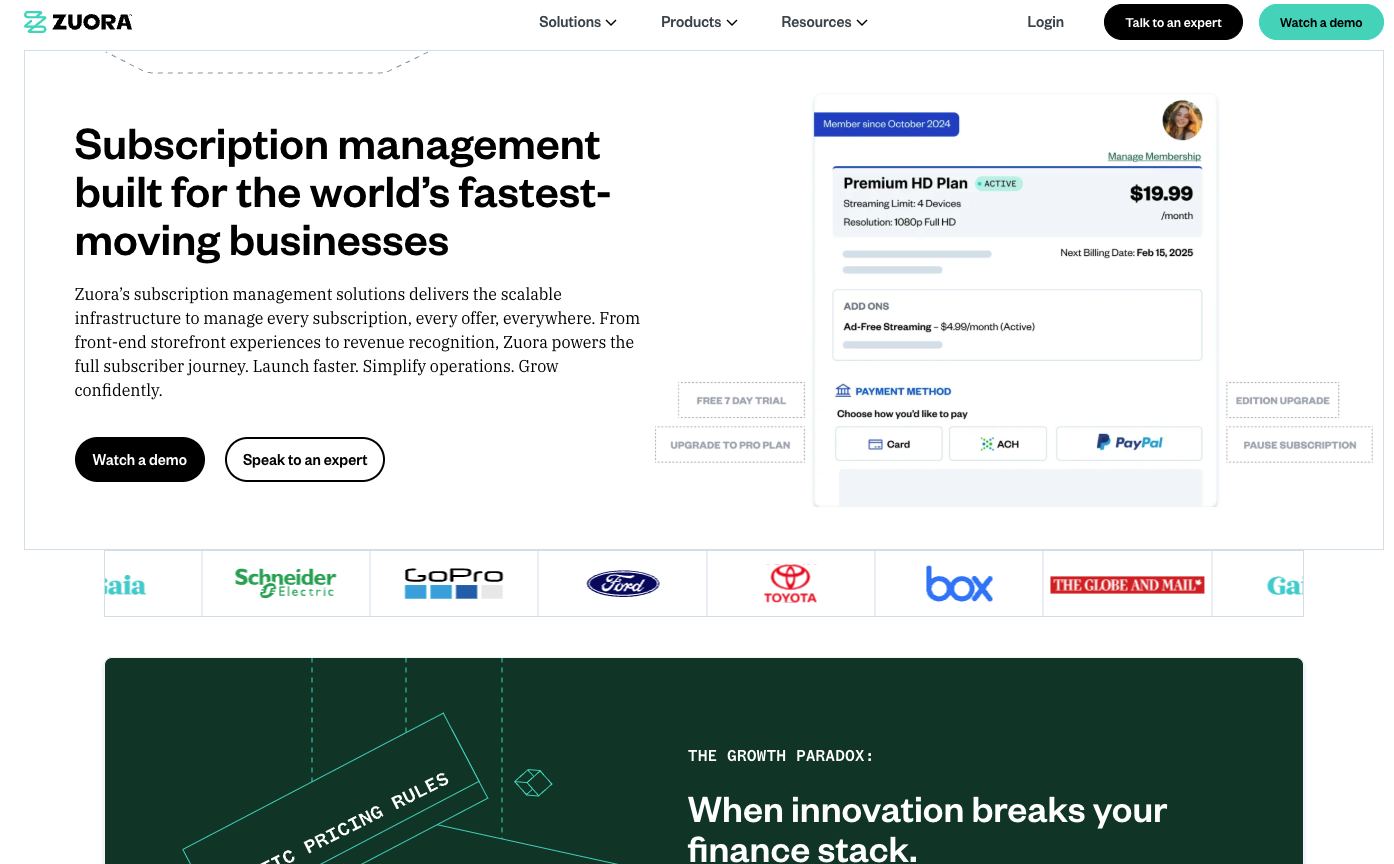
What it does: Zuora is an enterprise subscription management platform that replaces static SKU catalogs with rule-based pricing logic, covering recurring, usage-based, hybrid, and one-time models across global markets.
Best for: Large enterprise AI companies that need to deploy new pricing models and bundles without engineering involvement at high subscription volume, across 30+ global markets.
Zuora replaces sprawling SKU catalogs with rule-based pricing that product teams configure and launch without code.
Zuora also offers real-time personalization across customer behavior, region, and loyalty tier in real time, and self-service experiences deploy across web, mobile, and partner channels without custom development.
Mid-term changes, upgrades, downgrades, and proration sync automatically across billing and revenue systems. The platform supports recurring, usage-based, hybrid, and one-time models across 30+ global markets.
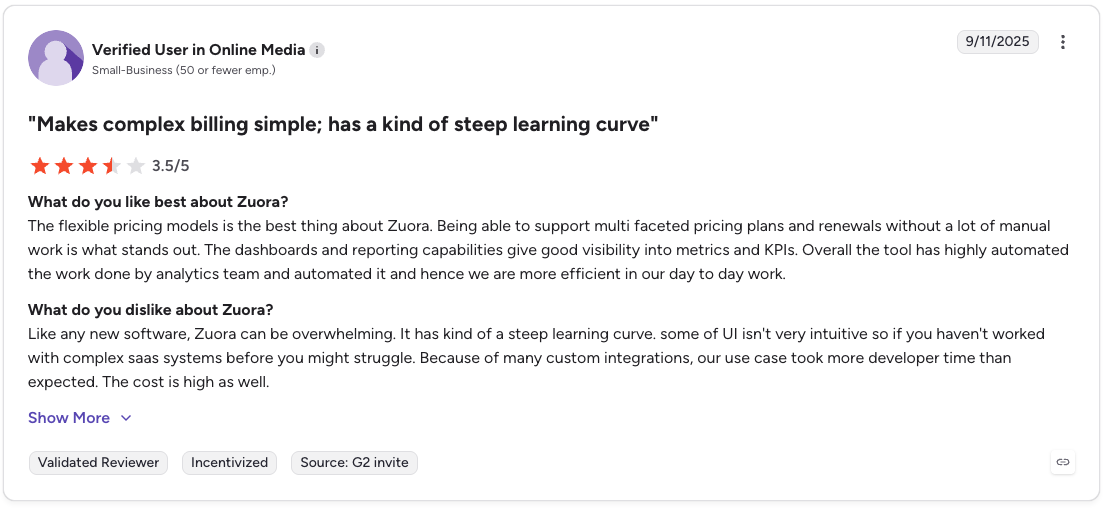
Pro: "The flexible pricing models is the best thing about Zuora. Being able to support multi faceted pricing plans and renewals without a lot of manual work is what stands out. The dashboards and reporting capabilities give good visibility into metrics and KPIs." [Verified User in Online Media, G2 Review (September 11, 2025)]
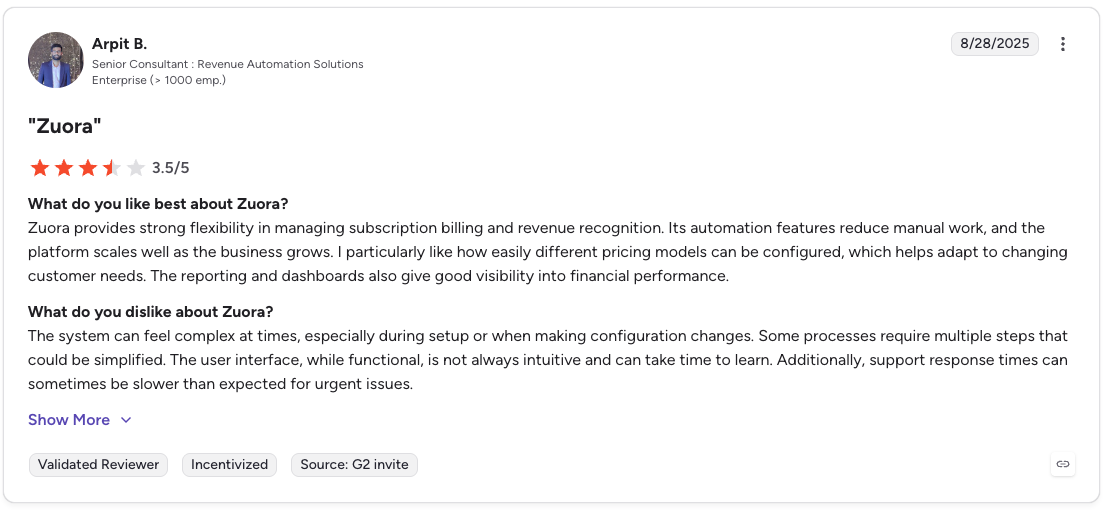
Con: "The system can feel complex at times, especially during setup or when making configuration changes. Some processes require multiple steps that could be simplified. The user interface, while functional, is not always intuitive and can take time to learn." [Arpit B., G2 Review (August 28, 2025)]
Zuora offers custom pricing tailored to your subscription, usage-based, and hybrid billing needs. Contact sales for a quote based on your business model, scale, and monetization requirements.
Zuora is built for enterprises where pricing catalog management and global subscription operations are first-class concerns. AI teams evaluating Zuora should plan for significant implementation time and factor the procurement timeline into their decision.
Choose Chargebee if your AI product has both recurring subscription revenue and usage-based AI consumption charges and you need both managed together with built-in expansion tracking.
Choose Stripe Billing if you're already processing payments through Stripe and your pricing model is manageable without significant custom logic on top.
Choose Recurly if your AI product needs to combine multiple pricing models within a single plan at high subscription volumes without rebuilding plan structures each time pricing changes.
Choose Paddle if you're selling internationally and need global tax compliance handled automatically alongside subscription management.
Choose Maxio if you're a finance-led B2B AI SaaS team that needs subscription billing and ASC 606 revenue recognition in one place with custom enterprise contract support.
Choose Zuora if you're a large enterprise with complex multi-entity contracts, global operations, and the budget and timeline for a full enterprise implementation.
Skip this category entirely if your product is pre-revenue, your pricing model is a simple flat subscription, and you have no usage-based component or enterprise contract requirements.
Chargebee and Stripe Billing are the most practical starting points for AI SaaS products. Chargebee fits better when usage-based and subscription revenue need to coexist in one platform. Stripe Billing fits better when the team is already in the Stripe ecosystem and pricing complexity is manageable.
Recurly is the strongest choice when pricing model flexibility is the primary requirement. Paddle is the right call when global tax compliance is a constraint. Maxio suits teams where finance is a primary stakeholder. Zuora is for enterprises where billing is a compliance function first.
Every platform on this list handles the plan side well. Where they stop is at request time, when the product needs to decide whether a customer is allowed to consume right now based on their current credits, tier, and org-level budget.
By the time any of these tools record usage, the compute has already run. For AI products, that's too late.
Stigg runs the enforcement layer that subscription tools weren't built for. Entitlements, credits, usage limits, and spend governance all resolve synchronously in the request path, before the model is called and before the cost is incurred.
Stigg works alongside the subscription management software on this list. If the enforcement layer is what you're building next, the Stigg docs are where to start.
Subscription management software handles billing, invoicing, plan lifecycle, and revenue reporting for products sold on a recurring basis. For AI products, it also needs to support usage-based pricing, hybrid billing models, and enterprise contract structures.
Chargebee is the strongest option for most AI SaaS products because it handles subscription billing and usage-based pricing in one system. Stripe Billing is the better choice for teams already on Stripe.
For enterprise AI companies with complex global contracts, Zuora covers the full subscriber lifecycle at that level of complexity.
The main difference between subscription management and usage-based billing is what they track.
Subscription management handles recurring plan lifecycles including upgrades, downgrades, renewals, and invoicing. Usage-based billing tracks actual consumption per period and calculates variable charges. Most AI products need both.
No, none of the subscription management platforms on this list handle real-time enforcement. They manage post-usage settlement and subscription lifecycle.
Checking whether a request is allowed based on current credit balance, plan tier, or model access before compute runs requires a separate runtime layer above the subscription management software.
%20(1).png)
%20(1).png)