%20(1).png)
Guides
AI Usage Control: Tokens, Credits & Real-Time Enforcement
Learn how AI usage control handles token limits, credits, entitlements, concurrency, and request-time enforcement before AI workloads run.

8 AI billing software platforms compared for tokens, credits, and inference pricing. Includes pricing, implementation complexity, and honest pros and cons.


AI billing software becomes a lot more complicated once customers start consuming tokens at scale. Engineering teams need real-time metering, credit enforcement, per-model cost tracking, and usage visibility that arrives before billing disputes do.
I reviewed 8 AI billing software platforms to show you where each fits in the stack.
Disclaimer: Prices are subject to change without notice. Always visit the official company websites for the most up-to-date pricing information.
I reviewed each platform based on how it handles metering, rating, and monetization for AI workloads.
Evaluation criteria included support for token and credit-based pricing, real-time usage enforcement, customer-facing usage visibility, and the engineering effort required to integrate the platform into production systems.
Pricing information came from official pricing pages, while user feedback was sourced from G2 and Reddit.
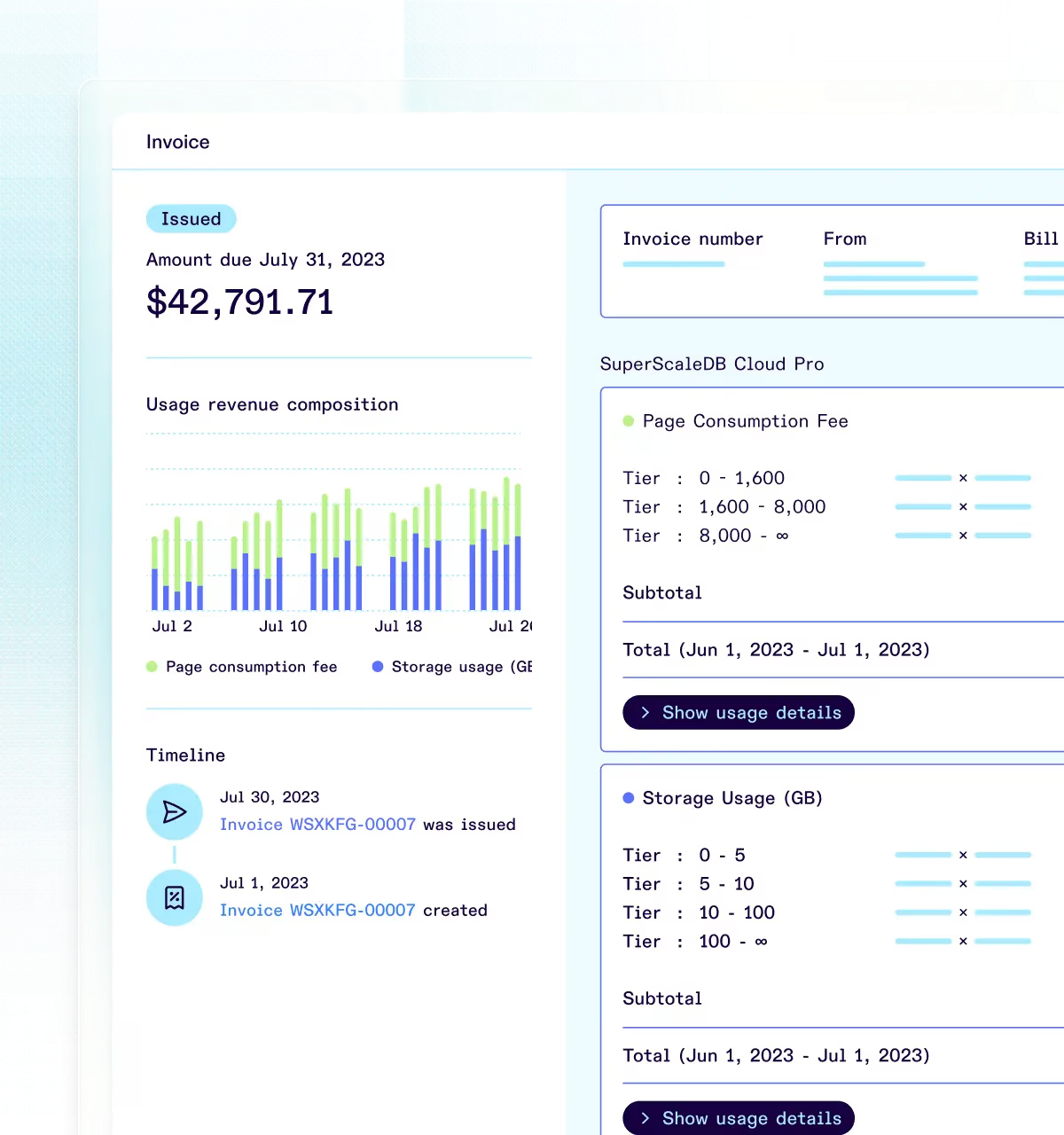
What it does: Orb is a developer-focused billing engine built for multi-dimensional, usage-based pricing with a real-time rating engine.
Best for: AI and API companies with pricing logic that varies by model, endpoint, token volume, or customer contract.
Orb is built for teams whose pricing resembles a formula more than a fixed price list. Different request types (such as GPT-4o and GPT-4o-mini) can carry separate rates.
Embedding endpoints and completion endpoints can each have their own pricing. Volume tiers can reset on contract anniversary dates instead of calendar months. All of this is managed within a single pricing configuration.
The platform is API-first, meaning product or RevOps teams expecting a no-code interface will need engineering involvement to configure and maintain pricing logic over time.
Orb does not process payments natively. It connects with Stripe, Braintree, and other payment providers to handle collection.
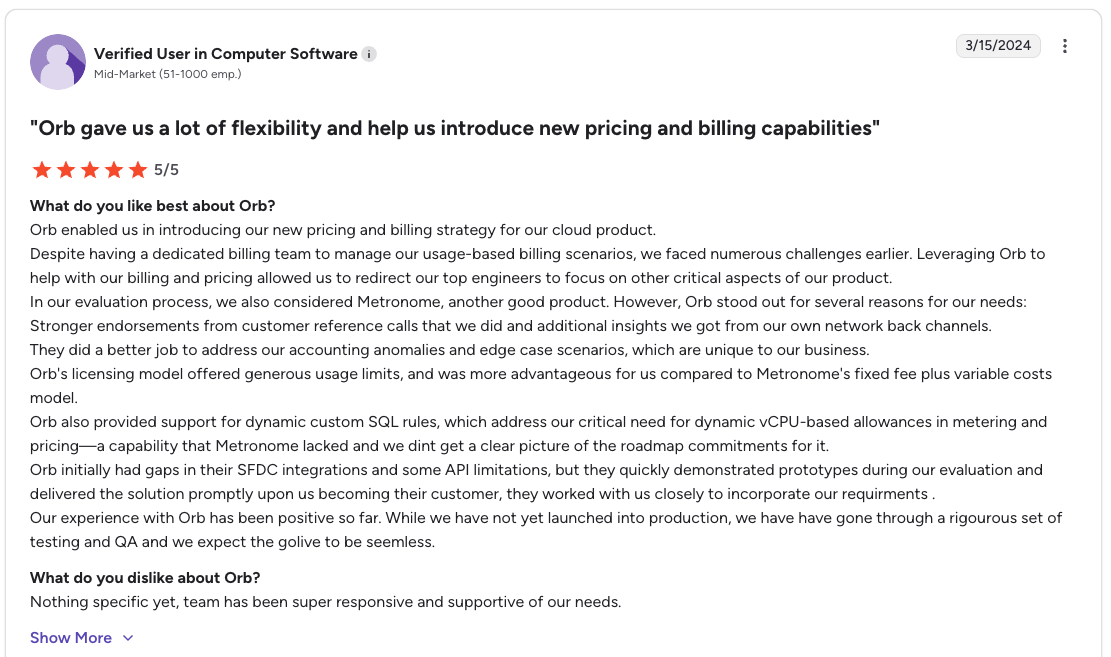
Pro: "Orb enabled us in introducing our new pricing and billing strategy for our cloud product. Despite having a dedicated billing team to manage our usage-based billing scenarios, we faced numerous challenges earlier." [Verified User in Computer Software, G2 Review (Mar 15, 2024)]
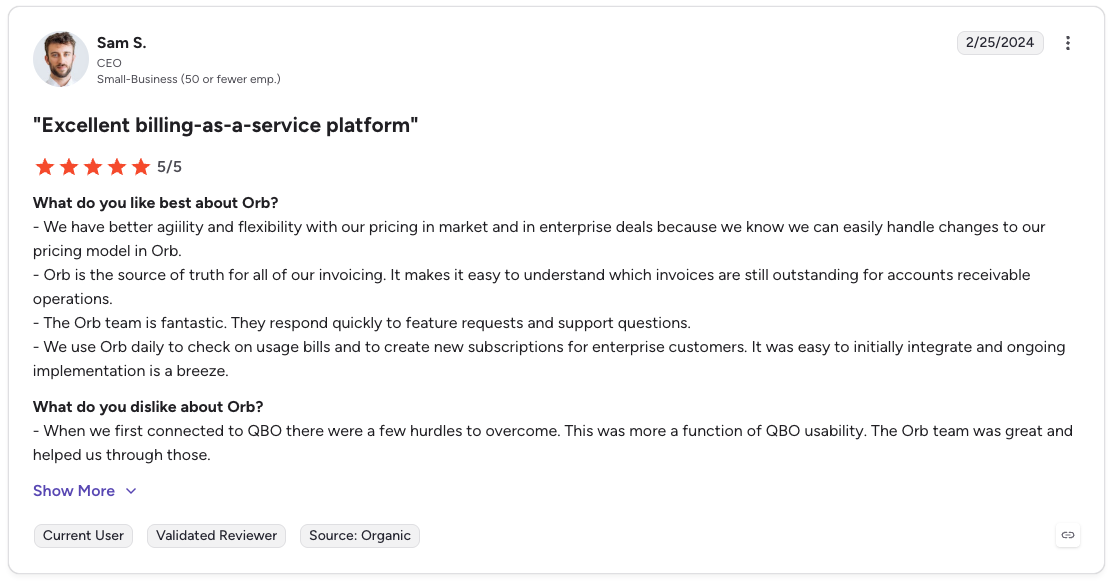
Con: "When we first connected to QBO there were a few hurdles to overcome. This was more a function of QBO usability." [Sam S., CEO, G2 Review (Feb 25, 2024)]
Custom pricing across Core, Advanced, and Enterprise plans. Contact Orb sales for a quote based on event volume, pricing model complexity, and support requirements.
Orb is the right call for AI companies that need serious pricing flexibility and have the engineering capacity to build on top of it. Teams expecting a plug-and-play setup should evaluate whether they have the resources to get full value from it.
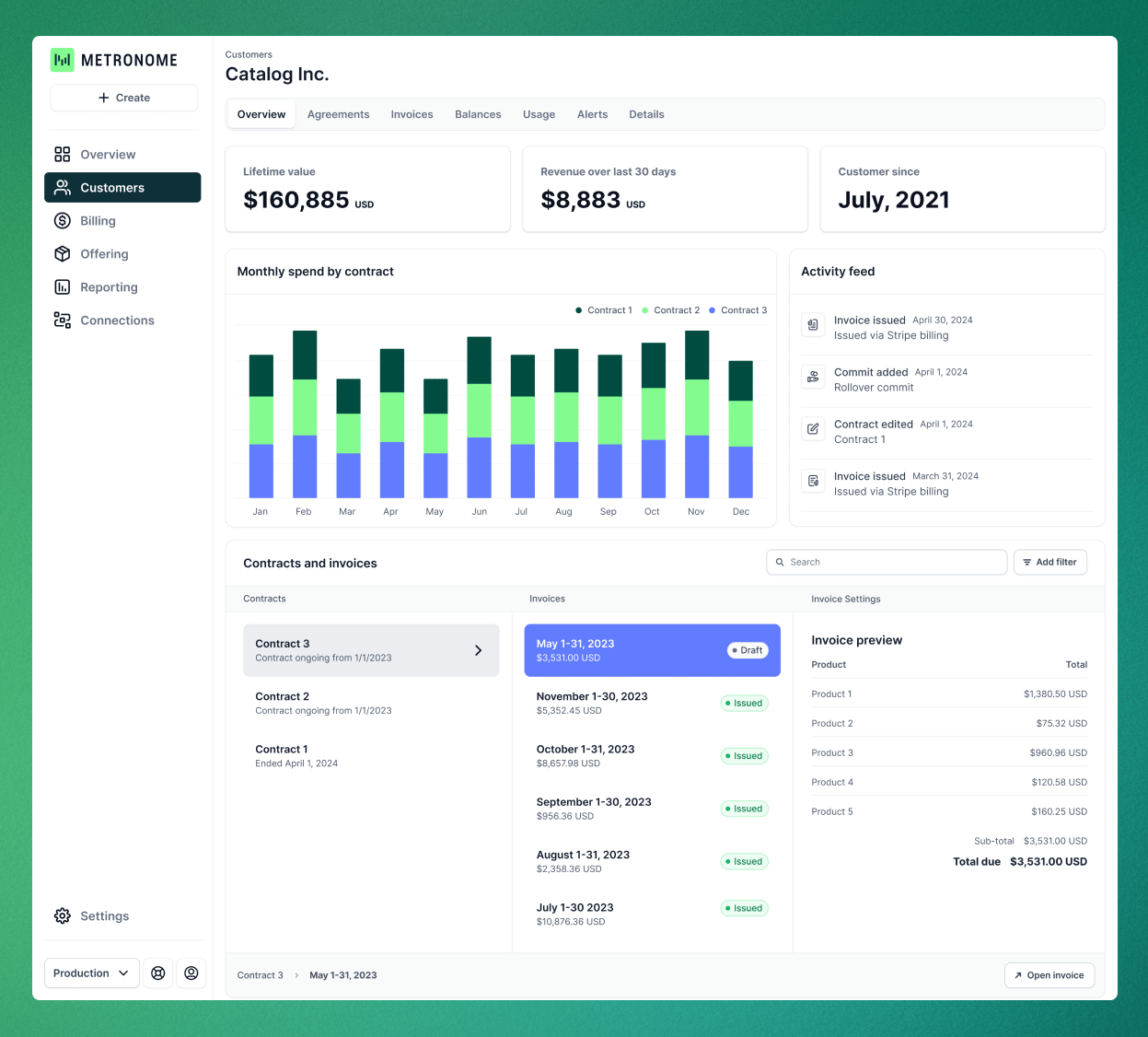
What it does: Metronome is a usage-based billing infrastructure platform built for high-volume event ingestion and enterprise pricing models, now part of the Stripe ecosystem.
Best for: High-volume AI platforms with enterprise pricing complexity and existing Stripe infrastructure.
Metronome was acquired by Stripe in 2026. The integration offers tighter alignment for teams already in the Stripe ecosystem, though the product roadmap is now Stripe-dependent. That dependency is worth considering for teams evaluating billing-provider independence.
Metronome ingests event streams, applies pricing rules including commitments and overages, and generates detailed invoices. Real-time usage dashboards let teams spot cost anomalies before the billing cycle closes.
Enterprise pricing and procurement apply. This is not a tool for early-stage teams evaluating options.
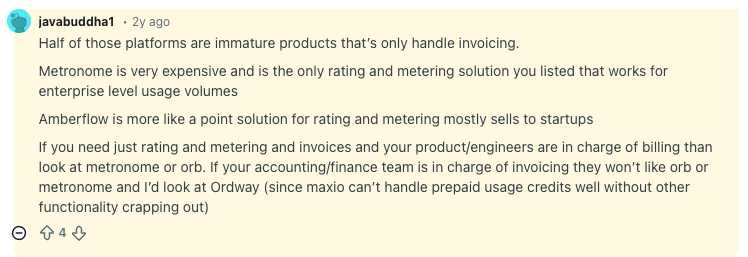
Pro: “Metronome is very expensive and is the only rating and metering solution … listed that works for enterprise-level usage volumes.” [Reddit User (July 09, 2024)]
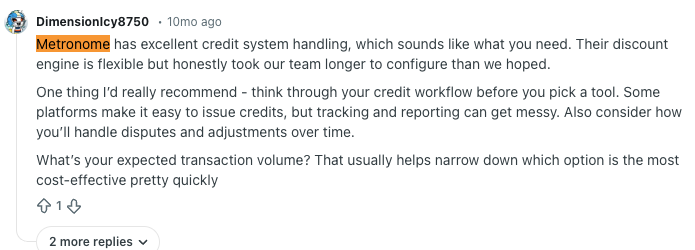
Con: “Metronome has excellent credit system handling, which sounds like what you need. Their discount engine is flexible but honestly took our team longer to configure than we hoped.” [Reddit User (July 03, 2025)]
Free Starter plan for launching usage-based billing. Custom pricing for high-growth companies needing advanced integrations, dedicated support, and tailored pricing configurations.
Metronome suits large AI platforms with enterprise billing complexity and existing Stripe relationships. The Stripe acquisition makes it a stronger fit for teams already in that ecosystem. Teams that want billing-provider independence should factor in the roadmap dependency.
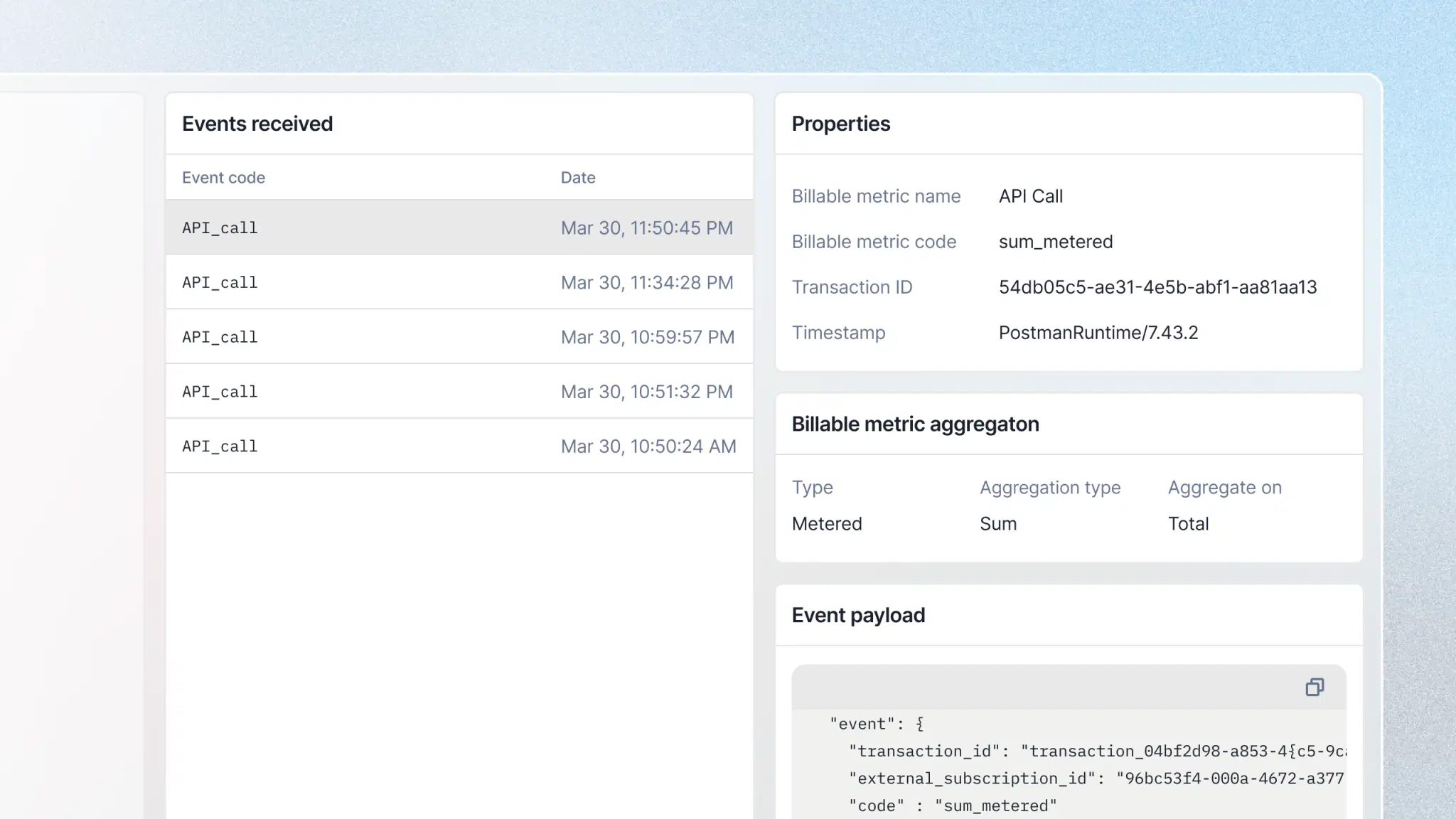
What it does: Lago is an open-source billing engine that teams can self-host or use as a managed cloud service, covering event-based metering, pricing configuration, and invoice generation.
Best for: AI teams with strict data residency requirements, teams avoiding vendor lock-in, or engineering-led teams that want to own the billing stack.
Lago is open-source and free at its core. Teams can deploy it within their own infrastructure, modify the codebase, and retain complete ownership of billing data and logic.
Self-hosting requires DevOps resources to implement and maintain, and features like the hosted portal, real-time balance management, and credit notes are either premium or require custom development.
Lago does not include native payment processing. Payment collection requires a separate integration.
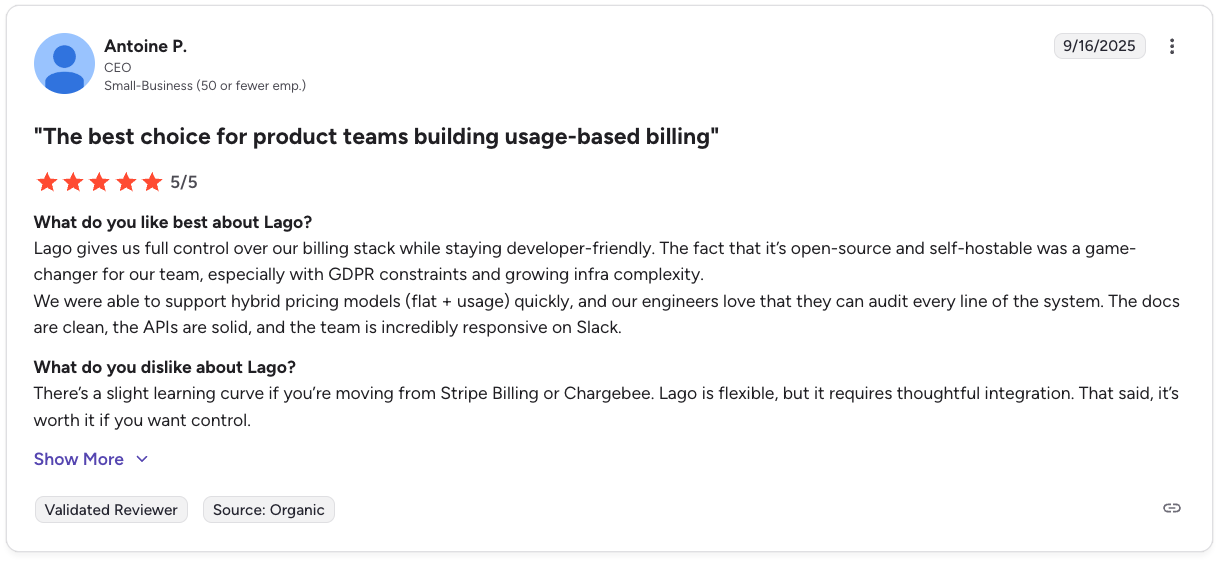
Pro: “Lago gives us full control over our billing stack while staying developer-friendly. The fact that it’s open-source and self-hostable was a game-changer for our team.” [Verified User in Small Business, G2 (September 16, 2025)]

Con: “Open source and highly customizable, though that also means more dev work on your side.” — Reddit User (July 03, 2025)
Lago offers custom pricing for both Business and Enterprise plans. Contact sales for a tailored quote based on your billing volume, support needs, and deployment requirements.
Lago is the right fit for when you treat billing as a core product component and want to own the entire stack. Teams without strong DevOps and engineering resources will run into high maintenance demands.
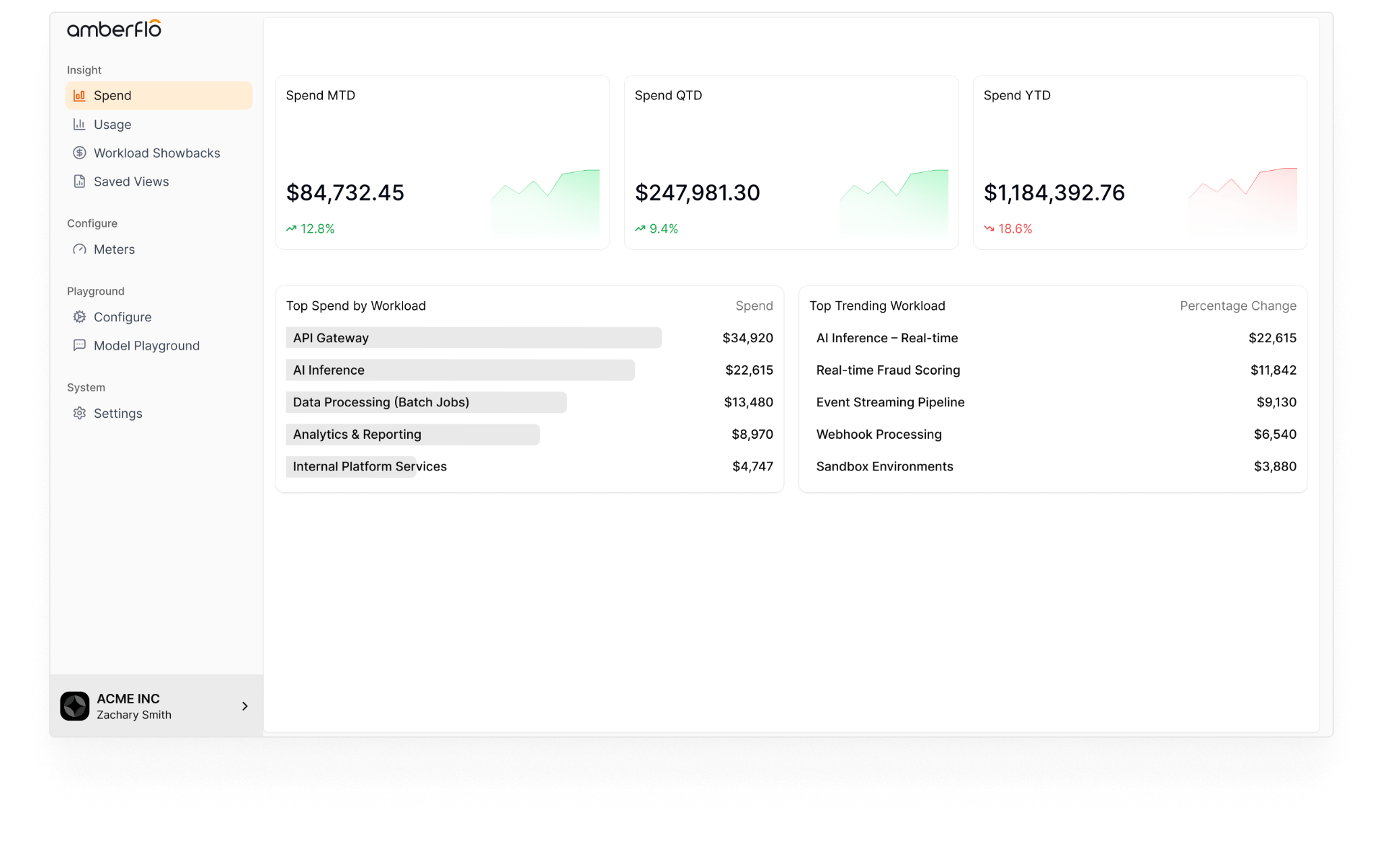
What it does: Amberflo is a cloud and API usage metering platform built for real-time, per-request cost tracking across high-frequency event streams.
Best for: API-first and AI teams that need granular, real-time visibility into per-request consumption costs before those costs reach an invoice.
Amberflo focuses on the metering layer, capturing every billable event as it occurs, attributing it to the correct customer and endpoint, and surfacing that data in real time.
If you're building AI APIs with variable per-request costs, Amberflo gives you usage velocity tracking and live spending dashboards for customers out of the box. It integrates with Stripe for payment collection rather than handling billing end-to-end.
For complex rating logic or enterprise contract management, you'll need additional tooling alongside it.

Pro: "Amberflow is more like a point solution for rating and metering mostly sells to startups" [Reddit user discussion (July 9, 2024)]
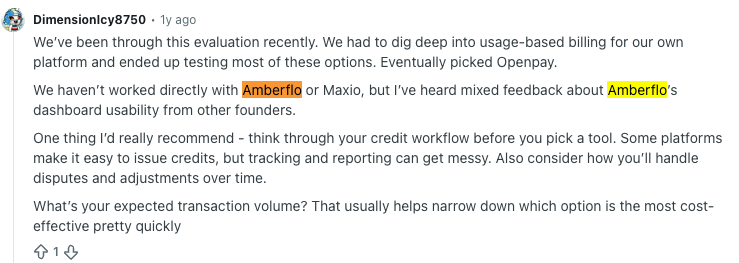
Con: "I’ve heard mixed feedback about Amberflo’s dashboard usability from other founders." [Reddit user discussion (July 3, 2025)]
Amberflo uses usage-based pricing that scales with event ingestion volume and the amount invoiced. Pricing grows predictably with your usage, with no seat-based fees, hidden costs, or customer limits.
Amberflo is worth evaluating for AI API teams whose primary need is accurate, real-time per-request metering with customer-facing visibility. If you also need complex pricing logic or enterprise contract management you’ll need additional tools alongside it.
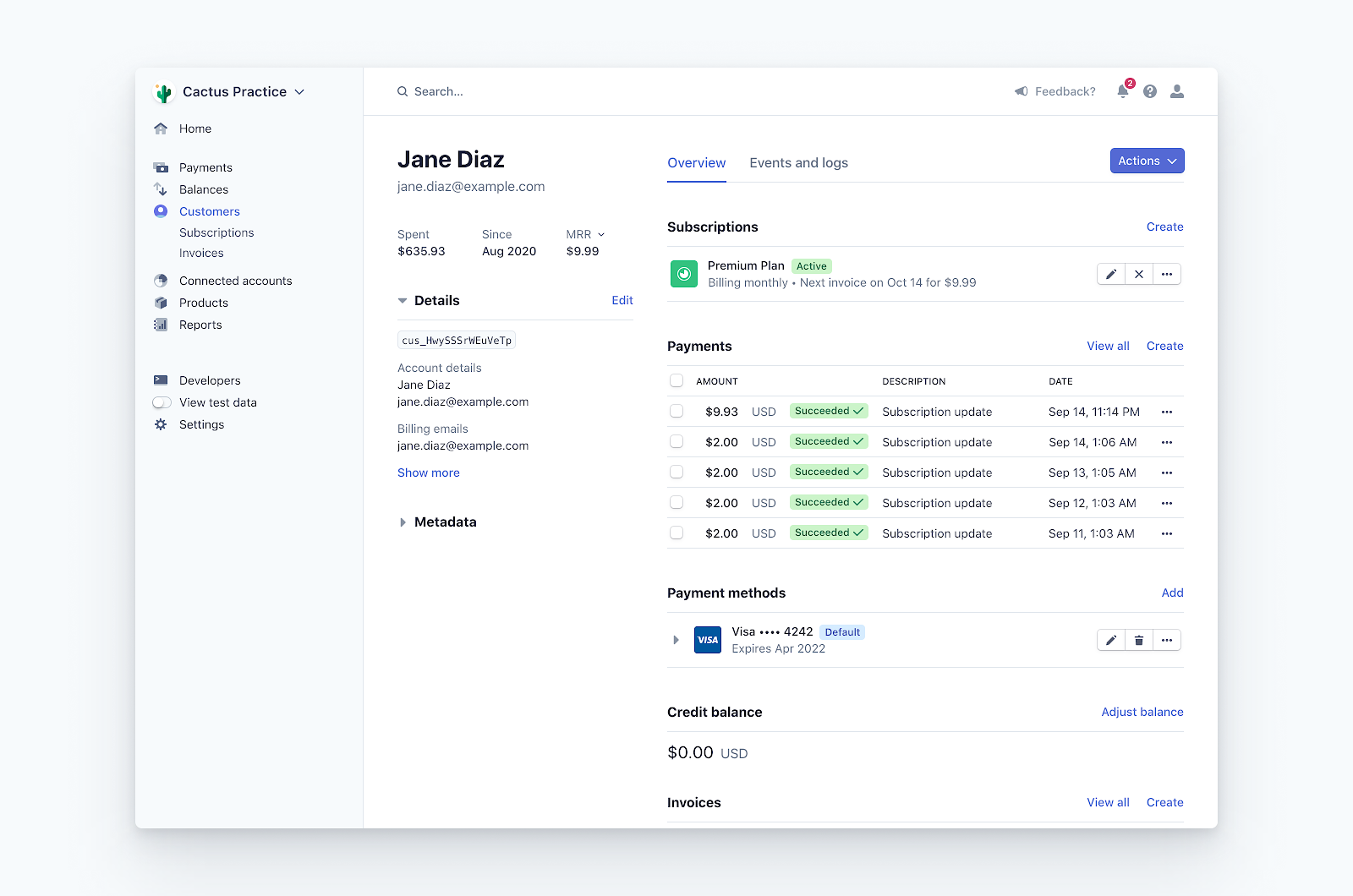
What it does: Stripe Billing is the subscription and usage-based billing layer within the Stripe payments ecosystem, covering metered billing, subscriptions, invoicing, and payment collection.
Best for: AI startups that already use Stripe for payments and want usage-based billing without adopting a separate platform.
Stripe Billing integrates directly with Stripe Payments. If you already process payments through Stripe you can add metered billing without introducing a new vendor relationship or a separate data pipeline.
Stripe's metered billing aggregates usage for end-of-cycle invoicing, and was not designed to enforce limits before compute runs. Teams building credit-based AI billing on Stripe alone will need to build the enforcement layer themselves.
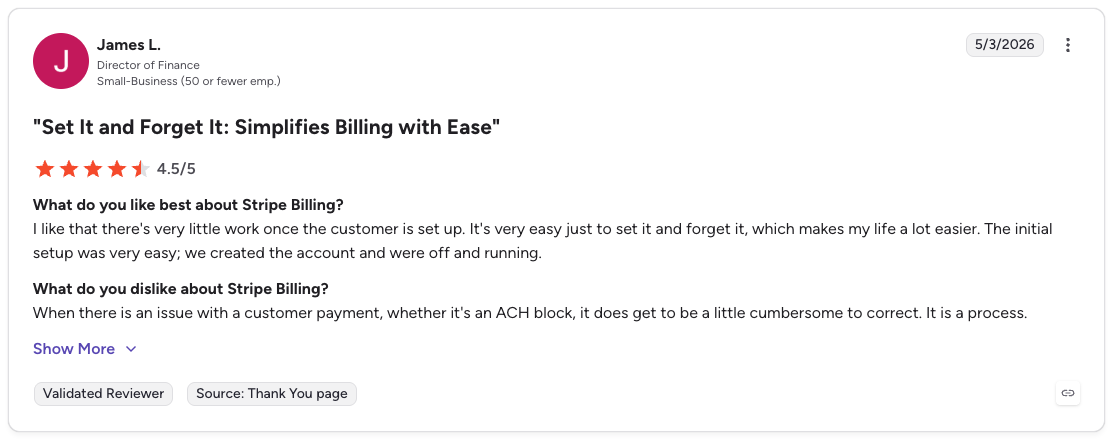
Pro: "I like that there's very little work once the customer is set up. It's very easy just to set it and forget it, which makes my life a lot easier. The initial setup was very easy; we created the account and were off and running." [James L., Director of Finance, G2 Review (May 3, 2026)]
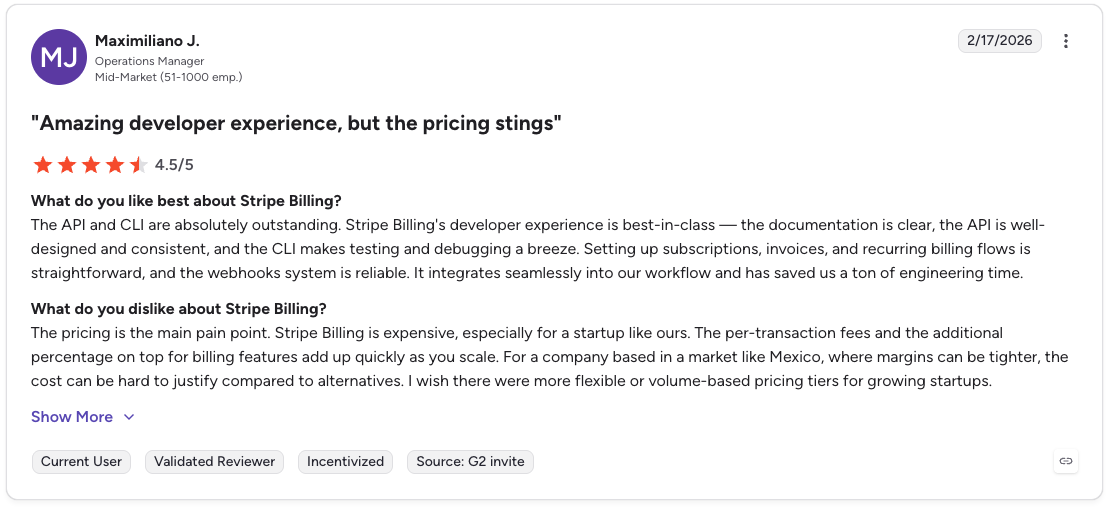
Con: "The pricing is the main pain point. Stripe Billing is expensive, especially for a startup like ours. The per-transaction fees and the additional percentage on top for billing features add up quickly as you scale." [Maximiliano J., Operations Manager, G2 Review (Feb 17, 2026)]
Stripe Billing offers two pricing options: starting at $620/month on an annual contract, or a pay-as-you-go model at 0.7% of billing volume. Pricing scales with your subscription and usage-based billing needs.
Stripe Billing is the natural starting point if you’re already in the Stripe ecosystem. It handles billing basics well and reduces integration overhead. Teams building credit-based AI pricing or needing real-time enforcement will need additional tooling on top of it.
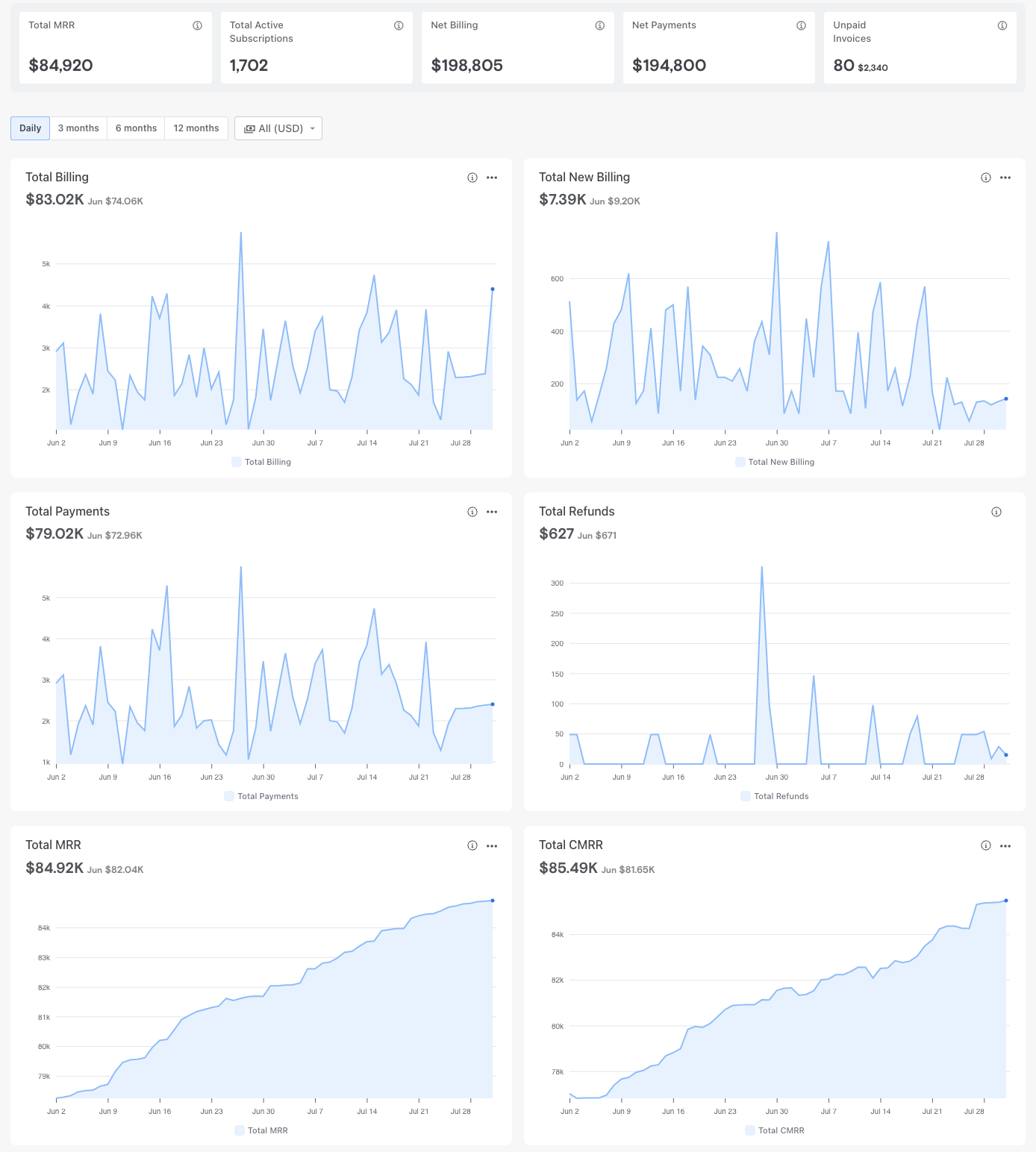
What it does: Chargebee is a subscription and usage-based billing platform that covers metering, invoicing, revenue recognition, and subscription lifecycle management.
Best for: AI SaaS companies that need both recurring subscription revenue and consumption-based AI usage charges to be managed together.
Chargebee supports usage-based AI billing alongside subscriptions. You can configure metered charges for tokens or API calls on top of a subscription base fee, with revenue recognition handled automatically.
Chargebee is better suited to the revenue operations layer than the real-time enforcement layer. It is designed for finance and RevOps teams managing billing alongside subscription lifecycles, not for engineering teams building inference-time enforcement.
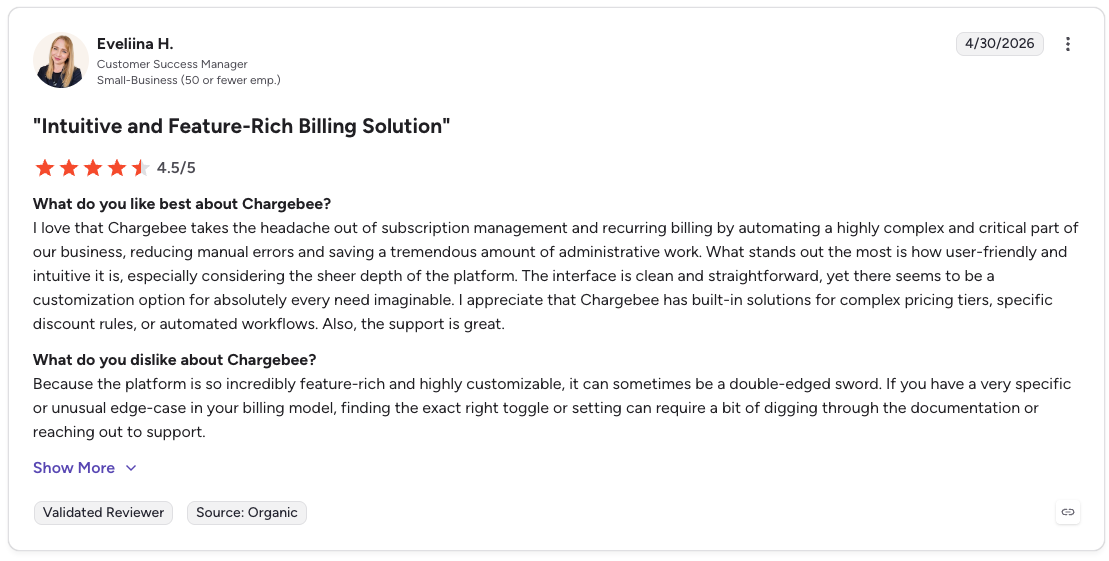
Pro: "I love that Chargebee takes the headache out of subscription management and recurring billing by automating a highly complex and critical part of our business, reducing manual errors and saving a tremendous amount of administrative work." [Eveliina H., Customer Success Manager, G2 Review (Apr 30, 2026)]
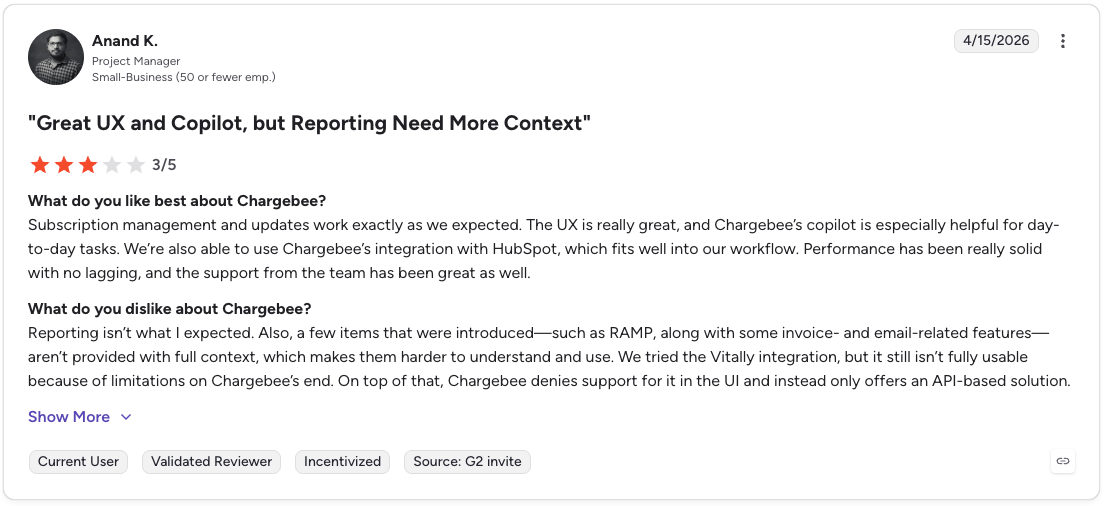
Con: "Reporting isn’t what I expected. Also, a few items that were introduced—such as RAMP, along with some invoice- and email-related features—aren’t provided with full context, which makes them harder to understand and use. We tried the Vitally integration, but it still isn’t fully usable because of limitations on Chargebee’s end. On top of that, Chargebee denies support for it in the UI and instead only offers an API-based solution." [Anand K., Project Manager, G2 Review (Apr 15, 2026)]
Chargebee offers a free Starter plan with 0.75% billing volume fees after the first $250K in cumulative billing. Paid plans start at $7,188/year (billed monthly) for up to $100K in monthly billing, with custom Enterprise pricing available.
Chargebee is a good fit for established AI SaaS companies that have subscription and usage-based revenue to manage together.
Pure AI-native companies with high-volume token pricing and real-time enforcement requirements should evaluate whether Chargebee's architecture fits their metering needs.
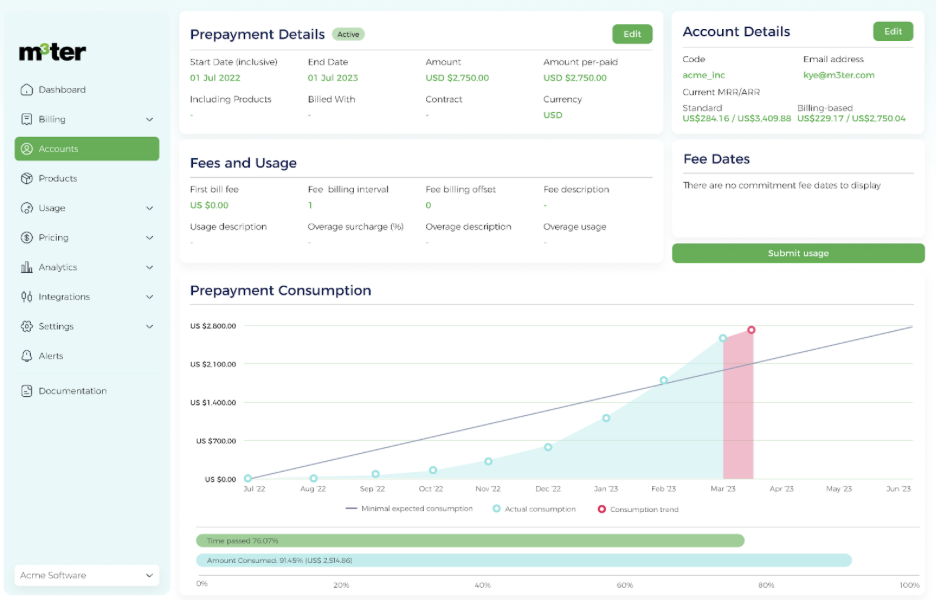
What it does: M3ter is a usage data platform rather than a full billing suite. It sits between the product and the billing or finance system, ingesting raw usage events, normalizing them, and outputting clean billable metrics.
Best for: AI companies with complex, multi-source usage data that needs to be aggregated and attributed accurately before it reaches a billing system.
M3ter addresses a specific problem where raw usage data from AI products is often messy, multi-dimensional, and inconsistent across services. M3ter normalizes this data into reliable billable metrics that downstream billing systems can use.
It does not process payments, generate invoices, or handle subscriptions independently. Teams using M3ter need a separate billing platform downstream, which makes it a metering layer in a larger architecture rather than a standalone billing solution.
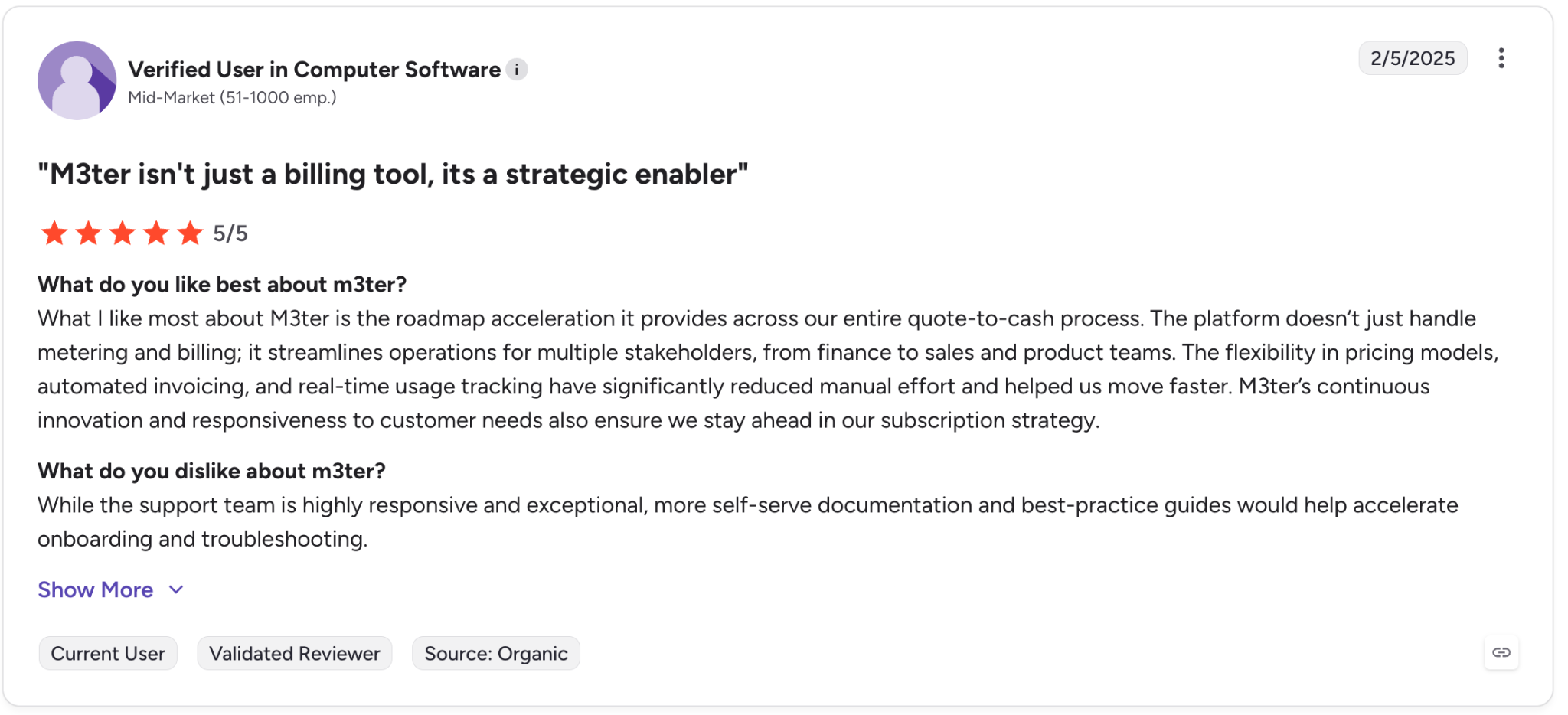
Pro: "What I like most about M3ter is the roadmap acceleration it provides across our entire quote-to-cash process. The platform doesn’t just handle metering and billing; it streamlines operations for multiple stakeholders, from finance to sales and product teams." [Verified User in Computer Software, G2 Review (Feb 5, 2025)]
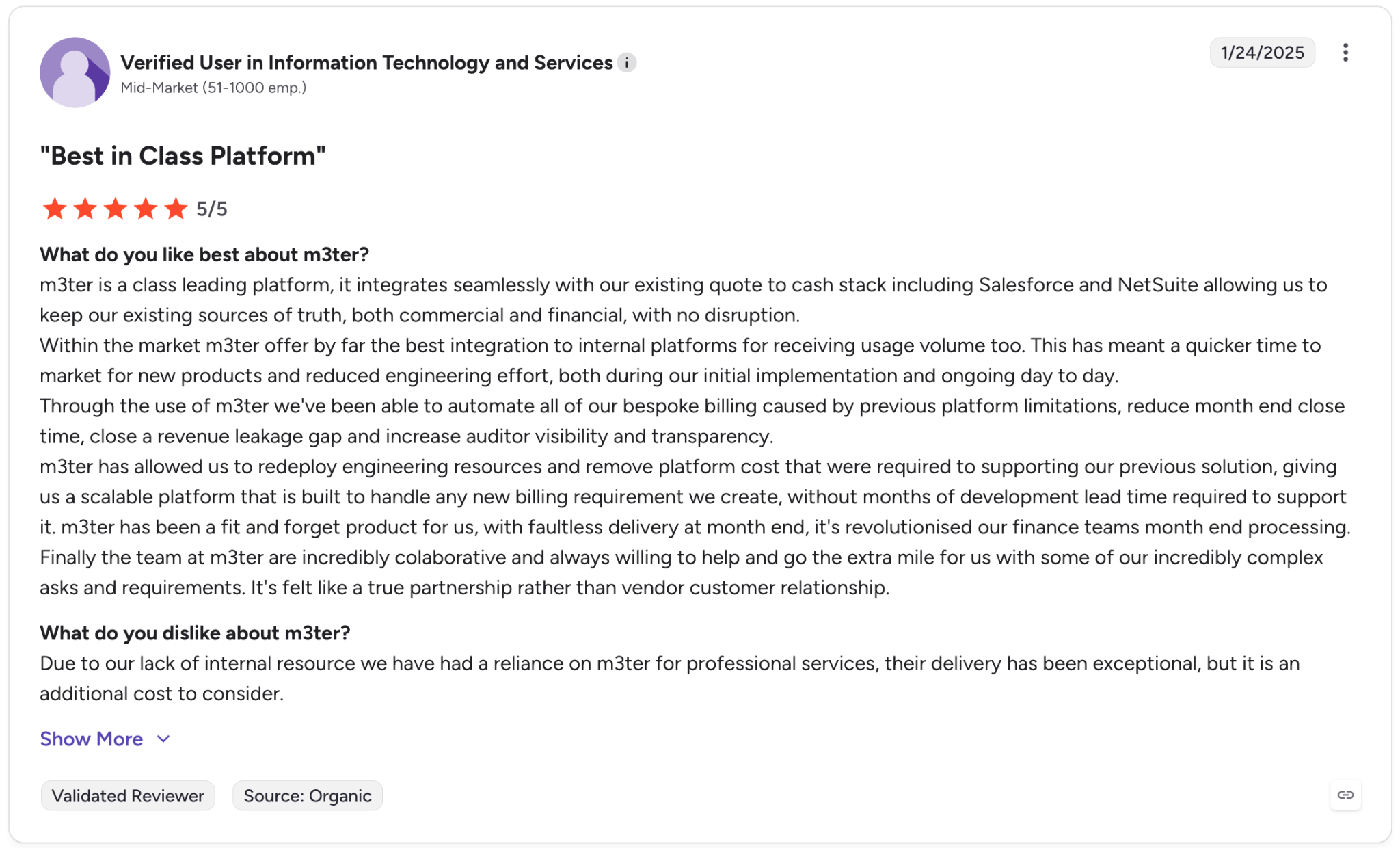
Con: "Due to our lack of internal resources, we have had a reliance on m3ter for professional services; their delivery has been exceptional, but it is an additional cost to consider." [Verified User in Information Technology and Services, G2 Review (Jan 24, 2025)]
M3ter uses custom pricing based on your usage volume, billing complexity, and support requirements. Costs are built from a core platform fee, optional add-ons, support packages, and implementation services.
M3ter is a strong choice for AI companies whose metering requirements are demanding enough to justify a dedicated data layer. Teams looking for an all-in-one billing solution should look elsewhere; M3ter is infrastructure for teams already building a multi-component billing architecture.
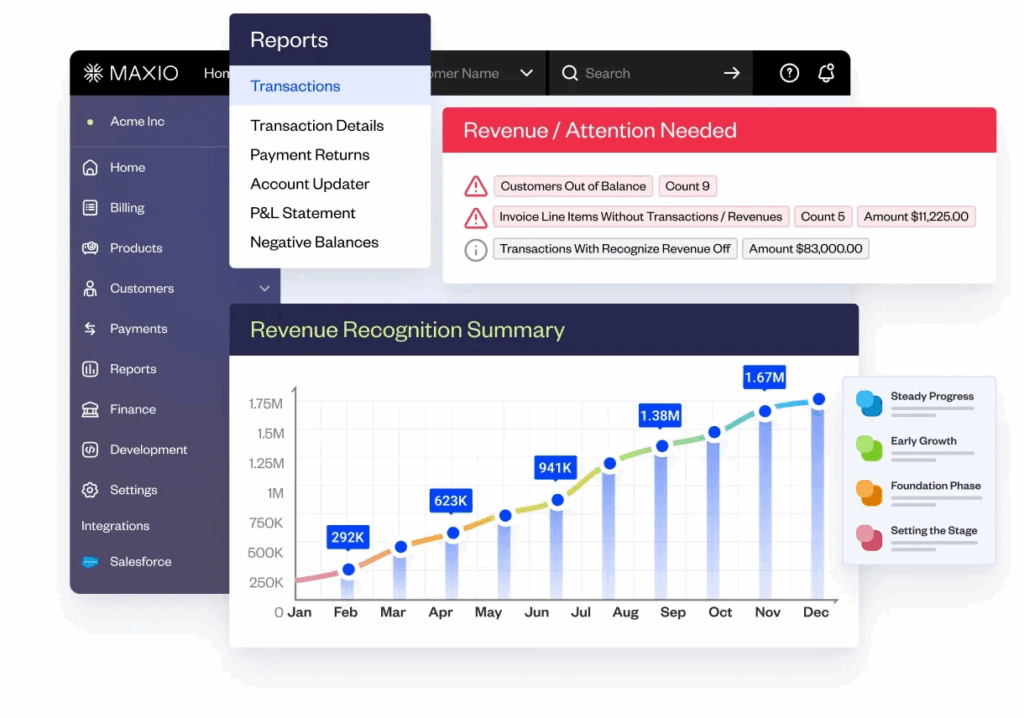
What it does: Maxio is a unified platform combining subscription and usage-based billing, SaaS metrics, and automated revenue recognition, formed through the merger of Chargify and SaaSOptics.
Best for: B2B AI SaaS companies with recurring and usage-based revenue that need billing and finance reporting in one system, with ASC 606 compliance.
Maxio targets the intersection of billing and financial operations. Finance teams get automated revenue recognition, SaaS metrics like MRR and churn, and reconciliation tools alongside the billing engine.
Engineering teams building complex real-time AI pricing models will find Maxio better suited to subscription-led products with a usage component than to pure inference-based pricing with high event volumes.
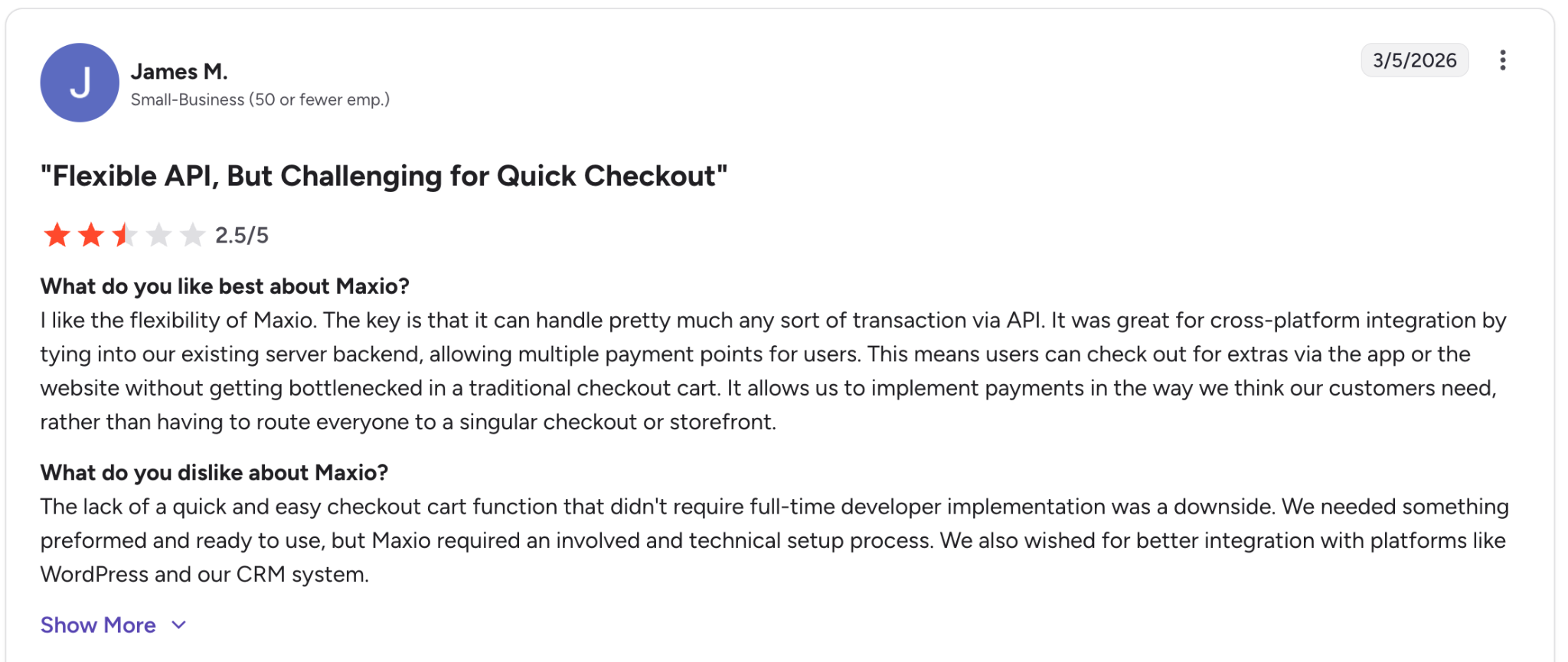
Pro: "I like the flexibility of Maxio. The key is that it can handle pretty much any sort of transaction via API. It was great for cross-platform integration by tying into our existing server backend, allowing multiple payment points for users." [James M., G2 Review (Mar 5, 2026)]
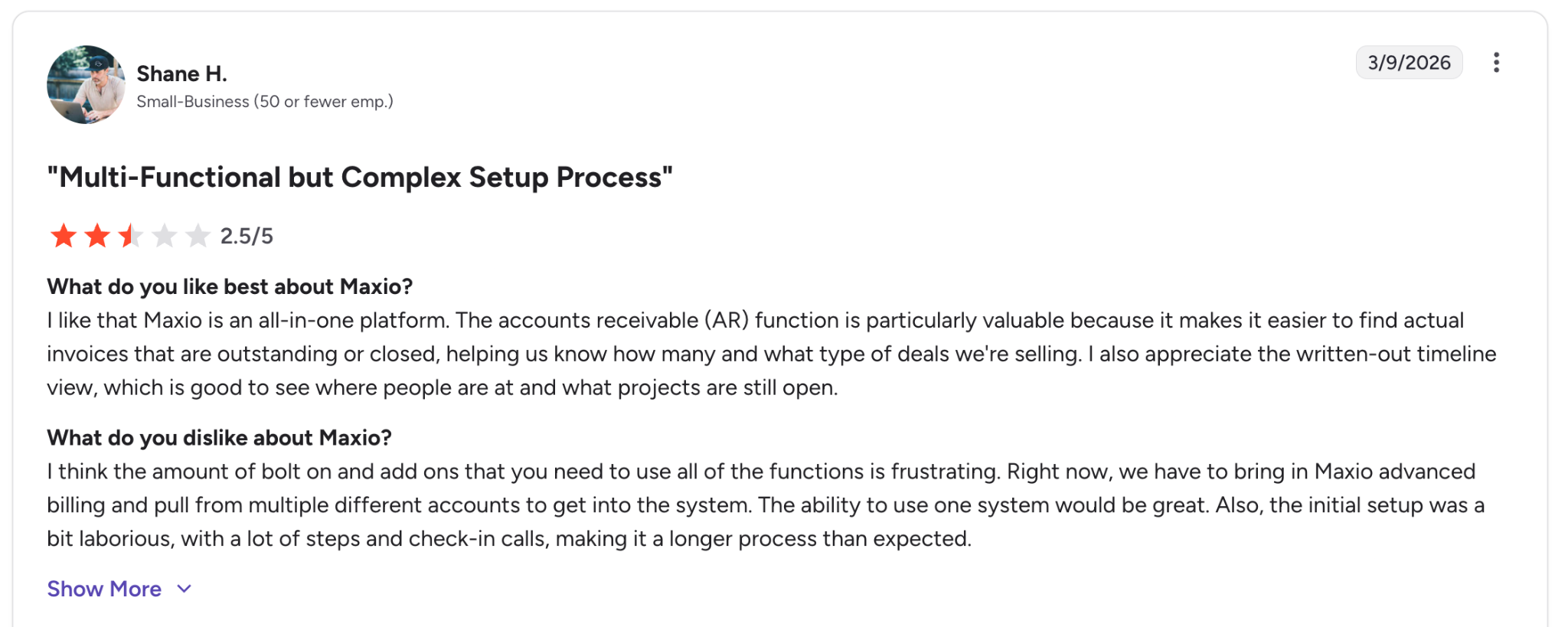
Con: "I think the amount of bolt-ons and add-ons that you need to use all of the functions is frustrating. Right now, we have to bring in Maxio advanced billing and pull from multiple different accounts to get into the system." [Shane H., G2 Review (Mar 9, 2026)]
Grow plan at $599/month for businesses with up to $100K in monthly billings. Scale plan with custom pricing for larger billing volumes.
Maxio is a good fit for established B2B AI SaaS companies that have moved into usage-based pricing and need billing and revenue recognition handled in one place.
For pure AI-native teams with high event volumes or inference-time enforcement needs, Maxio's subscription-first architecture will feel like the wrong layer.
Choose Orb if: Your pricing logic varies by model, endpoint, and customer contract simultaneously, and you have dedicated billing engineering resources to build and run it over time.
Choose Metronome if: You are running a high-volume enterprise AI platform, already have Stripe infrastructure in place, and need enterprise-grade event ingestion with complex pricing configurations.
Choose Lago if: Data residency requirements prevent you from using a hosted billing service, or your team wants full ownership of the billing stack and has the DevOps capacity to support it.
Choose Amberflo if: Your primary need is real-time per-request usage visibility, you're already on Stripe for payments, and pricing logic is relatively straightforward.
Choose Stripe Billing if: You already process payments through Stripe, your pricing model is relatively standard, and you want to add metered billing without a new vendor relationship.
Choose Chargebee if: Your product combines recurring subscription revenue with AI usage charges and you need both managed alongside finance reporting and revenue recognition.
Choose M3ter if: Usage data from your AI product comes from multiple services and needs normalization before it reaches a billing system, and you're building a multi-component billing architecture.
Choose Maxio if: You're a finance-led B2B SaaS team that has added AI usage pricing to an existing subscription model and needs billing and ASC 606 revenue recognition managed together.
Skip this category entirely if: Your product uses flat subscription pricing with no AI usage component. You don't need AI billing infrastructure yet.
Orb is the strongest fit for AI companies with complex token-based pricing logic and engineering resources to match. Metronome is the enterprise choice for high-volume platforms already in the Stripe ecosystem. Lago is the right call when data ownership or budget constraints make a hosted service impractical.
Stripe Billing is where most teams start and where many stay longer than they should before the enforcement requirements outgrow it. Chargebee and Maxio serve AI SaaS companies better than pure AI-native inference products.
M3ter fits a specific architectural role (the normalization layer), as opposed to a standalone billing need. Amberflo sits closest to the real-time metering end of the stack, with the caveat that complex pricing logic and enterprise contracts will need additional tooling.
Every platform on this list records what was consumed and generates an invoice. None decide whether the next request should proceed before compute runs. That's not a billing problem. It's an enforcement problem, and it belongs in a different layer.
At production volume, settlement latency produces delayed invoices. Enforcement latency produces user-facing errors. The fix for one doesn't address the other.
Stigg is the usage runtime built for that layer. Entitlements, credits, usage limits, and spend governance resolve synchronously in the request path before compute runs:
Most AI products already have billing covered. What's missing is the layer that runs above it and decides what's allowed before billing ever finds out. The Stigg docs show how to add that layer without touching the billing infrastructure already in place.
AI billing software handles metering, rating, and invoicing for products that charge based on token consumption, API calls, or compute usage.
It differs from standard subscription billing in that it needs to handle variable per-request costs and pricing logic that varies by model or endpoint.
Orb is the strongest option for complex, multi-dimensional token pricing across models, endpoints, and contract tiers. Metronome fits better for enterprises at high event volume already on Stripe. Teams earlier in the process typically start with Stripe Billing.
The main difference between Orb and Metronome is ecosystem. Orb is an independent billing engine for complex multi-dimensional pricing. Metronome is now part of Stripe, making it a stronger fit for teams already in that ecosystem.
Not fully. Credit wallet management with real-time balance enforcement and concurrent session safety isn't the primary design focus of the platforms on this list. Teams needing dedicated credit enforcement typically add a runtime layer above their billing stack.
Most handle it through event-based metering: the application emits a usage event after each request with the actual token count, and the billing platform aggregates and rates those events. None enforces limits before inference runs.
%20(1).png)
%20(1).png)