Industry Insights
The Model Is Sovereign. The Meter Isn't.
The model runs in your VPC. The meter runs in someone else's. Why that matters, and the four other things a usage layer has to get right.

AI agents are coming - and they’ll hammer your APIs with usage humans or human-generated code could never match. Skyrocketing costs, overloaded systems, and unpredictable spikes - these will all consequently disrupt your business and your new *Agentic customer* purchase experience. Here’s how to get your infrastructure ready and turn this chaos into a growth opportunity.


OpenAI is losing money on ChatGPT’s Pro plan.
ChatGPT Pro’s $2,400 annual price tag wasn’t universally embraced at launch. However, the users who did opt in have been pushing the limits of it, at OpenAIs expense.

To address this, OpenAI has added a caveat to their "Unlimited* access to GPT-4" promise, clarifying that usage must be "reasonable" - a mechanism often seen in cellular or internet providers to prevent excessive, and costly, use of their services. But this adjustment alone isn’t enough to prevent massive overages and losses on features designed to generate revenue.
As we move into the era of AI agents, developers exposing their APIs must brace for a future where usage spikes are not just frequent but unprecedented in scale.
AI agents, with their ability to autonomously interact with APIs, are revolutionizing software interactions. However, their very nature - executing tasks rapidly and at scale - can lead to sudden, intense peaks in API consumption. For developers offering APIs, these peaks can overload systems, inflate costs, and degrade user experience.
Whether you’re a $157 billion company or a startup, managing these spikes effectively requires robust entitlements and peak control mechanisms to ensure stability and sustainability.
Entitlements are the permissions or limits granted to users, managing what they can access and how much they can consume within a software product. They play a vital role in defining and controlling user behavior, especially in high-demand environments like AI applications. There are two primary types of entitlements:
When it comes to managing peaks, hard limits are indispensable. They prevent excessive usage that could otherwise overload your systems or lead to runaway costs. For example, by implementing hard limits on API calls, developers can safeguard their infrastructure from unexpected surges triggered by agentic AI activities.
To dive deeper into how entitlements work and how to design them effectively, check out our extensive blog post on entitlements.
To address peaks effectively, it’s important to first define what they are. Peaks refer to periods of high usage that exceed the average or expected load on your system. These spikes might occur due to a viral user activity, an AI agent’s intensive computational task, or a system event that drives up demand.
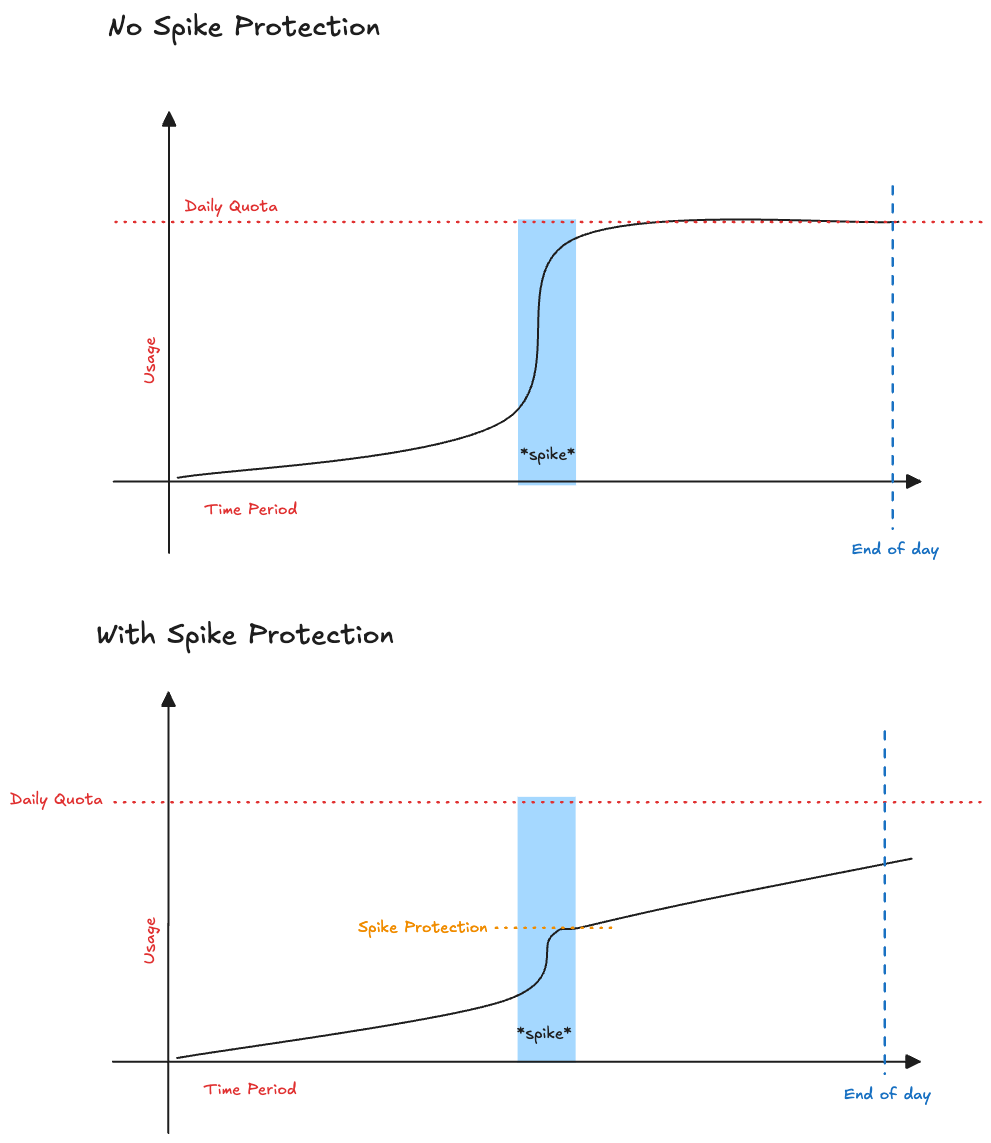
Here’s how developers can implement peak control:
Let’s shift the perspective. Spikes in API usage aren’t just challenges to overcome - they’re opportunities to grow.
By offering tiered service plans with different usage limits, you can create fairer pricing models that cater to a wide range of customers. For instance, smaller businesses might benefit from a basic plan with lower limits, while enterprises could opt for premium tiers with higher limits and additional perks. This approach ensures you’re not leaving money on the table while aligning the cost of your service with the value it delivers.
To enable such a strategy, you’ll need robust metering and entitlement systems in place. These systems allow you to track and manage usage dynamically, ensuring each customer gets the right level of service based on their needs and willingness to pay.
If your infrastructure isn’t quite ready for this level of flexibility yet, it’s worth exploring solutions that can help you get there. (Absolutely unbiased opinion - check out Stigg)
Agent AIs are already becoming integral to many businesses. Consider tools like AgentGPT, which automate lead generation for sales teams - from identifying promising prospects to crafting tailored outreach messages and providing real-time analytics on campaign performance.
Visionaries like Elon Musk (Tesla, SpaceX, X), Jensen Huang (NVIDIA), Satya Nadella (Microsoft), and Mark Zuckerberg (Meta) predict that AI agents will soon take over numerous tasks currently performed by humans.
Imagine an AI agent seamlessly managing procurement, customer service, or even software development tasks. This evolution means that AI agents could soon become not just users of your APIs but the ones who purchase it, too. Consequently, your next pricing model and monetization strategy might need to cater more to AI agents than human users. AI agents, unlike humans, can operate tirelessly, executing thousands of tasks per second. This unique behavior calls for tailored monetization approaches to handle their distinctive patterns of usage.
To capitalize on this shift, developers need flexible infrastructure that enables differentiated pricing and service levels. Here’s where entitlement management shines. By leveraging a robust entitlement system, you can:
For example, imagine offering a “freemium” plan to attract small startups while reserving premium tiers for enterprises that demand high-volume usage and advanced analytics. An AI-driven startup might use your API modestly at first but scale rapidly as its agents take on more tasks. With a well-designed entitlement system, you can accommodate their growth while ensuring they pay for the value they receive.
Agentic AI is transforming how we interact with technology, but it’s also introducing new complexities for developers. Peaks in usage, driven by the autonomy and resource demands of these agents, are inevitable. Managing these peaks requires a proactive approach that includes entitlements to define boundaries and peak controls to enforce them.
By leveraging tools like Stigg, developers can:
The result is a system that not only meets user needs but also ensures scalability, cost-efficiency, and reliability. As AI continues to evolve, having these measures in place will be a key differentiator for developers building the next generation of intelligent applications.
—---------------
If your current system may not be fully prepared for the demands of Agentic AI, Stigg can help. Explore our platform or reach out to us directly to learn how we can optimize your infrastructure to handle AI-driven peaks, manage usage effectively, and get you ready for a new wave of customers.

.jpg)